
UK Casino Payment Methods 2026: Speed, Fees & Operator Acceptance Compared
 Available in GB
Debit cards still move most of the money at UK casinos, but the gap is closing. PayPal clears a withdrawal in under an hour at Casumo. Open Banking verifies your identity at deposit and skips the registration form entirely. Pay-by-mobile caps you at £240 a month whether you like it or not.
The payment method you pick decides how fast you start playing, how soon you get paid, and whether your welcome bonus actually lands. UKGC-licensed operators support fourteen distinct methods as of 2026, each with its own speed profile, fee structure, and operator acceptance. Some withdraw in minutes. Others take three working days. Some qualify for every bonus. Others are blacklisted by most of the market.
This guide maps all of them. You’ll see exactly which methods work at which operators, how withdrawal times differ by hours rather than vague “fast” claims, where the hidden fees sit, and which regulatory requirements actually matter when you’re trying to cash out on a Friday evening.
Payment Methods at UK Online Casinos
Fourteen payment methods operate at UKGC-licensed casinos in 2026. They split into five categories: debit cards, e-wallets, mobile payments, bank transfers, and crypto. Not all fourteen are created equal.
Categories of Payment Methods
Debit cards are universal. Every UKGC operator accepts Visa and Mastercard debit. Credit cards have been banned since April 2020 — more on that regulatory mess later. Deposits clear in seconds. Withdrawals take one to three working days, though Visa Fast Funds shaves that to four hours at operators who bothered implementing it.
E-wallets dominate the speed rankings. PayPal withdrew £500 from a Casumo account in 35 minutes during independent testing. Skrill hit 45 minutes at Ladbrokes. Neteller runs similar times. The catch: Skrill and Neteller are excluded from welcome bonuses at roughly two-thirds of UK operators. PayPal isn’t. MuchBetter, Jeton, and AstroPay sit in the middle — faster than cards, bonus-eligible, but with narrower operator acceptance than the big names.
Mobile payments come in two flavours. Apple Pay and Google Pay turn deposits into a thumbprint but don’t support withdrawals — your winnings go back to the linked debit card. Pay-by-mobile (Boku) charges deposits to your phone bill, caps transactions at £30, and locks you into a £240 monthly ceiling. Unbanked players love it. High-rollers can’t use it.
Bank transfers split between legacy and instant. Standard bank-transfer withdrawals take three to seven working days — Faster Payments itself is near-instant, but casinos process these payouts manually. Open Banking via Trustly clears same-day, often under an hour. Pay N Play uses the same Open Banking rails to verify identity at deposit, creating no-registration casino experiences where your account is set up automatically and withdrawals return to the same verified bank account.
Crypto barely exists at UKGC casinos. Bitcoin, Ethereum, and the rest run into anti-money-laundering walls. UKGC operators can’t verify source of funds easily when deposits arrive from pseudonymous wallet addresses. Affordability checks become unenforceable. The handful of UKGC sites accepting crypto do it via third-party processors that convert to fiat before the funds reach the operator. Offshore casinos — Curaçao-licensed, no UKGC registration — handle crypto natively, but those sites operate illegally for UK-facing service under the Gambling Act 2005.
The table below compares all fourteen on the criteria that actually matter: how fast deposits clear, how fast withdrawals pay, what you can deposit per transaction, what it costs, and whether your welcome bonus survives contact with the method.
| Payment Method | Deposit Speed | Withdrawal Speed | Min Deposit | Max Deposit | Fees | Bonus Eligible | Withdrawal Supported |
|---|---|---|---|---|---|---|---|
| Visa/Mastercard Debit | Instant | 1–3 days | £5–£10 | £5k–£10k | Zero | Yes | Yes |
| PayPal | Instant | 35 min–4 hours | £10 | £5k–£25k | Zero | Yes | Yes |
| Skrill | Instant | 45 min–24 hours | £5–£10 | £10k–£100k | 1–2% to bank | Often excluded | Yes |
| Neteller | Instant | 2–12 hours | £5–£10 | £10k–£100k | 1–2% to bank | Often excluded | Yes |
| MuchBetter | Instant | 2–24 hours | £10 | £5k–£25k | Zero | Yes | Yes |
| Jeton | Instant | 2–24 hours | £10 | £5k–£25k | Zero | Varies | Yes |
| AstroPay | Instant | 2–24 hours | £10 | £5k | Zero | Varies | Yes (wallet only) |
| Apple Pay | Instant | Not supported | £10 | £3k | Zero | Yes | No |
| Google Pay | Instant | Not supported | £10 | £3k–£5k | Zero | Yes | No |
| Pay by Mobile (Boku) | Instant | Not supported | £10 | £30 (£240/month) | Zero at cashier | Varies | No |
| Bank Transfer | Same-day–2 days | 3–7 days | £10–£20 | £10k–£100k | Zero | Yes | Yes |
| Open Banking (Trustly) | Instant | 50 min–same-day | £10 | £10k–£100k | Zero | Yes | Yes |
| Klarna | Instant | Same-day | £10 | £5k–£25k | Zero | Yes | Yes |
| Zimpler | Instant | Same-day | £10 | £5k–£25k | Zero | Yes | Yes |
How to Choose the Right Payment Method for You
Four priorities determine which method makes sense. Match your use case to the list.
Speed priority: PayPal at Casumo, PokerStars, or Grosvenor pays verified accounts within hours — 35 minutes at Casumo. Trustly via Open Banking hits 50 minutes at Betway. Skrill clocked 45 minutes at Ladbrokes. Standard debit card withdrawal takes one to three working days. If you’re playing Friday evening and want your winnings Saturday morning, e-wallets and Open Banking are the only realistic options.
Low-deposit priority: Most methods accept £5–£10 minimums. Pay-by-mobile works with £10 transactions but caps you at £240 monthly — fine for casual players, useless for anyone depositing more than £60 a week. Debit cards and e-wallets all support £5–£10 entry points. Bank transfer minimums sit at £10–£20 due to manual processing overhead.
Privacy priority: Open Banking and e-wallets keep your card number out of the casino database. Apple Pay and Google Pay tokenise the underlying debit card — the operator sees a device-specific token, not your actual card digits. AstroPay’s prepaid card offers similar separation (you pre-load a virtual card, deposit from that, and the casino never touches your main bank details). Standard debit card deposits expose your full card number to the operator’s payment processor.
No-registration priority: Pay N Play casinos use Open Banking to verify identity at deposit. You authenticate via your bank’s login page, the casino pulls your name and address from bank records, and your account is created automatically. No signup forms. Trustly, Zimpler, and some Klarna implementations enable this. Withdrawals return to the same verified bank account. The UX eliminates ten minutes of typing personal details and uploading documents — at standard registration casinos you still complete age and identity checks before you can play, so the time-saving only materialises if you actually play at a Pay N Play operator.
What’s the difference between PayPal and Skrill for casino payments?
PayPal qualifies for welcome bonuses at every UK operator that accepts it; Skrill is excluded at many UKGC casinos. Both withdraw fast. Skrill charges 1–2% to move money to your bank, while PayPal is free for GBP. Skrill allows higher transaction limits; PayPal offers broader consumer trust.
Debit Cards: The UK Default
Visa and Mastercard debit cards move more money through UK casino cashiers than every other method combined. Universal acceptance. Zero fees. Bonus eligibility at every operator. Familiar checkout flow. The trade-off: withdrawals take longer than e-wallets, and you’re handing your card number to the operator’s payment processor.
Visa Debit
Visa debit cards work at 100% of UKGC-licensed casinos. Every UK bank issues them — Barclays, HSBC, Lloyds, NatWest, Santander, Nationwide, and the challenger banks. Deposits clear in seconds via 3D Secure authentication (you type your card details at the casino cashier, get redirected to your bank’s authentication page, confirm via SMS code or banking app, and the funds land instantly).
Withdrawals return to the same card you deposited with. Anti-money-laundering rules prohibit withdrawing to a different card. Processing time is one to three working days for standard card withdrawals. William Hill offers Visa Fast Funds — a four-hour card withdrawal service that uses Visa Direct rails to push funds back to your card. Not every UKGC operator supports Visa Fast Funds yet, but adoption has grown as the Visa Direct network expanded.
Minimum deposits sit at £5–£10 depending on operator. Maximum deposits range from £5,000 to £10,000 per transaction — high enough for recreational players, tight for high-rollers (who typically shift to bank transfer or Open Banking for five-figure deposits). There are no fees at casino level. Your bank might charge a foreign-transaction fee if the operator processes in euros or dollars, but UK-facing UKGC casinos process in GBP, so that scenario rarely arises.
Visa debit qualifies for every welcome bonus. Credit cards were banned in April 2020, but debit cards were unaffected and remain the default UK payment method.
Mastercard Debit
Mastercard debit mirrors Visa in acceptance and processing. Every UKGC casino that takes Visa takes Mastercard. Same 3D Secure authentication. Same one-to-three-day withdrawal window. Same £5–£10 minimums and £5k–£10k maximums. Same zero-fee structure.
Maestro — Mastercard’s older debit brand — was discontinued in the UK in July 2023. Mastercard phased it out in favour of Mastercard Debit. If you still hold a Maestro card issued before 2023, it works at UK casinos until expiry, but banks aren’t issuing new ones.
Mastercard doesn’t have a direct equivalent to Visa Fast Funds. Some operators process Mastercard withdrawals slightly faster than the standard three-day window, but sub-24-hour Mastercard withdrawals remain rare compared to Visa Fast Funds availability. If fast card withdrawals matter, check whether the operator supports Visa Fast Funds before signing up.
How to Deposit and Withdraw with Debit Cards
Depositing: navigate to the casino cashier, select Visa or Mastercard, enter your card number, expiry date, and three-digit CVV, confirm the amount, and authenticate via 3D Secure (your bank will send an SMS code or push notification to your banking app). The deposit clears instantly.
Withdrawing: request a withdrawal in the casino cashier, select the same card you deposited with, enter the amount (must be at least £10–£20 depending on operator), and submit. The operator processes the withdrawal request (anywhere from instant approval to 24-hour manual review depending on KYC status), then sends the funds to your card. Processing time is one to three working days from approval. The funds appear in your bank account as a refund or credit from the casino’s payment processor.
UKGC rules have required operators to verify your age and identity before you can gamble since May 2019, so basic checks happen at sign-up. Your first withdrawal can still trigger requests for extra documents: a photo ID (passport or driving licence), proof of address (utility bill or bank statement dated within three months), and proof of payment method (photo of your debit card showing the first six and last four digits, expiry date, and your name — the middle six digits can be masked). Manual review takes 24–48 hours. Upload anything the casino asks for immediately after your first deposit so it doesn’t hold up your first withdrawal.
Is it safe to use my debit card at online casinos in the UK?
Yes, at UKGC-licensed operators. Licensed casinos must use PCI-DSS compliant payment processors, encrypt card data and disclose how well your balance is protected if they become insolvent. Card details run on the same Visa and Mastercard networks, with 3D Secure, that handle everyday online shopping. Avoid unlicensed offshore casinos entirely.
E-Wallets: Fast Withdrawals and Privacy

E-wallets put a layer between your bank account and the casino. You fund the e-wallet from your debit card or bank account, deposit from the e-wallet to the casino, and withdrawals return to your e-wallet balance. The casino never sees your card number. Withdrawal times drop from days to hours — sometimes minutes.
Six e-wallets operate at UK casinos: PayPal, Skrill, Neteller, MuchBetter, Jeton, and AstroPay. PayPal dominates consumer trust but isn’t universally accepted. Skrill and Neteller offer the highest limits but are excluded from most welcome bonuses. MuchBetter targets mobile players. Jeton and AstroPay serve niche segments.
PayPal
PayPal Holdings Inc. operates the most trusted e-wallet in the UK consumer market. High-street recognition from e-commerce. FCA-regulated as an e-money institution. Accepted at a growing number of UKGC casinos, though not universal — some operators exclude PayPal due to higher processing fees compared to debit cards.
Withdrawals are the fastest in the mainstream payment ecosystem. Independent testing recorded 35 minutes from request to PayPal balance at Casumo, under three hours at PokerStars (after the late-2025 infrastructure rebuild), and under 3.5 hours at Grosvenor. Median withdrawal time across PayPal-accepting operators sits around two to four hours for verified accounts. That puts PayPal at or near the top of the withdrawal-speed rankings, alongside Open Banking and Skrill at the fastest operators.
Deposits clear instantly. Minimum £10, maximum £5,000 to £25,000 depending on operator (PokerStars caps PayPal deposits at £25k per transaction, smaller operators often set £5k limits). The casino cashier adds no fees of its own. PayPal itself charges 3–4% currency conversion if you’re moving funds between currencies, but UK-facing casinos process in GBP, so that fee doesn’t apply to domestic transactions.
PayPal qualifies for welcome bonuses at every operator that accepts it. This distinguishes it from Skrill and Neteller, which are systematically excluded. Bonus hunters gravitate to PayPal for exactly this reason.
Setup requires a PayPal account at paypal.com. Link a UK debit card or bank account to your PayPal wallet, deposit funds into PayPal (or let PayPal pull directly from your linked card at transaction time), then select PayPal at the casino cashier. You’ll be redirected to PayPal’s login page, authenticate, confirm the amount, and return to the casino with the deposit complete.
Skrill
Skrill is a gambling-specialist e-wallet under the Paysafe Group umbrella (which also owns Neteller). Founded in 2001 as Moneybookers, rebranded to Skrill in 2011, acquired by Paysafe in 2015. FCA-regulated. Widely accepted at UKGC casinos — near-universal coverage because Skrill targets the gambling vertical specifically.
Withdrawals run 45 minutes to 24 hours. Ladbrokes delivered a Skrill withdrawal in 45 minutes during independent speed testing. Median time across operators is two to twelve hours. Faster than debit cards, slightly slower than PayPal at the top operators.
Funds hit your balance the moment you confirm. Minimum £5–£10, maximum £10,000 to £100,000 (Skrill supports six-figure transactions for high-rollers, far above PayPal’s £25k ceiling). The casino cashier charges nothing, but Skrill takes 1–2% to withdraw from your Skrill balance to your UK bank account. That fee is avoidable if you keep winnings in your Skrill wallet and use them for your next deposit, but most players eventually cash out to their bank account and eat the fee.
Skrill is excluded from welcome bonuses at roughly 60–70% of UKGC operators. This is anti-bonus-abuse enforcement. Skrill users historically bonus-hunted across multiple casinos (deposit £10, claim £50 bonus, play through wagering requirements, withdraw, repeat at the next operator). Casinos responded by blacklisting Skrill deposits from triggering bonuses. If you deposit with Skrill, you typically get your deposit funds but no bonus match. Check the operator’s terms before depositing.
Setup requires a Skrill account at skrill.com. Fund your Skrill wallet via bank transfer or debit card, then select Skrill at the casino cashier. You’ll be redirected to Skrill’s login page, authenticate, confirm the transaction, and return to the casino.
Neteller
Neteller is Skrill’s sister product under the Paysafe Group. Founded in Canada in 1999; its parent company has traded as Paysafe Group since 2015. FCA-regulated. Functionally identical to Skrill: same fee structure, same bonus exclusion problem, same speed profile, same six-figure transaction limits.
Withdrawals take two to twelve hours typical. Some operators process Neteller slightly faster than Skrill, others treat them identically. Both are faster than debit cards, both trail PayPal at the fastest operators.
Money lands in your account within seconds. Minimum £5–£10, maximum £10,000 to £100,000. There’s nothing to pay at the casino cashier, though moving funds from Neteller to your bank account costs 1–2%. Neteller is excluded from welcome bonuses at most UKGC operators for the same anti-bonus-abuse reasons as Skrill.
Neteller and Skrill run separate account systems. You can’t transfer funds between a Neteller account and a Skrill account directly, even though both are Paysafe brands. Some operators accept Neteller but not Skrill, or vice versa, due to licensing or partnership differences. Gamblers who use e-wallets seriously often hold both accounts to maximise operator coverage.
Setup requires a Neteller account at neteller.com. Fund via bank transfer or debit card, select Neteller at the casino cashier, authenticate at Neteller’s redirect page, confirm, and return.
MuchBetter
MuchBetter Ltd launched in 2017 as a mobile-first e-wallet targeting mobile casino players. UK company, FCA-regulated. App-only — no web interface for deposits. You download the MuchBetter app (iOS or Android), create an account, fund via debit card or bank account, and deposit at casinos using a PIN or biometric authentication (Face ID, Touch ID, fingerprint).
Withdrawals take two to 24 hours typical. Not as fast as PayPal or Skrill at the top end, but comfortably faster than debit cards. Deposits post immediately, with a £10 minimum and a £5,000 to £25,000 maximum depending on operator. There are no fees at casino level, and MuchBetter itself doesn’t charge withdrawal fees to your linked bank account (a key advantage over Skrill/Neteller’s 1–2% cut).
MuchBetter qualifies for welcome bonuses at most operators. It isn’t blacklisted like Skrill and Neteller because it entered the market after bonus-abuse patterns were already mitigated through wagering-requirement caps and stricter KYC. This makes it attractive for players who want e-wallet speed without forfeiting their welcome bonus.
Acceptance is growing but not universal. Mid-tier and mobile-focused UK operators support MuchBetter. Older established brands are slower to integrate it. Check the operator’s cashier before assuming MuchBetter works.
Jeton
Jeton Wallet launched in 2017 (UK-based fintech, FCA-regulated). Offers both an e-wallet and a physical prepaid Jeton Card linked to the wallet balance. The card works at ATMs and merchants, giving Jeton utility beyond online casinos.
Withdrawals take two to 24 hours typical, and deposits clear instantly. Minimum £10, maximum £5,000 to £25,000, with no fees at casino cashier level. Whether your bonus survives depends on the operator — Jeton isn’t systematically excluded like Skrill/Neteller, but it’s also not as widely recognised as PayPal, so some operators treat it as a niche method and exclude it from promotions.
Acceptance at UK casinos is narrower than PayPal, Skrill, or Neteller. Jeton targets the iGaming vertical but entered a crowded market. Players choosing Jeton typically do so for the prepaid card feature or to avoid Skrill’s bonus exclusion.
Setup requires a Jeton account at jetonwallet.com. Fund via bank transfer or card, select Jeton at the casino cashier, authenticate, and confirm.
AstroPay
AstroPay LLP is a UK-based fintech with Latin American origins (founded 2009). FCA-regulated. Offers two products: AstroPay Card (prepaid virtual card, deposit-only) and AstroPay Wallet (e-wallet, supports withdrawals). The prepaid card model appeals to privacy-conscious players — you pre-load a virtual card with a fixed amount, deposit from that card to the casino, and the casino sees the AstroPay card number rather than your actual bank details.
Withdrawals go to your AstroPay Wallet (not to the prepaid card — prepaid cards are deposit-only by design). Withdrawal time is two to 24 hours typical, while deposits are instant. Minimum £10, maximum £5,000, and the casino charges no fees. Bonus eligibility again varies by operator.
Acceptance at UK casinos is niche. AstroPay’s prepaid card model was more popular in the 2010s before Open Banking and mobile wallets offered easier privacy solutions. The brand maintains a presence in the gambling vertical but doesn’t compete with PayPal or Skrill on volume.
Setup requires an AstroPay account at astropay.com. Purchase a prepaid AstroPay Card or fund your AstroPay Wallet, then select AstroPay at the casino cashier.
E-Wallets vs Debit Cards
E-wallets win on withdrawal speed and privacy. PayPal gets you paid in under an hour at top operators. Debit cards take one to three days. E-wallets keep your card number out of the casino database. Debit cards expose it to the operator’s payment processor.
Debit cards win on universality, fees, and bonus eligibility. Every UKGC casino accepts Visa and Mastercard debit. Not every one accepts PayPal. Debit cards are always free. Skrill and Neteller charge 1–2% to cash out to your bank. Debit cards always qualify for bonuses. Skrill and Neteller usually don’t.
The optimal setup: use debit cards for deposits (universal acceptance, zero fees, bonus-eligible) and e-wallets for withdrawals (faster payout). Some operators let you deposit with a debit card and withdraw to PayPal or Skrill, others require withdrawal to the same method you deposited with. Check the operator’s withdrawal rules before depositing.
Which casino payment method has the fastest withdrawal time in the UK?
PayPal is fastest for mainstream methods: 35 minutes at Casumo, under three hours at PokerStars. Open Banking via Trustly reached 50 minutes at Betway, and Skrill 45 minutes at Ladbrokes. Debit cards take one to three working days; bank transfers three to seven. Upload requested documents early to avoid delays.
Why are Skrill and Neteller excluded from welcome bonuses at some casinos?
Bonus abuse. Skrill and Neteller users historically opened accounts at many casinos, deposited small amounts, claimed large bonus matches, met wagering requirements, withdrew and repeated the cycle. Because e-wallet transfers are instant, operators excluded these deposits from triggering bonuses. PayPal escaped this because it entered UK gambling later, after stricter controls.
Mobile Payments: Apple Pay, Google Pay, and Pay by Mobile
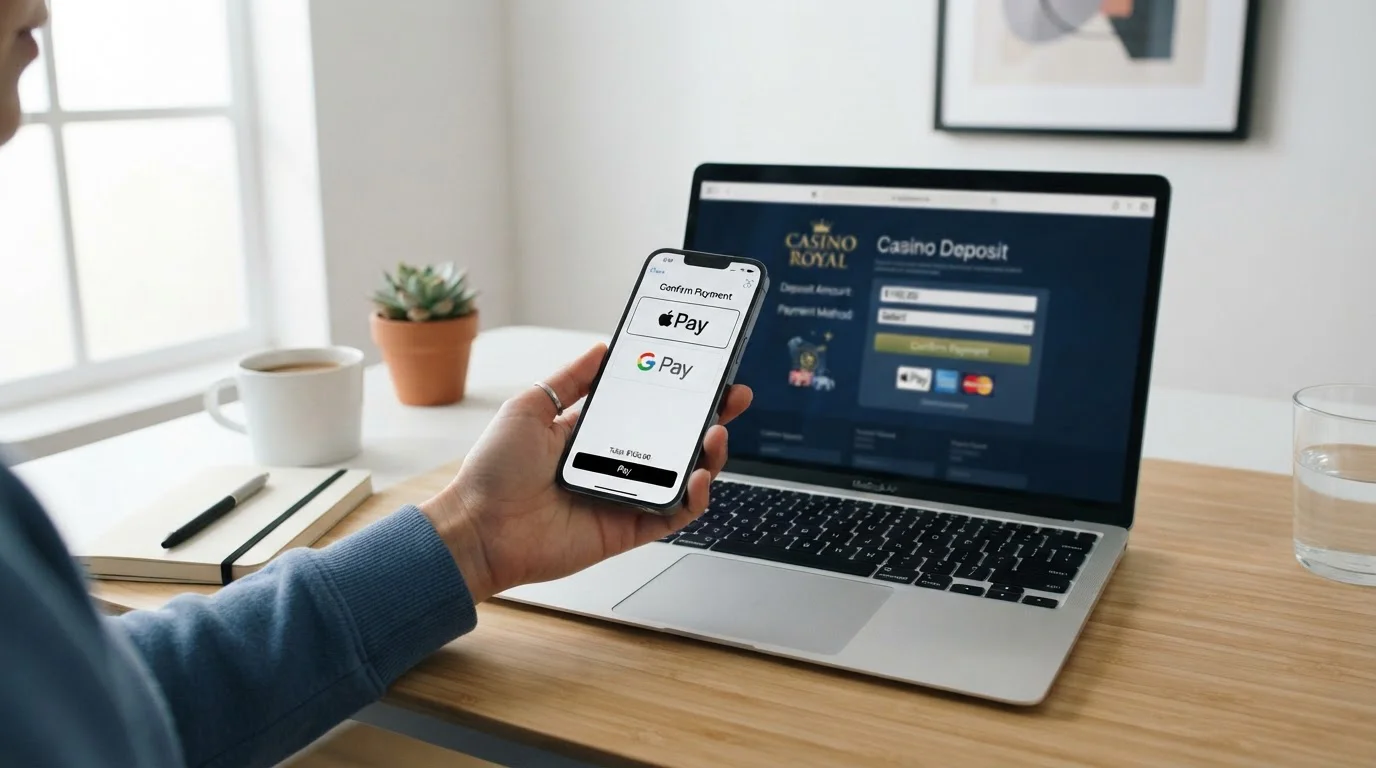
Three mobile payment methods operate at UK casinos: Apple Pay, Google Pay, and pay-by-mobile (Boku). The first two turn deposits into a thumbprint but don’t support withdrawals. The third charges your phone bill and caps you at £240 a month.
Apple Pay
Apple Pay launched in the UK in July 2015 (less than a year after the US debut). Integrates with Apple Wallet on iPhone, iPad, and Apple Watch. Deposits authenticate via Face ID or Touch ID — faster than typing card details. The underlying mechanism is tokenisation: Apple Pay generates a device-specific token representing your linked debit card, so the casino never sees your actual card number.
Deposits are instant. Minimum £10, maximum £3,000 per transaction, with no fees and bonus eligibility at operators that accept Apple Pay.
Withdrawals are not supported. Apple Pay is a push-payment method for merchants. Payment networks don’t allow merchant-initiated refunds or withdrawals back through Apple Pay. Your casino winnings return to the debit card linked to your Apple Pay wallet, processed as a standard card withdrawal (one to three working days).
Acceptance grew through 2024–2026 as mobile gambling surged. Examples of UKGC operators supporting Apple Pay: BoyleSports, William Hill, Betway, 888 Casino, Highbet. Not yet universal — smaller operators lag on mobile wallet integration.
Setup is straightforward if you already use Apple Pay for retail purchases. Add a UK debit card to Apple Wallet, select Apple Pay at the casino cashier, authenticate via Face ID or Touch ID, and the deposit clears. No separate account registration.
Google Pay
Google Pay is the Android equivalent of Apple Pay. Launched in 2015 as Android Pay (successor to Google Wallet), rebranded to Google Pay in 2018. Works on Android devices and Chrome browser (though casino integration typically targets Android). Deposits authenticate via fingerprint, PIN, or pattern unlock.
Deposits clear instantly. Minimum £10, maximum £3,000 to £5,000 typical, with no fees and full bonus eligibility. Withdrawals are not supported — same payment-network limitation as Apple Pay. Winnings return to the linked debit card as a standard card withdrawal.
Acceptance parallels Apple Pay. Operators adding mobile wallet support usually integrate both Apple Pay and Google Pay simultaneously to cover iOS and Android users. If Google Pay matters to you, check the operator’s cashier page before registering — availability can differ between the app and the desktop site.
Setup requires Google Pay configured on your Android device with a linked UK debit card. Select Google Pay at the casino cashier, authenticate, confirm, and return.
Pay by Mobile (Boku)
Boku Inc. (San Francisco-based, listed on London’s AIM market) operates carrier-billing aggregation for UK casinos. Partners with EE, O2, Vodafone, and Three to enable phone-bill deposits. The user selects pay-by-mobile at the casino cashier, enters their phone number, receives an SMS confirmation, and the charge is added to their monthly phone bill (or deducted from prepay credit).
Deposits post immediately. Minimum £10, maximum £30 per transaction, £240 monthly cap (UK carrier limits, not casino limits). This ceiling is set by UK mobile carriers as an anti-fraud and consumer-protection measure. It makes pay-by-mobile useless for anyone depositing more than £60 a week.
Fees are zero at casino cashier level, but carrier billing carries a 15–20% processing charge that can be passed on to you. It never appears in the casino cashier — only on your bill (if you deposit £10, your phone bill may show £11.50, while the casino receives £10 and the carrier keeps £1.50). Bonus eligibility varies — some operators exclude pay-by-mobile due to the low transaction amounts and deposit-only nature.
Withdrawals are not supported. Pay-by-mobile is deposit-only by design. Casino winnings must be withdrawn via an alternative method (debit card, e-wallet, bank transfer). Users must add and verify a withdrawal method before cashing out.
The £240 monthly cap is both the appeal and the limitation. Casual mobile players appreciate the natural spending ceiling as a responsible gambling guardrail. Anyone depositing more than £60 a week hits the cap and must use debit cards or e-wallets instead.
Boku dominates UK casino carrier billing. Founded 2009, listed on AIM in 2017. Partnerships with all big-four UK carriers. Other carrier-billing providers exist but lack Boku’s market penetration at UKGC casinos.
Bank Transfers and Open Banking: High Limits and Instant Verification
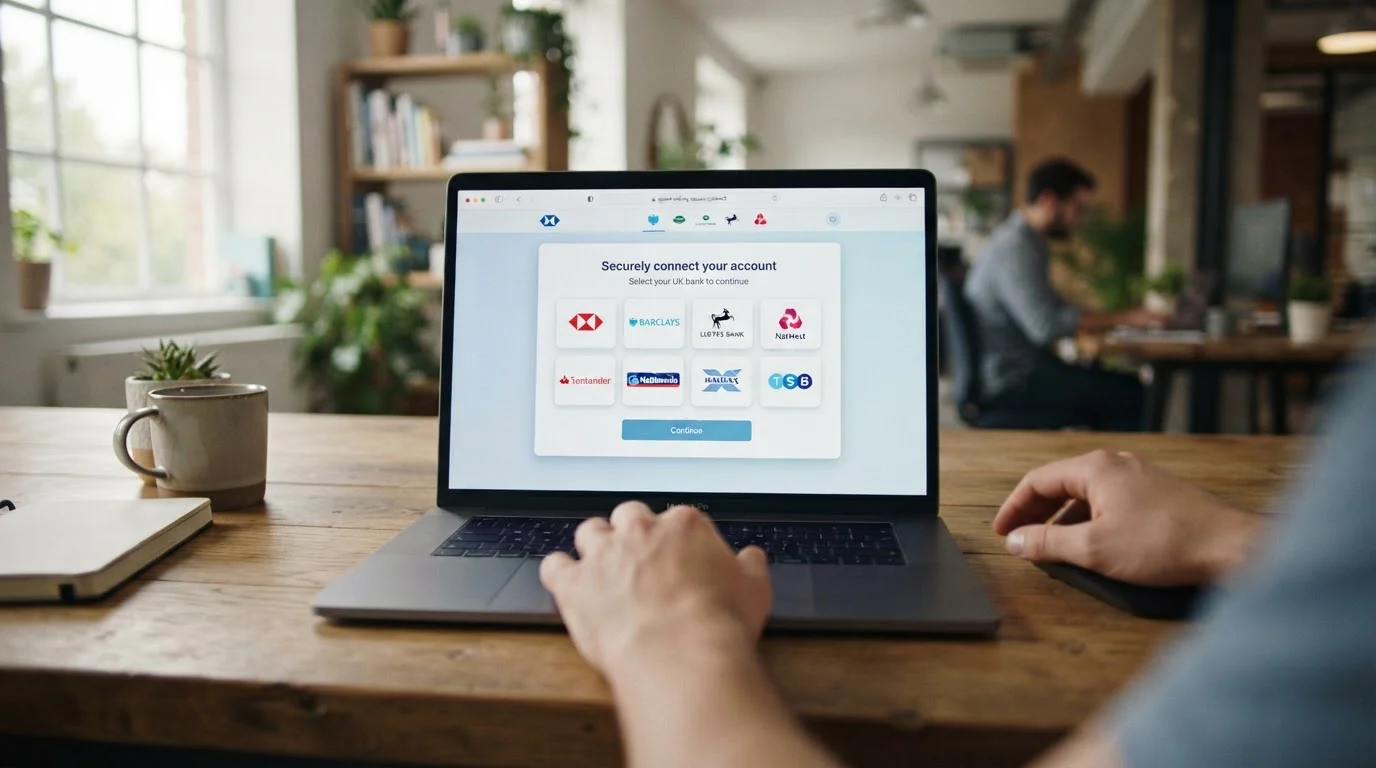
Bank-to-casino transfers come in three flavours: manual bank transfer (slow, legacy), Open Banking via Trustly (instant, automated), and Pay N Play (no-registration casino UX using Open Banking identity verification). The first is obsolete. The second is fast. The third is the cleanest onboarding flow in UK gambling.
Standard Bank Transfer
Standard bank transfer means you manually initiate a Faster Payments transfer from your UK bank account to the casino’s bank account. The operator gives you their bank details (account number, sort code, and a unique reference code to match your payment). You log into your banking app, set up the payee, enter the amount, include the reference, and send. The casino matches the reference to your account and credits your deposit.
Deposits take same-day to two days (Faster Payments clears same-day between UK banks, but casinos process incoming transfers manually once or twice daily). Withdrawals take three to seven working days (the casino initiates a bank transfer to your account, processing time depends on their finance team’s workflow). Minimum deposit £10–£20 (higher than cards or e-wallets due to manual processing overhead). Maximum deposit £10,000 to £100,000 (bank transfer is the high-limit option for players depositing five or six figures). There are no casino-level fees, and UK domestic bank transfers are free.
Standard bank transfer is universal — every player with a UK bank account can use it. But it’s manual, slow, and exposes your full bank details (account number, sort code, and account holder name) to the casino. Open Banking replaced it for speed and convenience. Legacy players still use it for high-limit deposits where card and e-wallet maximums are too restrictive.
Open Banking and Trustly
Open Banking launched in the UK in January 2018 as the UK implementation of PSD2 (the EU’s second Payment Services Directive). It requires the big-nine UK banks to provide standardised APIs that let third-party payment providers access account data and initiate payments with the account holder’s consent. Trustly Group AB (Stockholm, founded 2008) is the dominant Open Banking payment provider for UK casinos.
The flow: you select Trustly (or “Instant Bank Transfer” or “Pay by Bank”) at the casino cashier, choose your bank from a list, get redirected to your bank’s login page, authenticate via your banking app or credentials, confirm the payment, and return to the casino with the deposit complete. The entire process takes 30 seconds. No typing card details. No separate e-wallet registration. Direct bank-to-casino transfer authenticated by your bank.
Deposits are instant. Withdrawals are same-day to one hour typical. Betway delivered a Trustly withdrawal in 50 minutes during independent testing. That’s faster than debit cards, competitive with e-wallets, and the fastest bank-transfer option available. Minimum deposit £10. Maximum deposit £10,000 to £100,000 (same high-limit capability as manual bank transfer). There are no fees at casino level, and deposits qualify for welcome bonuses.
Security is bank-level. You authenticate via your bank’s own login system. Trustly never sees your banking credentials. The casino never sees your bank account number — they receive a payment confirmation from Trustly, and Trustly handles the transfer. This is cleaner than giving a casino your card number or bank details.
Trustly expanded UK casino partnerships through 2024–2026. Most mid-tier and top-tier UKGC operators now integrate Trustly. Smaller operators are slower to add it due to integration costs.
Pay N Play: No-Registration Casinos
Pay N Play is a branded UX technology (not a separate payment method) that uses Open Banking identity verification to eliminate casino registration forms. The flow: you visit a Pay N Play casino, click “Deposit,” select your bank, authenticate via Open Banking, and the casino pulls your name, date of birth, and address from your bank’s records during the authentication handshake. Your account is created automatically. You deposit. You play. Withdrawals return to the same verified bank account. No signup form. No uploading documents for KYC. Identity verification happens at deposit via your bank’s data.
This is the cleanest onboarding flow in UK online gambling. Traditional casinos require ten minutes of typing personal details, email verification, password creation, and identity checks before you can play, plus document uploads if the operator asks for them. Pay N Play casinos skip most of it. The trade-off: you must have a UK bank account that supports Open Banking (all major UK banks do as of 2026, but some challenger banks are slower to implement the APIs).
Pay N Play originated in Sweden circa 2015 with Trustly-powered casinos. UK operators adopted it from 2019 onward. Not every UK casino is Pay N Play — most still use standard registration flows. Operators marketing Pay N Play explicitly advertise it (“No registration,” “Instant play”). Zimpler and some Klarna implementations also support no-registration flows similar to Trustly’s Pay N Play model.
Deposits and withdrawals use the same Open Banking rails as standard Trustly: instant deposits, same-day withdrawals, £10 minimum, £10k–£100k maximum, zero fees. The benefit is purely UX — faster onboarding, no password to remember, no worry about forgetting your login.
Klarna
Klarna Bank AB (Stockholm, founded 2005) is a buy-now-pay-later giant in e-commerce. Klarna’s casino offering is instant bank transfer via Klarna Pay Now (not buy-now-pay-later — BNPL for gambling is restricted by UKGC responsible gambling rules and would be analogous to the banned credit card use). Pay Now uses Open Banking rails similar to Trustly.
Money lands within seconds. Withdrawals are same-day typical. Minimum deposit £10, maximum £5,000 to £25,000, with zero fees and bonus eligibility intact. Acceptance at UK casinos is niche — Klarna focused on e-commerce and treats gambling as a secondary vertical. Trustly dominates Open Banking casino integration.
Setup requires no separate Klarna account if you’re using Pay Now for a one-off casino deposit. Select Klarna at the cashier, choose your bank, authenticate via Open Banking, and the payment clears. Klarna’s BNPL product (Pay Later) is not offered for gambling transactions.
Zimpler
Zimpler (Swedish fintech, founded 2012) is a mobile-first instant banking provider. Similar to Trustly but targets mobile casino players with SMS-based authentication rather than full Open Banking redirect flows. Deposits clear instantly. Withdrawals are same-day typical. Minimum £10, maximum £5,000 to £25,000, charged at no fee and bonus-eligible. Zimpler also supports Pay N Play-style no-registration flows at some operators.
Acceptance at UK casinos is narrower than Trustly. Zimpler focuses on Nordic markets; UK is secondary. Mobile-focused operators integrate Zimpler for players who prefer app-based banking over web redirects.
What is Open Banking and how does it work for casino deposits?
Open Banking is a UK framework (launched January 2018 under PSD2) requiring banks to offer standardised APIs for payment providers. Trustly, Klarna and Zimpler use them for instant transfers: you pick your bank, authenticate on its page, confirm, and return. No card number, no wallet registration. Deposits are instant; withdrawals same-day.
Withdrawal Speed Compared: Which Methods Pay Fastest?
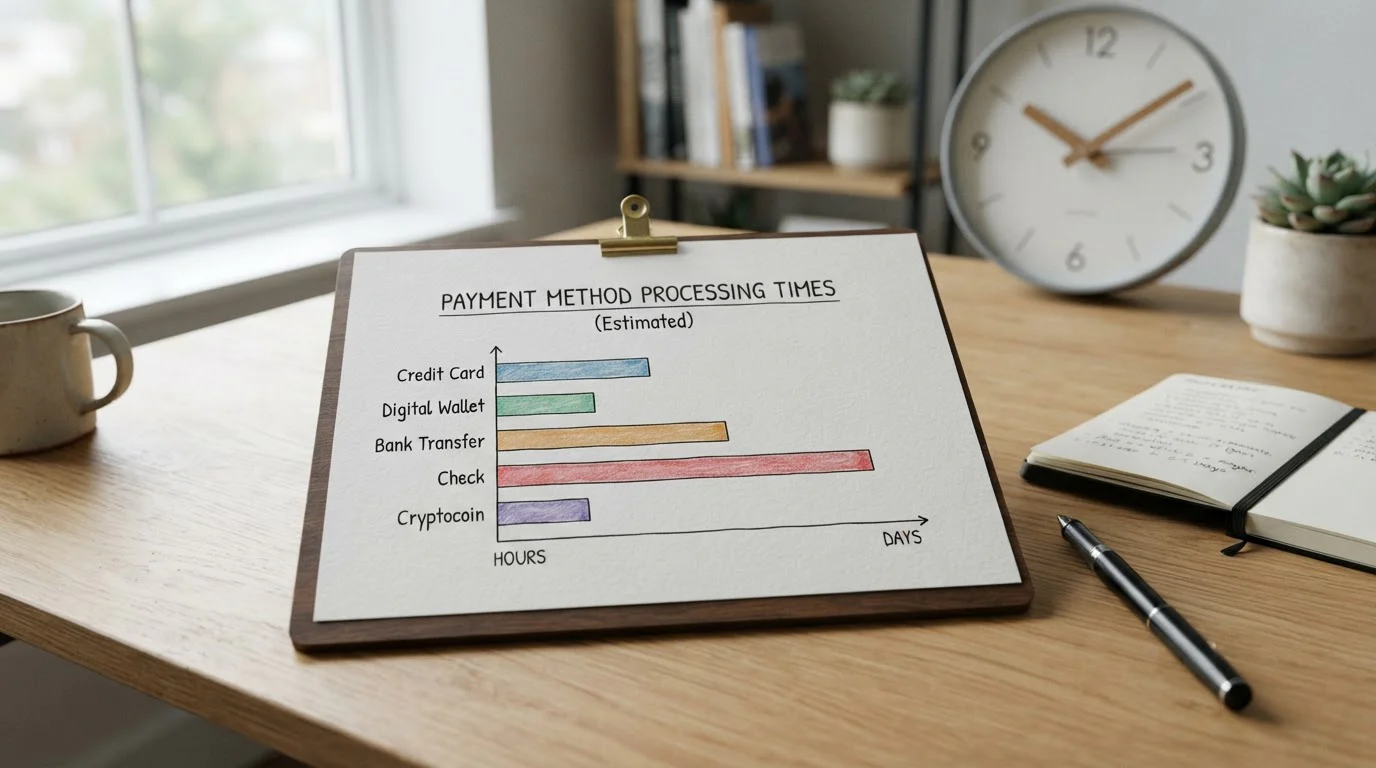
Withdrawal speed determines how fast you get paid. Deposit speed is uniform — everything except manual bank transfer clears instantly. Withdrawal speed varies by hours and days. The table below ranks methods by typical withdrawal time and names the fastest operators for each method.
| Payment Method | Typical Withdrawal Time | Fastest Operators (with concrete times) |
|---|---|---|
| PayPal | 35 min–4 hours | Casumo (35 min), PokerStars (under 3 hours), Grosvenor (under 3.5 hours) |
| Open Banking (Trustly) | 50 min–same-day | Betway (50 min), typical same-day at Trustly-integrated operators |
| Skrill | 45 min–24 hours | Ladbrokes (45 min), median 2–12 hours |
| Neteller | 2–12 hours | Similar to Skrill, median 2–12 hours |
| MuchBetter | 2–24 hours | Median 6–12 hours |
| Jeton | 2–24 hours | Median 6–12 hours |
| AstroPay | 2–24 hours | Median 6–12 hours |
| Klarna | Same-day | Same-day typical |
| Zimpler | Same-day | Same-day typical |
| Visa/Mastercard Debit | 1–3 working days | William Hill Visa Fast Funds (4 hours), standard 1–3 days |
| Bank Transfer | 3–7 working days | Standard processing, no fast-track option |
| Apple Pay | Not supported | Withdrawal to linked debit card (1–3 days) |
| Google Pay | Not supported | Withdrawal to linked debit card (1–3 days) |
| Pay by Mobile (Boku) | Not supported | Must use alternative method |
Three variables affect actual withdrawal time beyond payment method: casino approval speed (instant vs 24-hour manual review), KYC verification status (a first withdrawal may trigger document requests, subsequent withdrawals are faster), and payment-method processing time. The times above assume approved request from a verified account. Unverified accounts add 24–48 hours for document review.
Fast-withdrawal operators minimise the approval/pending period. Casumo, PokerStars, and Betway process e-wallet and Open Banking withdrawals with near-instant approval for verified accounts. Slower operators impose 12–24-hour pending periods even for fast methods, negating the speed advantage.
If payout speed is the priority, the strategy is: choose an operator known for fast processing (Casumo, PokerStars, Grosvenor, Betway), complete KYC verification immediately after first deposit, and withdraw via PayPal, Trustly, or Skrill. That combination can deliver payouts within hours — sometimes under one — for recreational amounts (£100–£500). Larger withdrawals (£5k+) may trigger additional anti-money-laundering checks regardless of method, adding manual review time.
Can I withdraw to a different payment method than I deposited with?
Sometimes. UKGC anti-money-laundering rules return winnings via your deposit method up to the amount deposited. Deposit £100 by debit card, win £500, and the first £100 returns to that card; the remaining £400 may go elsewhere at operator discretion. Deposit-only methods like Apple Pay need an added withdrawal method.
Deposit Limits, Fees, and Bonus Eligibility
Three secondary decision factors: how much you can deposit per transaction, whether you pay fees, and whether your deposit qualifies for the welcome bonus. The comparison table at the top of this guide covers these, but the nuances matter.
Minimum and Maximum Deposit Limits
Most methods accept £5–£10 minimums. PayPal, MuchBetter, Jeton, AstroPay, Apple Pay, Google Pay, pay-by-mobile, bank transfer, Open Banking, Klarna, and Zimpler all set £10 floors. Debit cards (Visa/Mastercard) and e-wallets (Skrill/Neteller) drop to £5 at some operators. Bank transfer minimums sit higher (£10–£20) due to manual processing overhead.
Maximum deposits separate casual players from high-rollers. Debit cards cap at £5,000 to £10,000 per transaction. PayPal caps at £5,000 to £25,000. MuchBetter, Jeton, AstroPay, Klarna, and Zimpler sit at £5,000 to £25,000. Skrill and Neteller support £10,000 to £100,000 (six-figure deposits for high-rollers). Bank transfer and Open Banking support £10,000 to £100,000 (the high-limit option when cards and e-wallets are too restrictive).
Pay-by-mobile is the outlier: £30 per transaction, £240 monthly cap. That ceiling is set by UK mobile carriers, not casinos. It’s fine for casual mobile players (£60 weekly budget) and useless for anyone depositing more.
Operators layer their own limits on top of payment-method ceilings. A casino might accept PayPal but cap PayPal deposits at £5,000 even though PayPal itself supports £25,000. Check the operator’s deposit page for actual limits.
Payment Method Fees
Fees at casino cashier level are zero for all fourteen methods. You never pay a percentage or flat fee to the casino for depositing or withdrawing. But three e-wallets charge fees at the provider level: Skrill charges 1–2% when you transfer from your Skrill balance to your bank account. Neteller charges 1–2% from Neteller to bank. PayPal charges 3–4% currency conversion on non-GBP transactions (irrelevant at UK-facing GBP casinos, but relevant for international use).
Pay-by-mobile invisibly charges 15–20% (mobile carriers bill you £11.50 for a £10 casino deposit, keeping the £1.50 difference as a processing fee). That fee never appears on the casino cashier — you only see it on your phone bill. It’s a hidden cost of the convenience.
Debit cards, Apple Pay, Google Pay, bank transfer, Open Banking, MuchBetter, Jeton, AstroPay, Klarna, and Zimpler are genuinely zero-fee from deposit to bank account withdrawal.
Which Payment Methods Qualify for Welcome Bonuses?
Debit cards, PayPal, Apple Pay, Google Pay, bank transfer, Open Banking (Trustly), Klarna, and Zimpler qualify for welcome bonuses at every operator that accepts them, and MuchBetter qualifies at most. Deposit with any of these and your welcome bonus should land.
Skrill and Neteller are excluded from welcome bonuses at roughly 60–70% of UKGC operators. Deposit with Skrill or Neteller and you’ll receive your deposit funds but no bonus match. Some operators still honour Skrill/Neteller bonuses, but it’s the minority. Always check the bonus terms before depositing.
Jeton and AstroPay bonus eligibility varies. Some operators treat them as standard e-wallets (bonus-eligible), others exclude them. Check the terms.
Pay-by-mobile bonus eligibility varies due to the £30 transaction cap. Welcome bonuses often require £10–£20 minimum deposits, which pay-by-mobile supports, but some operators exclude it due to the deposit-only nature and low limits.
Are there any fees for depositing or withdrawing at UK casinos?
Casinos charge zero fees for deposits and withdrawals across all fourteen methods. But Skrill and Neteller take 1–2% when you move money from the e-wallet to your bank, and pay-by-mobile carries a 15–20% carrier charge shown on your phone bill. PayPal adds 3–4% only on non-GBP transactions. Everything else is genuinely free.
What are the minimum and maximum deposit limits at UK casinos?
Minimums are £5–£10 for most methods; bank transfers sit at £10–£20. Pay-by-mobile caps transactions at £30 and £240 a month. Maximums vary: debit cards £5k–£10k, PayPal £5k–£25k, Skrill and Neteller £10k–£100k, and bank transfer or Open Banking £10k–£100k. High-rollers use bank transfer, Open Banking or the big e-wallets.
UK Casino Payment Regulations: Credit Card Ban and UKGC Rules
UKGC payment rules shape which methods work, how verification happens, and why credit cards disappeared in April 2020. Three regulatory layers matter: the credit card ban, affordability checks, and KYC verification requirements.
Why Are Credit Cards Banned at UK Casinos?
Credit cards were banned at all UKGC-licensed gambling operators on 14 April 2020 under LCCP section 5.1. The ban covers every brand: Visa credit, Mastercard credit, American Express and Diners Club. It applies to casinos, betting, bingo and poker, and blocks indirect use, so casinos cannot accept deposits from credit-funded e-wallets.
The rationale: UKGC consumer research found credit card gamblers were at significantly higher risk of problem gambling. Gambling on borrowed money compounds losses. Players using credit to chase losses fall into debt spirals. The ban was framed as a harm-reduction measure.
Debit cards were unaffected. Debit cards use your own funds (money already in your bank account). Credit cards use borrowed funds. The UKGC drew the line at borrowing to gamble. Buy-now-pay-later services like Klarna offer a loophole in theory (you could fund a Klarna payment with credit later), but Klarna’s casino integration uses Pay Now (instant bank transfer, not deferred payment), so the credit ban isn’t circumvented in practice.
Offshore operators (Curaçao-licensed, MGA-licensed in some cases) still accept credit cards from UK players. Those operators don’t hold UKGC licences and aren’t subject to UK regulations. Using them is legal for UK players (the Gambling Act 2005 targets unlicensed operators, not consumers), but they operate without UKGC consumer protections, approved dispute resolution, or any disclosure of how player funds are protected.
Alternatives to credit cards: debit cards, e-wallets funded by debit cards or bank accounts, Open Banking direct from your bank account, bank transfer. Any of the fourteen methods listed in this guide work at UKGC casinos without triggering the credit ban.
UKGC Payment Rules and Affordability Checks
The UKGC tightened affordability checks in 2025–2026 as part of broader gambling reforms. Checks now start at lower cumulative deposit or loss levels than before, and each operator sets its own triggers based on its risk assessment, so the point at which you are asked for documents differs between casinos. Operators must now request financial documents (bank statements, payslips, tax returns) at lower cumulative deposit or loss levels, and block further deposits until the player proves affordability.
Payment implications: operators enforce stricter deposit limits at payment-method level to avoid triggering affordability thresholds. Some set daily, weekly, or monthly deposit caps regardless of payment method. Players hitting cumulative thresholds face withdrawal delays while additional verification completes. High-volume players experience this friction more than casual players.
Other recent reforms introduced online slot stake limits (£5 per spin, £2 for 18–24-year-olds, from April/May 2025) and a 10x wagering-requirement cap on bonuses (from 19 January 2026); autoplay on online slots has been banned since 2021. Payment methods aren’t directly affected by these changes, but the overall regulatory environment tightened. Crypto acceptance remains minimal at UKGC casinos partly due to affordability-check enforcement difficulty (operators can’t verify crypto wallet balances or source of funds easily).
KYC Verification Requirements
KYC (Know Your Customer) verification is mandatory at all UKGC casinos: since May 2019, operators must verify your age and identity before you can gamble, not just before you withdraw. Operators may also ask you to confirm your address and payment-method ownership, often around your first withdrawal. The process: upload a photo ID (passport or driving licence), proof of address (utility bill or bank statement dated within three months), and proof of payment method (photo of your debit card showing first six and last four digits, or screenshot of your e-wallet account page showing your name and account details).
Verification takes 24–48 hours for manual document review. Some operators use automated ID verification (OCR scan of your passport or licence photo) that completes in minutes. Pay N Play casinos verify identity via Open Banking at deposit, pulling your name and address from bank records, so document uploads aren’t required unless the operator flags your account for additional AML checks.
Upload any outstanding documents immediately after your first deposit. Don’t wait until you request your first withdrawal — a document request at that point adds 24–48 hours to your payout time. Verified accounts withdraw faster because the operator has already confirmed your identity.
Payment methods don’t bypass KYC. Apple Pay and Google Pay tokenise your card number but don’t verify your identity for the casino. Open Banking pulls limited data (name, address) from your bank but operators still require document uploads for higher-risk accounts. Only Pay N Play casinos streamline verification by relying on bank-sourced identity data, and even they may request documents if AML risk scoring flags your account.
Do I need to verify my identity before I can withdraw from a UK casino?
Yes — in fact, earlier. Since May 2019, UKGC rules require operators to verify your age and identity before you can gamble at all, not just before a withdrawal. A first withdrawal may trigger extra requests for proof of address and payment method. Upload anything requested soon after depositing to avoid payout delays.
Why can’t I use my credit card at UK online casinos?
Credit cards were banned at UKGC-licensed gambling operators on 14 April 2020 under LCCP section 5.1. UKGC research found credit-card gamblers faced higher problem-gambling risk, since borrowing to gamble compounds losses. The ban covers Visa, Mastercard, American Express and Diners Club. Debit cards, e-wallets, mobile payments, Open Banking and bank transfer remain available.
Cryptocurrency at UK Casinos: Limited Options
Bitcoin, Ethereum, and other cryptocurrencies barely exist at UKGC-licensed casinos. Regulatory and AML obstacles make crypto acceptance impractical under UKGC rules. Offshore operators handle crypto natively, but those sites operate illegally for UK-facing service.
Crypto’s UKGC problem: source-of-funds verification. UKGC requires operators to verify deposits come from the player’s own funds, not third-party sources or criminal proceeds. Crypto wallet addresses are pseudonymous. Blockchain transactions are public but wallet ownership is opaque. Operators can’t easily trace whether a Bitcoin deposit originated from the player’s own wallet, an exchange, a mixer, or a third party. That makes AML compliance nearly impossible.
Affordability checks are also unenforceable with crypto. UKGC requires operators to assess whether a player can afford their gambling spend. Operators check bank statements and payslips. Crypto wallet balances aren’t visible to the operator. A player could hold £100,000 in Bitcoin and the operator has no way to verify or assess affordability.
Consumer protection concerns compound the regulatory friction. Crypto transactions are irreversible. If a player disputes a deposit or claims their account was hacked, the operator can’t reverse a blockchain transaction the way Visa or PayPal can issue a chargeback. Crypto values fluctuate — a £100 Bitcoin deposit might be worth £90 or £110 by withdrawal time, creating valuation disputes.
A handful of UKGC operators accept crypto via third-party processors that convert to fiat before funds reach the operator. The player deposits Bitcoin, the processor converts to GBP, and the casino receives pounds. This setup technically complies with UKGC rules (the casino only handles fiat), but it’s clunky and rare. Most UKGC casinos don’t bother.
Offshore crypto casinos — Curaçao-licensed, no UKGC registration — handle Bitcoin, Ethereum, Dogecoin, Ripple, Solana, and other coins natively. These operators target international players. They’re illegal under the Gambling Act 2005 for targeting UK consumers without a UKGC licence; enforcement is aimed at operators rather than players, but anyone who plays there has no UKGC consumer protections, dispute resolution, or regulatory oversight.
If you are weighing up an offshore crypto casino, be clear about what you give up. These sites are not part of GamStop, so self-exclusion does not reach them — and self-exclusion exists for a reason. There is no UKGC complaints framework, no approved ADR provider such as IBAS, and no affordability or safer gambling checks. Coins such as Bitcoin Cash, BNB, Dogecoin, XRP and Solana move quickly, but a fast blockchain transfer is no protection if the operator refuses to pay. If gambling is becoming a problem, free support is available from GamStop, GamCare (0808 8020 133) and BeGambleAware. At UKGC casinos, crypto supply remains near-zero; for regulated play, stick to debit cards, e-wallets or Open Banking.
How to Deposit and Withdraw at UK Online Casinos
The mechanics are similar across methods, but timing and approval workflows differ. Three steps: deposit, play, withdraw. Friction lives in the withdrawal-approval process, not the deposit.
Step-by-Step: Making Your First Deposit
Navigate to the casino cashier (usually a “Deposit” button in the top navigation or account menu). Select your payment method from the list. Enter the amount (must meet the method’s minimum, usually £5–£10). Confirm.
The redirect and authentication flow depends on method. Debit cards: type your card number, expiry, CVV, and authenticate via 3D Secure (SMS code or banking-app push notification). E-wallets: redirect to the e-wallet’s login page (PayPal, Skrill, Neteller), authenticate, confirm the transaction, return to casino. Mobile payments: Apple Pay/Google Pay authenticate via Face ID/Touch ID/fingerprint on device. Pay-by-mobile: enter phone number, confirm via SMS. Bank transfer: manual (initiate transfer from your banking app using casino’s bank details) or Open Banking (redirect to bank login, authenticate, confirm, return). Open Banking/Trustly/Pay N Play: select your bank, redirect to bank login, authenticate, confirm, return.
Deposits clear instantly except for manual bank transfer (same-day to two days). The funds appear in your casino account balance immediately. You can start playing.
Step-by-Step: Requesting a Withdrawal
Navigate to the casino cashier, select “Withdraw” or “Cash Out.” Choose your payment method (must match your deposit method for the deposited amount under AML rules, or choose a different method for winnings above the deposited amount). Enter the amount (must meet the minimum withdrawal threshold, usually £10–£20). Submit.
The operator processes the request. First-time withdrawals can trigger additional document checks (ID, address proof, payment-method proof) on top of the age and identity checks completed at sign-up. Manual review takes 24–48 hours. Subsequent withdrawals from verified accounts are faster — some operators approve instantly, others impose 12–24-hour manual review periods even for verified accounts.
After approval, the payment method’s processing time applies. E-wallets (PayPal, Skrill, Neteller, MuchBetter, Jeton, AstroPay): 35 minutes to 24 hours. Open Banking (Trustly, Klarna, Zimpler): 50 minutes to same-day. Debit cards: one to three working days (four hours for Visa Fast Funds where supported). Bank transfer: three to seven working days.
Deposit-only methods (Apple Pay, Google Pay, pay-by-mobile) require you to add a withdrawal method at account setup. Select debit card or e-wallet for withdrawals, complete payment-method verification (upload card photo or link e-wallet account), then request withdrawal to that method.
Common Deposit and Withdrawal Issues
Deposit declined: check 3D Secure authentication completed (declined authentication fails the deposit), verify sufficient balance in your bank account or e-wallet, confirm deposit amount meets minimum threshold, check the payment method is actually accepted at this operator (not all operators accept all fourteen methods). If repeated declines occur, contact casino support — some operators’ payment processors flag certain card BINs or e-wallet accounts as high-risk and block them.
Withdrawal delayed: a first-time withdrawal may trigger additional document checks (24–48 hours). Verify documents are uploaded and approved. Check withdrawal meets minimum threshold (usually £10–£20). Confirm you’re withdrawing via an accepted method (some operators restrict withdrawal methods even if they accept the method for deposits). If the operator imposes a pending period, withdrawals won’t process until that expires (12–24 hours at slow operators, instant at fast ones). Contact support if withdrawal sits “pending” beyond the stated timeframe — occasionally manual reviews get stuck in queue.
Bonus didn’t credit: verify your deposit method qualifies for bonuses (Skrill and Neteller are excluded at most operators). Check deposit amount meets the minimum bonus threshold (usually £10–£20). Confirm you opted in to the bonus before depositing (some operators require clicking a checkbox or entering a bonus code). If bonus still doesn’t credit, contact support immediately — manual crediting is possible if the deposit qualifies.
Payment-method verification rejected: ensure card photo shows first six and last four digits clearly (middle six can be masked), expiry date, and your name. Bank statements and utility bills must be dated within three months. Scanned documents must be full-page (not cropped), legible, and show your full name and address matching your casino account registration. Rejected documents usually result from poor photo quality, outdated dates, or name/address mismatches.
Casino Deposit Methods UK 2026 — Compare Payment Options
Content created by the «casinopayoptions-uk.com» team