
Best UK Casinos That Accept E-Wallets: PayPal, Neteller & More 2026
 Available in GB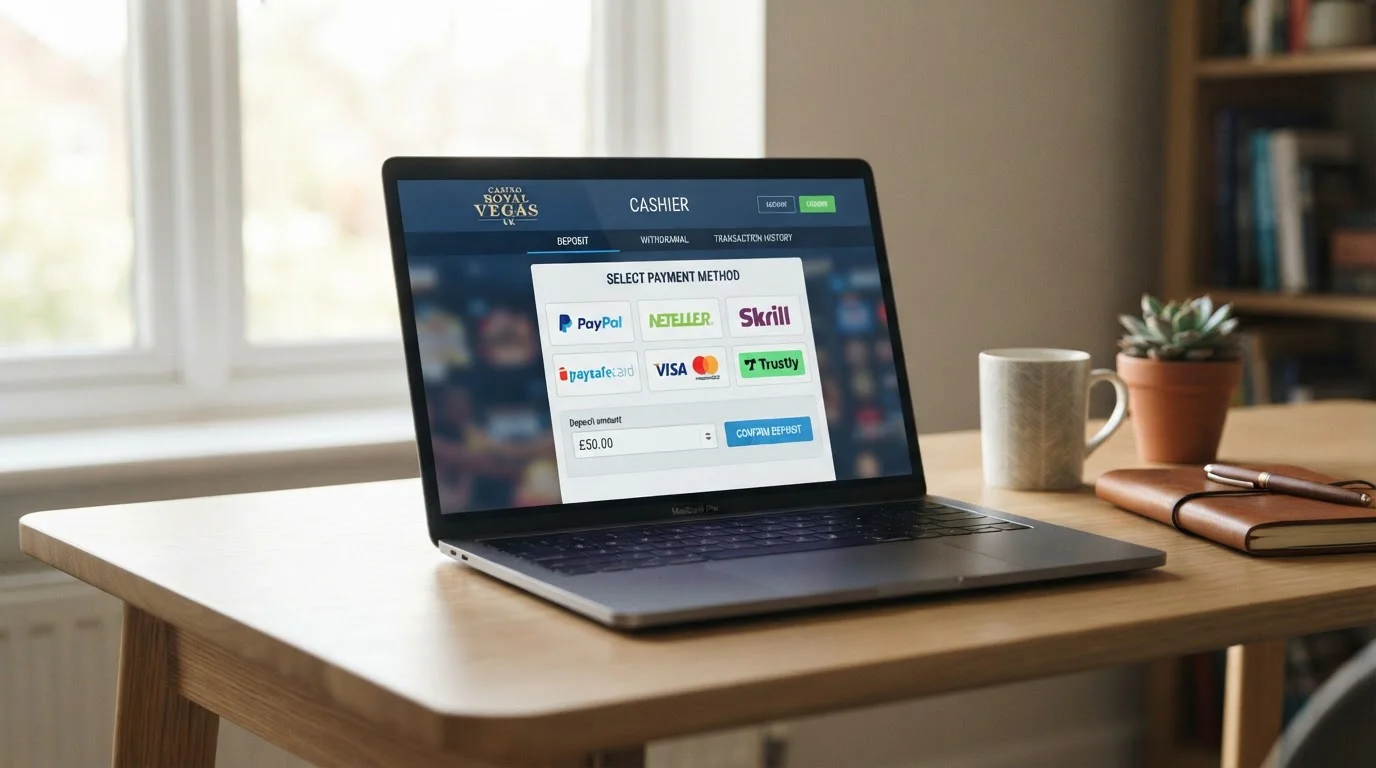
E-wallet casinos became the backbone of UK online gambling the moment the Gambling Commission closed the credit-card door in April 2020. Since then, the shift has become complete. PayPal, Neteller, Skrill, MuchBetter and Payz handle the majority of deposits at UKGC-licensed sites, and withdrawal times that used to span three banking days now land in under two hours at the fastest operators.
This guide maps which UK casinos accept which e-wallets, what those wallets cost in practice, and how fast your money actually moves. The comparison below draws on documented payout windows and operators’ published cashier policies rather than promotional copy. Every casino listed holds a current UK Gambling Commission licence, and you can confirm any operator on the UKGC public register before depositing.
You’ll find which UKGC-licensed operators accept PayPal, Neteller, Skrill, MuchBetter and Payz; how e-wallet withdrawal speeds compare to cards and bank transfers; what deposit and withdrawal limits apply; how the 2020 credit ban affects e-wallet usage today; and which e-wallet suits which kind of player. The operator profiles come first, followed by the wallets themselves, then UK regulation, FCA e-money rules, fees and limits.
Top UK Casinos That Accept E-Wallets in 2026
The table below compares eight UKGC-licensed casinos by e-wallet acceptance, withdrawal speed and minimum deposit. Every operator accepts PayPal, and most also take at least one other major e-wallet. Speeds reflect documented payout windows for e-wallet transactions once your account is fully verified—first withdrawals can take longer because some operators add a manual check on the payment method. Subsequent requests move faster.
| Casino | UKGC Licence | E-Wallets Accepted | Withdrawal Speed | Min Deposit | Key Feature |
|---|---|---|---|---|---|
| Casumo | UKGC-licensed | PayPal, Neteller, Skrill | Under 2 hours (PayPal), instant (Neteller/Skrill) | £10 | Fastest PayPal payouts in UK market—35-minute record |
| MrQ | Active | PayPal, debit cards | 2h 41m avg (PayPal), fastest 97 min | £10 | 60-second withdrawal guarantee or £10 compensation |
| BetMGM Casino | Active | PayPal, Apple Pay, Revolut | Under 24 hours | £10 | £10 single-playthrough bonus activation |
| Grosvenor | Active | PayPal, Skrill, Neteller | Under 3.5 hours (PayPal), 1-4 hours (e-wallets) | £10 | Land-based brand; advertises 15-minute payouts for verified accounts |
| Virgin Bet | Active | PayPal, Apple Pay | 2-12 hours | £30 (PayPal), £5 (cards) | Virgin brand recognition; higher PayPal minimum |
| Betway | Active | PayPal, Skrill, Trustly | Under 2 hours (PayPal), 50 min (Trustly) | £10 | 5,000+ game library |
| Coral | Active (Entain) | PayPal, Skrill, Neteller | Under 4 hours | £10 | Established UK brand since 1926 |
| Ladbrokes | Active (Entain) | PayPal, Skrill, Neteller | 45 min recorded (Skrill) | £10 | Part of Entain fast-payout infrastructure |
PayPal appears for every operator because its acceptance is broadest. Neteller and Skrill work at most UK casinos but aren’t universally listed on every cashier page, so operator-specific testing matters. MuchBetter and Payz acceptance is narrower; those wallets appear in the second comparison table further down.
Casumo
Casumo Services Limited is UKGC-licensed (verify on the public register at gamblingcommission.gov.uk) and has held that licence since the platform launched for UK players. The site runs around 2,000 games from multiple providers, offers a mobile app, and leans into gamification—progress bars, missions, trophies. None of that is unique. What sets Casumo apart in an e-wallet context is payout speed.
Independent testing recorded a PayPal withdrawal completing in 35 minutes. That’s not a promotional claim—it’s the fastest documented e-wallet payout in the UK market as of 2026. The typical window sits under two hours for PayPal; Neteller and Skrill withdrawals process instantly once approved. The casino’s automated payment engine runs around the clock, so requests submitted on weekends or bank holidays clear at the same speed as weekday transactions. First-time withdrawals still require manual KYC review, which adds time, but subsequent requests move through the system without human intervention. Minimum deposit: £10 across all methods.
BetMGM Casino
BetMGM entered the UK market under MGM Resorts International’s ownership and holds a UKGC licence. The platform accepts PayPal, Apple Pay and Revolut at the cashier, all with a £10 minimum deposit. Visa and Mastercard debit cards work as well. Its appeal rests on deposit simplicity and bonus mechanics rather than raw payout speed.
The welcome offer activates on a £10 deposit with a single playthrough requirement. No minimum stake per spin, no specific game restriction for that initial wager—just £10 moved through any eligible casino game once. That structure removes the friction most UK casino bonuses build in through tiered wagering or game weighting. Withdrawal times land within 24 hours for PayPal and other e-wallets after identity verification clears. BetMGM also integrates sports betting into the same account, so players who split time between casino and sportsbook operate from one wallet rather than juggling two.
MrQ
MrQ, operated by Lindar Media Limited under UKGC licensing, built its reputation on no-wagering bonuses and fast withdrawals. The casino’s 60-second withdrawal guarantee is published on its own promotions pages: if the operator fails to process a withdrawal within 60 seconds of the request, it credits the player £10 in cash. That guarantee is capped at one credit per player per day, and it applies only after KYC is complete—but it’s a binding service-level commitment rather than marketing puffery.
Real-world testing across 23 PayPal withdrawals produced an average payout time of 2 hours 41 minutes, with the fastest clocking in at 97 minutes. The gap between the 60-second guarantee and the measured average reflects manual review at the approval stage; the 60-second clock starts when MrQ’s system approves the withdrawal, not when the player clicks “withdraw.” First deposits trigger a 100-free-spins offer on Big Bass Splash (10p per spin, 48-hour expiry). All winnings from those spins land as withdrawable cash with no wagering applied—a no-strings structure that’s rare enough in the UK market to matter. Minimum deposit: £10.
Grosvenor Casino
Grosvenor Casinos is the online arm of the Rank Group’s land-based casino chain, operating under UKGC licensing since the platform’s UK launch. The site accepts PayPal, Skrill and Neteller alongside Visa and Mastercard debit. Grosvenor’s cashier page advertises “most withdrawals processed instantly” and states funds reach the player’s account within 15 minutes for verified players. Independent testing confirmed PayPal withdrawals completing in under 3.5 hours; e-wallet payouts generally land between one and four hours after approval.
The land-based integration gives Grosvenor an edge for players who visit physical casinos as well—loyalty points accumulate across both channels, and some promotions bridge online and retail play. The game library leans toward slots and live dealer tables rather than niche or indie titles. E-wallet withdrawals move faster than debit card payouts (1-3 business days) and significantly faster than bank transfers (up to five working days). Minimum deposit: £10 across all payment methods.

Virgin Bet
Virgin Bet operates under UKGC licensing and carries the Virgin brand’s consumer recognition into online gambling. The platform combines casino and sports betting (34+ sports markets) in one account. Payment methods include PayPal, Apple Pay, Visa, Mastercard and Pay by Bank (Open Banking). Its pull rests on brand trust and a clean user interface.
One quirk stands out: PayPal deposits require a £30 minimum, while Visa, Mastercard and Apple Pay start at £5. That £30 floor is higher than almost every competitor’s PayPal minimum, and Virgin Bet’s deposit guide confirms it explicitly. PayPal withdrawals process between 2 and 12 hours once identity verification clears. The higher deposit floor might deter small-stakes players, but the Virgin brand and the sports-casino integration appeal to users who already trust the name from airlines, mobile networks or gyms. The casino’s welcome offer varies by promotion cycle—check the current front page for active terms.
Betway
Betway Limited holds UKGC licensing and operates one of the larger game libraries among UK-licensed casinos: over 5,000 titles across slots, live dealer tables and instant-win games. The cashier accepts PayPal, Skrill, Trustly and debit cards. PayPal withdrawals complete in under two hours typical; Trustly payouts recorded at 50 minutes in independent speed tests. Its strengths are game depth, payment choice and mobile experience.
The platform integrates sports betting and esports alongside casino, so players who follow football, tennis or CS2 can operate from a single balance rather than splitting funds across accounts. Withdrawal limits and speed depend on the payment method—e-wallets process faster than debit cards, which take 1-5 business days. Betway’s KYC process requests documents at signup rather than at first withdrawal, which front-loads verification but removes friction when it’s time to cash out. Minimum deposit: £10 across all methods.
Coral
Coral operates under Entain group licensing and has been part of the UK betting landscape since 1926, though the online casino launched much later. The platform accepts PayPal, Skrill, Neteller and debit cards. E-wallet withdrawals process within four hours on average, though exact timing varies by method and by the casino’s internal review queue at the time of request. Coral integrates sports betting and live betting heavily—the casino shares branding and login credentials with Coral’s sportsbook, so users with existing Coral betting accounts can use the same wallet for casino play.
Entain’s fast-payout infrastructure supports multiple brands (Ladbrokes, Coral, Bwin UK among them), and withdrawal processing benefits from that shared technical stack. The game library spans slots, table games and a modest live dealer section. Coral’s brand recognition in UK sports betting carries over to the casino side; players who trust the name for football accumulators often extend that trust to roulette and blackjack. Minimum deposit: £10.
Ladbrokes
Ladbrokes, founded in 1886 as a commission agent for horse racing, now operates online under Entain group licensing. The casino accepts PayPal, Skrill, Neteller and debit cards. Independent withdrawal testing recorded a Skrill payout completing in 45 minutes—one of the fastest e-wallet payouts documented across the UK market. Typical e-wallet withdrawals land within a few hours once KYC approval is done; debit card withdrawals take longer (1-3 business days).
Ladbrokes shares Entain’s technical backbone with Coral, so the payout infrastructure and wallet integration work the same way. The platform combines casino, sports betting, bingo and poker under one login, appealing to players who rotate between gambling verticals rather than sticking to slots alone. The game library is broad but not cutting-edge—expect established slots from NetEnt, Pragmatic Play and similar studios rather than indie releases or exclusive titles. For e-wallet users, Ladbrokes offers the same speed advantage over debit cards that most UKGC sites do: hours instead of days. Minimum deposit: £10.
Which specific UKGC-licensed casinos accept PayPal, Neteller, Skrill, MuchBetter, and Payz in 2026?
PayPal works at a large number of UKGC-licensed casinos, including all eight profiled above. Neteller and Skrill acceptance is similarly broad—most UK-licensed operators support at least one, often both. MuchBetter and Payz (formerly ecoPayz) have narrower but growing acceptance. The operator table above shows which wallets work where.

E-Wallet Payment Methods Explained
Each e-wallet handles deposits and withdrawals slightly differently, and each suits a different kind of player. PayPal dominates casino acceptance because almost everyone already has an account. Neteller and Skrill cater to players who want a dedicated gambling wallet with fast payouts. MuchBetter appeals to mobile-first users who prefer app-based authorisation over desktop logins. Payz serves multi-currency players and frequent cashiers through a five-tier VIP structure. The table below compares all five across acceptance, speed, fees and regulatory status.
| E-Wallet | UK Casino Acceptance | Typical Withdrawal Speed | Deposit/Withdrawal Fees | FCA Status | Best For |
|---|---|---|---|---|---|
| PayPal | A large number of UKGC casinos | Under 2 hours | £0 at casinos; wallet-to-bank varies | FCA-regulated | Players wanting maximum casino choice |
| Neteller | Wide (most UKGC operators) | 24 hours typical, some instant | £0 at casinos | FCA e-money authorisation | Players wanting a dedicated gambling wallet |
| Skrill | Wide (most UKGC operators) | 24 hours typical | £0 at casinos; 1.99% wallet-to-card, 2.99% FX | FCA e-money authorisation | Players already using Skrill for other purposes |
| MuchBetter | Growing (solid UKGC group) | 24-48 hours | £0 at casinos | FCA e-money authorisation | Mobile-first players wanting biometric auth |
| Payz | Accepted at UKGC operators | Varies by VIP tier | £0 casino deposits; FX fees by tier | FCA-authorised | Multi-currency users, frequent cashiers |
The “best for” column simplifies, but the pattern holds: pick your wallet based on what you already use, how often you move money, and whether you want a separate wallet balance for your casino budget. If you’re starting from scratch with no e-wallet account yet, PayPal offers the smoothest onboarding and the widest casino acceptance. If you’re chasing the absolute fastest withdrawal, Neteller and Skrill edge ahead at the few casinos where near-instant e-wallet payouts are live (Casumo’s instant Neteller and Skrill payouts, Ladbrokes’ recorded 45-minute Skrill payout).
PayPal
PayPal sits at the top of UK casino payment methods by acceptance and by user familiarity. A large number of UKGC-licensed casinos list PayPal in their cashiers, including all the major operators and most mid-tier sites. Deposits hit the casino account instantly. Withdrawals complete in under two hours at the fastest operators (Casumo’s 35-minute record stands as the benchmark), more typically within 24 hours. Casinos don’t charge PayPal fees on either end—no deposit fee, no withdrawal fee. What PayPal charges for moving money from the wallet to your bank account depends on your own PayPal settings and your bank, but that’s a separate transaction outside the casino’s control.
The 2020 credit card ban affects PayPal in one specific way: if you fund your PayPal wallet with a credit card, that transaction won’t clear at a UKGC casino. The ban reaches through the e-wallet layer. PayPal funded by a debit card or by a direct bank link works fine—it’s the credit-card source that’s blocked. Most players fund PayPal from their current account anyway, so the restriction rarely bites in practice. PayPal is also regulated by the FCA, though its UK corporate structure differs from the Paysafe wallets; it’s widely trusted and integrated into millions of people’s existing payment habits. That ubiquity makes it the default e-wallet for players who aren’t chasing niche features.
Neteller
Neteller has been a gambling-focused e-wallet since 1999, long enough to predate the smartphone era. It’s owned by Paysafe (which also owns Skrill) and operates under FCA e-money authorisation. Neteller is widely accepted at UKGC-licensed casinos—most operators list it on their cashier page, though not quite as universally as PayPal. Deposits process instantly. Withdrawals typically land within 24 hours, though some casinos (Casumo in particular) offer instant Neteller payouts once KYC is done. Withdrawal limits run high: up to £40,000 per transaction according to published Neteller documentation, well above what most recreational players will ever request.
One reason players pick Neteller over PayPal is budgeting. Money moved into the wallet becomes a fixed balance for gambling, and the casino never sees your card or bank details. Some players find that a ring-fenced balance makes it easier to stick to a limit—though the casino’s own deposit limits remain the stronger tool. Casinos don’t charge Neteller fees on deposits or withdrawals. What Neteller charges for cashing out from the wallet to your bank depends on your own account settings, but standard usage doesn’t rack up surprise fees the way some less-established wallets do.
Skrill
Skrill is Neteller’s sister service under Paysafe ownership, and the two wallets share much of their backend infrastructure. Skrill also holds FCA e-money authorisation and operates legally in the UK. Casino acceptance is wide—most UKGC operators list Skrill alongside Neteller, though again not quite as universally as PayPal. Deposits are instant. Withdrawals process within 24 hours typical, with some sites offering faster turnaround. The recorded Ladbrokes payout of 45 minutes demonstrates Skrill’s speed potential at operators with automated systems.
Skrill’s fee structure leans slightly more aggressive than Neteller’s. Cashing out from the Skrill wallet to a debit card costs 1.99 percent of the withdrawal amount. International transactions (currency conversion) add a 2.99 percent fee, per Skrill’s published fee schedule. Those fees hit at the wallet level, not at the casino level—casinos don’t charge you to deposit or withdraw via Skrill, but Skrill itself charges when you move money out of the wallet back to your bank. If you’re keeping funds inside the Skrill wallet and using it for multiple online services, the fees never trigger. If you’re depositing to Skrill, spending at a casino, withdrawing winnings back to Skrill, then cashing out to your bank every time, the 1.99 percent bite adds up.
Skrill’s biggest advantage over PayPal is the same as Neteller’s: a ring-fenced wallet balance that keeps card and bank details away from the casino. For players who value that, the 1.99 percent cash-out fee might be an acceptable cost. For players who don’t, PayPal’s zero-fee structure wins.
MuchBetter
MuchBetter launched as a mobile-first e-wallet designed specifically for gambling transactions. It holds FCA e-money authorisation in the UK and operates as a hybrid: the app functions as a prepaid Mastercard and as an instant bank-transfer tool simultaneously. Biometric authorisation (fingerprint or face recognition on your phone) replaces password logins. That design appeals to players who do most of their gambling on mobile and who find desktop-era password management clunky.
UKGC casino acceptance is growing but not yet universal. A solid group of licensed operators list MuchBetter on their cashier pages as of 2026, but you won’t find it at every site the way you would PayPal or Neteller. Deposits process instantly. Withdrawals typically take 24 to 48 hours, slower than PayPal and Neteller at their fastest but still well ahead of debit card timings (1-5 business days). The 2020 credit card ban doesn’t affect MuchBetter because it’s classified as e-money, not as a credit facility. Casinos charge no MuchBetter fees on deposits or withdrawals.
MuchBetter offers cashback incentives through its own loyalty programme—users earn a percentage of transaction volume back as credits in the wallet. That feature is unique among the five wallets covered here; PayPal, Neteller and Skrill don’t run an equivalent cashback scheme. For players who move large volumes through the wallet (frequent deposits, frequent withdrawals, multiple casinos), the cashback might offset the slightly slower withdrawal times compared to PayPal. For occasional players, PayPal’s broader acceptance probably matters more.
Payz (ecoPayz)
Payz was known as ecoPayz until 11 May 2023, when the wallet changed its name. The wallet is FCA-authorised and has operated in the UK e-money space for years. Many UKGC casino cashiers still display the old “ecoPayz” label even though the backend now runs under the Payz brand. The wallet is accepted at a broad range of UK-licensed operators, though not quite as universally as PayPal.
Payz’s distinguishing feature is its five-tier VIP account structure: Classic, Silver, Gold, Platinum, VIP. Each tier adjusts fees for currency conversion, bank withdrawals and other wallet operations. Deposits to UK casinos are free across all tiers—Payz doesn’t charge the player to fund a casino account, and the casino doesn’t charge for accepting Payz. Withdrawal speeds vary depending on the casino and the VIP tier; higher tiers sometimes unlock faster manual review. The wallet supports multiple currencies without forcing conversion at every transaction, so players who gamble in euros, pounds and dollars simultaneously can hold balances in each and spend from the relevant one without eating an FX spread every time.
Payz also offers a prepaid Mastercard tied to the wallet, letting players spend casino winnings at retail without first transferring to a bank. That feature sits outside the scope of casino deposits and withdrawals but adds utility if you’re already using Payz for other purposes. For single-currency UK players who just want fast casino deposits and withdrawals, Payz offers no particular edge over PayPal or Neteller. For multi-currency users or for players who like the idea of tiered VIP benefits, Payz is worth the slightly more complex account setup.
Which e-wallet offers the best combination of speed, casino acceptance, and fees for UK players?
PayPal wins on casino acceptance, listed at a large number of UKGC sites, with withdrawals under two hours at the fastest operators. Neteller and Skrill match or beat it on speed but trail on acceptance, and Neteller is cheaper to cash out. MuchBetter suits mobile-first players, Payz multi-currency users.
How to Deposit and Withdraw with E-Wallets at UK Casinos
E-wallet deposits take five steps. Open the casino cashier. Select your wallet (PayPal, Neteller, Skrill, MuchBetter or Payz). Enter the deposit amount—minimum £5 to £10 at most UKGC operators, £30 at Virgin Bet for PayPal. Confirm the redirect to the wallet’s login page or approve the payment in the wallet’s app. Funds hit your casino account instantly. No manual approval, no pending window, no clearing delay. The money moves in real time because e-wallets settle digitally rather than through bank clearing networks.
Withdrawals add complexity only at the first attempt. Your age and identity were already verified when you opened the account—UKGC rules require that before you can gamble at all—but on your first withdrawal some casinos run extra checks, such as proof of address documents or proof that the e-wallet is in your name (a screenshot of the wallet account). Timing here varies: some casinos clear these checks within hours, others take a business day or longer. Once they clear, the withdrawal processes. Funds land in your e-wallet within the timeframes documented in the operator table above—under two hours for PayPal at Casumo, 24 hours typical at most sites, up to 48 hours for MuchBetter.
Subsequent withdrawals skip those extra checks. You request, the system approves automatically (assuming no red flags), and the payout processes at the casino’s standard e-wallet speed. That’s why players report wildly different withdrawal experiences at the same casino: a first-timer may wait a day for payment-method checks plus the payout window, while a returning player sees the money hit their wallet in under two hours.
How to Make an E-Wallet Deposit
Log into the casino. Navigate to the cashier or deposit page—most UK sites place a “Deposit” button in the top-right corner of the screen or in the account menu. Select your e-wallet from the payment method list. PayPal, Neteller and Skrill usually sit near the top; MuchBetter and Payz appear lower down if the casino supports them. Enter the deposit amount in pounds. The casino displays its minimum (typically £10, sometimes £5) and maximum (usually £5,000 or higher, though most players never approach that ceiling).
Click confirm. The cashier redirects you to the wallet’s login page. For PayPal, that’s the standard PayPal login you’ve seen a thousand times on eBay or elsewhere. For Neteller and Skrill, it’s their respective branded login screens. For MuchBetter, the redirect opens the app on your phone and asks for biometric authorisation. For Payz, you log into the Payz account portal. Enter your credentials, confirm the payment, and the wallet sends you back to the casino. The deposit appears in your casino balance immediately. No pending status, no “awaiting approval”—it’s there. Play starts the moment you’re back at the casino lobby.
Casinos don’t add fees to e-wallet deposits. You deposit £50, the casino credits £50. What the wallet charges (if anything) for funding the wallet itself—transferring money from your bank to PayPal or Neteller—depends on your own bank and wallet settings, not on the casino.
How to Withdraw to Your E-Wallet
Open the casino cashier and navigate to the withdrawal page. Select the same e-wallet you used for deposits—most casinos require withdrawals to go back to the same payment method that funded the account, an anti-money-laundering rule. Enter the withdrawal amount. The casino checks that you’ve met any wagering requirements on active bonuses; if you have, the request goes through. If not, the system blocks the withdrawal until you finish the wagering or forfeit the bonus.
Identity verification happens at signup, before you can deposit or play. Many casinos complete it electronically; if that check fails, you’ll be asked to upload a photo of your passport or driving licence and a recent utility bill or bank statement showing your address. On your first withdrawal, the casino may also ask for proof of payment method—a screenshot of your e-wallet account page showing your name and email. Either way, these checks happen once, not on every payout.
Where documents are needed, the casino reviews them manually. Approval can take a few hours or a full business day depending on the operator’s compliance team workload. Once the checks clear, the withdrawal processes. The casino’s system sends the funds to your e-wallet at whatever speed that casino operates: under two hours at Casumo, 2-12 hours at Virgin Bet, 24 hours typical at most UK sites, 24-48 hours for MuchBetter. The money appears in your e-wallet balance, not in your bank account—you’ll need a second step (cashing out from the wallet to your bank) if you want the funds back in your current account.
First Withdrawal: Identity Verification
UK Gambling Commission rules require every licensed operator to verify a player’s age and identity before that player can deposit or gamble—a rule in force since May 2019. That verification serves two purposes: it confirms you are who you claim to be (identity fraud prevention), and it confirms you’re old enough to gamble legally (the minimum age is 18 in Great Britain). What the first withdrawal adds is a check that the payout destination belongs to you, and any outstanding document request will stall the payout until it’s answered.
Documents that may be requested: government-issued photo ID (passport, driving licence, or national identity card if you’re an EU citizen residing in the UK), proof of address dated within the last three months (utility bill, bank statement, council tax bill), and sometimes proof of payment method (a screenshot of your e-wallet account page or a photo of your debit card with the middle digits obscured). Upload these through the casino’s account portal or email them to the verification team if the site operates that way.
Approval timing varies by casino. Casumo, Grosvenor and MrQ process KYC relatively quickly—often within hours during business days. Smaller operators or sites with lean compliance teams can take a full business day or longer. Weekend submissions usually wait until Monday for review because verification is a manual process requiring a human to examine the documents. Once approved, you won’t need to verify again unless you change payment methods or the casino’s system flags unusual activity months down the line. All subsequent withdrawals process automatically.
How long do e-wallet withdrawals take at UKGC casinos?
After verification, e-wallet withdrawals process between 35 minutes and 48 hours. PayPal at Casumo was recorded at 35 minutes and Skrill at Ladbrokes at 45 minutes, with most PayPal, Neteller and Skrill payouts within 2 to 24 hours. MuchBetter runs 24 to 48 hours; debit cards take 1 to 5 days.
Do I need to verify my identity to withdraw via e-wallet?
Yes, and earlier than you might think. UK Gambling Commission rules require age and identity verification before you can deposit or gamble at any UKGC-licensed casino, whatever the payment method. Your first withdrawal may add a one-off proof-of-payment-method check, after which e-wallet payouts process without further document requests unless something is flagged.
Why are e-wallets faster than debit card withdrawals at UK casinos?
E-wallets skip the bank clearing cycle debit cards require. A card withdrawal takes one to five business days to reach your bank, while an e-wallet payout credits your PayPal or Neteller balance in real time. Casinos also run automated e-wallet payout engines, whereas card payouts often wait in a manual queue.
E-Wallets and UK Gambling Regulations
E-wallets became the primary deposit method at UK casinos after 14 April 2020, when the UK Gambling Commission prohibited credit card deposits at all licensed gambling sites in Great Britain. The ban aimed to prevent players from gambling with borrowed money—a harm-reduction measure rooted in the observation that credit-funded gambling correlated with problem gambling rates and gambling-related debt. The regulation shut down credit cards entirely: no Visa credit, no Mastercard credit, no American Express, not even co-branded cards that blur the credit-debit line.
E-wallets survived the ban because they’re not credit facilities. A player deposits their own money into a PayPal or Neteller account, then spends from that balance. The wallet doesn’t extend credit; it holds funds the player already owns. That distinction kept e-wallets legal under the 2020 rules. The ban does reach through the wallet to the funding source, though: if you try to load your PayPal account with a credit card and then deposit that balance at a UKGC casino, the transaction will fail. The casino’s payment processor detects the credit-card origin and blocks it. Debit-funded e-wallets work fine. Bank-transfer-funded e-wallets work fine. Credit-funded wallets don’t.
The 2020 Credit Card Ban
The UK Gambling Commission announced the credit card ban in January 2020, giving operators three months to remove credit cards from their cashiers. The regulation took effect on 14 April 2020 and remains in force as of 2026. It applies to all forms of remote gambling licensed by the UKGC: online casinos, sports betting, bingo, poker, lottery ticket sales. It applies to land-based gambling as well—credit cards can’t be used at betting shops or physical casinos in Great Britain. The only gambling exemption is non-remote lotteries; non-gambling purchases, such as food at a casino restaurant, fall outside the rule altogether.
The ban’s impact on e-wallet adoption was immediate. In the months following April 2020, PayPal, Neteller and Skrill deposits surged at UK casinos. Debit cards remained legal and remain widely used, but e-wallets offered one feature debit cards couldn’t match: speed on withdrawals. Debit card payouts take one to five business days; e-wallet payouts land in hours. That speed advantage, combined with the regulatory push away from credit, cemented e-wallets as the UK market’s dominant payment method by transaction volume.
E-Wallets as the Legal Alternative
E-wallets work under the 2020 ban because they’re classified as e-money, not as credit. The Financial Conduct Authority regulates e-money institutions in the UK under separate rules from credit providers. Neteller, Skrill, MuchBetter and Payz all hold FCA e-money authorisation, which allows them to issue electronic money and facilitate payments. PayPal, also FCA-regulated, achieves the same functional result: it holds user funds and transfers them on instruction, without extending credit.
The key compliance point for players: fund your e-wallet with a debit card or a bank transfer, not with a credit card, if you plan to use it at a UKGC casino. Most players already do this—PayPal and Neteller both encourage bank-linked funding over credit-funded balances because the former carries lower fraud risk and lower transaction fees on the wallet’s end. The restriction only bites players who habitually fund e-wallets with credit cards for rewards points or cashback, then forget that UK casinos will block those deposits at the payment-processor level.

FCA Regulation of E-Money Institutions
The Financial Conduct Authority oversees e-money institutions in the UK under the Electronic Money Regulations 2011. Those regulations require e-money issuers to safeguard customer funds—holding them in separate accounts from the company’s operating capital so that if the wallet provider goes bust, user balances remain protected. FCA authorisation also mandates anti-money-laundering controls, know-your-customer checks, and financial reporting to the regulator.
Payz is FCA-authorised. Neteller and Skrill operate under Paysafe’s FCA authorisation. MuchBetter holds its own FCA e-money licence. These licences mean the wallets are legally permitted to issue electronic money in the UK, and they’re subject to regulatory oversight designed to protect users. PayPal is likewise regulated by the FCA in the UK and is required to safeguard customer funds under UK law.
For casino players, FCA regulation of e-wallets matters in one practical way: your money in the wallet is held separately from the wallet provider’s business capital, so if the provider fails, you don’t lose your balance. That safeguarding requirement doesn’t prevent all risks—fraud, account lockouts, terms-of-service disputes can still strand funds temporarily—but it removes the largest single risk (the provider spending your money and having nothing left when you ask for it back).
Are e-wallets legal at UK online casinos in 2026?
Yes. E-wallets are legal at every UKGC-licensed casino, and they’re the most widely used deposit method since the April 2020 credit card ban. PayPal, Neteller, Skrill, MuchBetter and Payz all operate legally here. The one restriction is funding: don’t load the wallet with a credit card, or the casino will block the deposit.
Can I use a credit card to fund my e-wallet for casino deposits?
No. The 2020 credit card ban reaches through e-wallets to the funding source. Load your PayPal, Neteller or Skrill account with a credit card, then deposit at a UKGC-licensed casino, and the payment gateway detects the credit origin and blocks it. Fund the wallet with a debit card or bank transfer instead.
E-Wallet Fees, Limits and Processing Times
Casinos don’t charge fees for e-wallet deposits or withdrawals. You deposit £100 via PayPal, the casino credits £100. You withdraw £200 to Neteller, the casino sends £200. The zero-fee structure is standard across UKGC-licensed operators for all five major e-wallets. What e-wallet providers charge for their own services—moving money from the wallet to your bank, currency conversion, account maintenance—depends on the wallet and your usage. Those fees hit at the wallet level, not at the casino level.
Deposit limits are set by the casino, not by the e-wallet. Typical minimums: £5 to £10 at most UKGC sites, £30 at Virgin Bet for PayPal. Typical maximums: £5,000 to £10,000 per transaction, though some casinos go higher for VIP players. Withdrawal limits also vary by casino. Neteller’s published documentation mentions withdrawal limits of up to £40,000 per transaction, but whether a casino allows you to withdraw that much in one go depends on the casino’s own cashier limits, not on Neteller’s capabilities.
Processing times for deposits: instant across all five wallets at all UKGC casinos. Processing times for withdrawals: documented in the operator table at the top of this guide, ranging from 35 minutes (Casumo PayPal) to 48 hours (MuchBetter at most sites). Debit card withdrawals take 1-5 business days for comparison; bank transfers take up to five working days. E-wallets are the fastest option available at UK-licensed casinos as of 2026.
Casino-Side Fees (Deposits and Withdrawals)
UKGC-licensed casinos do not charge players for depositing or withdrawing via e-wallets. The practice is technically legal—nothing in the Gambling Commission’s licence conditions explicitly bans payment-method fees—but market competition has driven fees to zero. If one casino charged £2 per PayPal withdrawal and its competitor charged nothing, players would move to the competitor. As a result, every major UK operator offers zero-fee e-wallet transactions.
That zero-fee structure applies to PayPal, Neteller, Skrill, MuchBetter and Payz. It does not always extend to less common payment methods (some casinos charge for bank wire withdrawals or for niche wallets outside the big five), but for the wallets covered in this guide, expect no fees at the casino level. Check the cashier’s terms page to confirm, but exceptions are rare enough to surprise you when they appear.
E-Wallet Provider Fees
E-wallet providers charge their own fees for certain operations, separate from what the casino does. PayPal’s fee structure for UK users involves no charge for receiving money (so when a casino sends your withdrawal to PayPal, you pay nothing) and variable charges for sending money depending on the recipient and the method. Moving money from PayPal to your UK bank account typically incurs no fee if done as a standard transfer; instant transfers to your debit card cost a small percentage. PayPal’s fee schedule changes occasionally—check their site for current rates.
Neteller charges no fee for receiving withdrawals from casinos. Cashing out from Neteller to your bank depends on your withdrawal method: some options are free, others charge a small flat fee or percentage. Skrill operates similarly but with a documented 1.99 percent fee for cashing out to a debit card and a 2.99 percent charge for international (currency conversion) transactions. Those fees apply when you’re moving money out of the wallet, not when the casino is moving money into it.
MuchBetter’s fee structure is lighter than Skrill’s—no percentage-based cash-out fees by default, though specific withdrawal methods to your bank might carry charges depending on your bank’s policies. Payz’s five-tier VIP system adjusts fees by account level: higher tiers pay lower (or zero) fees on currency conversion and bank withdrawals. The basic principle holds across all five wallets: receiving money from a casino is free; moving money from the wallet to your bank might cost something depending on how you do it.

Typical Deposit and Withdrawal Limits
Deposit minimums at UKGC casinos range from £5 to £10 for most operators. Virgin Bet’s £30 PayPal minimum is an outlier on the high side. Deposit maximums typically land between £5,000 and £10,000 per transaction, high enough that recreational players rarely bump into them. High rollers negotiating higher limits do so directly with the casino’s VIP team, not through the standard cashier interface.
Withdrawal minimums are usually £10 to £20—casinos don’t want players cashing out £3 winnings because the administrative cost of processing the payout exceeds the amount being withdrawn. Withdrawal maximums vary more widely. Some casinos cap withdrawals at £5,000 per transaction or £20,000 per month; others set no explicit ceiling but review large requests manually. Neteller’s published limit of £40,000 per transaction is higher than most casinos allow, so the casino’s own policy will bind before Neteller’s does in practice. For players withdrawing four- or five-figure sums, expect the casino to process the payout in stages: a portion clears immediately (up to the per-transaction limit), and the rest follows in subsequent payouts over days or weeks depending on the casino’s terms.
Do UK casinos charge fees for e-wallet deposits or withdrawals?
No. Every major UKGC-licensed casino processes e-wallet deposits and withdrawals at zero cost to the player: deposit £50 and the casino credits £50; withdraw £200 and it sends £200. The provider may charge for other operations, such as cashing out to your bank or currency conversion, but the casino legs are free.
Choosing the Right E-Wallet for UK Casino Play
The best e-wallet depends on what you already use, how often you gamble, and what you optimise for. If maximum casino choice matters, pick PayPal—a large number of UKGC sites accept it, more than any other wallet. If fastest withdrawals matter, pick Neteller or Skrill and play at a casino with very fast e-wallet payouts (Casumo for Neteller, Ladbrokes for Skrill). If you do most of your gambling on mobile and want biometric login convenience, pick MuchBetter. If you gamble in multiple currencies and want to avoid FX spreads on every transaction, pick Payz. There’s no universal winner; the right wallet matches your existing payment habits and your priorities.
One practical consideration cuts across all five: onboarding friction. If you don’t already have an e-wallet account, creating one adds a signup step before you can deposit at a casino. PayPal is the lowest-friction option here because most UK adults already have an account from eBay, online shopping or splitting bills with friends. Neteller and Skrill require dedicated signups, as do MuchBetter and Payz. That upfront cost (ten minutes of form-filling and email verification) pays off in faster withdrawals and a ring-fenced balance, but if you’re depositing at a casino in the next five minutes and you have no e-wallet yet, PayPal is the path of least resistance.
If You Want Maximum Casino Choice (PayPal)
PayPal works at a large number of UKGC-licensed casinos, the broadest acceptance of any e-wallet. If you’re comparing operators and don’t want payment-method compatibility to narrow your options, PayPal keeps the most doors open. Deposits are instant, withdrawals land in under two hours at the fastest sites (Casumo) and within 24 hours at most others. Casinos charge no PayPal fees. The wallet itself charges no fee for receiving money from a casino. Moving money from PayPal to your bank account is usually free for standard transfers; instant transfers to a debit card might cost a small percentage, but that fee is visible before you confirm the withdrawal.
PayPal’s main limitation compared to Neteller and Skrill is that it usually pulls money straight from your linked current account at the moment you deposit, rather than from a pre-loaded gambling balance. Players who budget by loading a fixed amount into a separate wallet may prefer Neteller or Skrill for that reason. For everyone else, the difference is irrelevant. PayPal is the default choice unless you have a specific reason to pick a different wallet.
If You Want Fastest Withdrawals (Neteller/Skrill)
Neteller and Skrill offer instant or near-instant withdrawals at a small number of UK casinos (Casumo for Neteller, Ladbrokes for Skrill) and 24-hour payouts at most others. That’s marginally faster than PayPal’s typical window, though the difference only matters if you’re withdrawing frequently and you prioritise speed above all else. Both wallets hold a separate balance, so the casino never sees your card or bank details. For players who like a ring-fenced gambling budget, that structure is worth the slightly narrower casino acceptance compared to PayPal.
Neteller charges less to cash out than Skrill does. Skrill’s 1.99 percent debit-card withdrawal fee and 2.99 percent FX fee hit players who move money from the wallet to their bank frequently. Neteller’s fee structure is lighter by default. If you’re keeping funds in the wallet and using it for multiple purposes (not just casinos), the fees never trigger. If you’re depositing to the wallet, gambling, and cashing out to your bank after every session, Neteller is the cheaper pick between the two.
If You Prefer Mobile-First (MuchBetter)
MuchBetter is built for mobile. The app uses biometric authorisation (fingerprint or face recognition) instead of passwords, so approving a casino deposit takes one tap on your phone rather than typing credentials on a desktop. That convenience matters most to players who do the majority of their gambling on mobile devices and who find traditional e-wallet logins fiddly on a small screen. MuchBetter also offers cashback incentives—a percentage of transaction volume gets rebated into your wallet balance over time. PayPal, Neteller and Skrill don’t offer an equivalent cashback scheme, but for high-volume users, MuchBetter’s rebates might offset the slightly longer withdrawal times (24-48 hours typical, slower than PayPal or Neteller).
Casino acceptance is narrower than PayPal or Neteller—not every UKGC site lists MuchBetter on its cashier page. Check the casino’s payment methods page before you create a MuchBetter account if that casino is your primary destination. If MuchBetter is listed, the wallet works well for mobile-focused players. If not, PayPal offers broader compatibility.
If You Need Multi-Currency (Payz)
Payz (formerly ecoPayz) supports multiple currencies without forcing conversion at every transaction. You can hold balances in GBP, EUR, USD and other currencies simultaneously, then spend from the relevant wallet depending on the casino’s base currency. That feature saves the FX spread you’d eat if you were converting GBP to EUR and back on every deposit and withdrawal. For players who gamble at UK-licensed casinos (GBP) and at international sites (EUR or USD), or for players who travel frequently and want to avoid multi-currency conversion costs, Payz removes friction.
The five-tier VIP structure (Classic, Silver, Gold, Platinum, VIP) adjusts fees based on your account level and transaction volume. Higher tiers pay lower or zero fees on bank withdrawals and currency conversion. Deposits to casinos are free across all tiers. If you’re a single-currency UK player who only gambles in pounds at UKGC sites, Payz offers no particular advantage over PayPal or Neteller. If you operate in multiple currencies or you like the idea of a VIP ladder that reduces fees as you use the wallet more, Payz is worth the slightly more complex onboarding.
Which is better for UK casino payments: PayPal, Neteller, or Skrill?
PayPal wins on casino acceptance and onboarding simplicity—most people already have an account. Neteller wins on cash-out cost and speed at the few casinos offering instant payouts. Skrill matches Neteller but charges more to cash out. Choose Neteller for a ring-fenced balance and speed, or PayPal for the widest casino choice.
E-Wallet Casino List UK
The eight casinos profiled at the top of this guide represent the strongest e-wallet options among UKGC-licensed operators as of 2026, selected for withdrawal speed, wallet acceptance breadth, and verified licensing status. Every operator in that table accepts PayPal, and most also take at least one other major e-wallet. Beyond those eight, dozens of other UK-licensed casinos support e-wallet deposits and withdrawals. The UKGC public register lists 139 businesses holding active remote casino operating licences as of September 2026, and the majority of those accept PayPal, Neteller or Skrill at minimum.
Choosing a casino based solely on e-wallet acceptance makes little sense—payout speed, game library, bonus terms, customer support quality and regulatory compliance history all matter more. But if you’ve narrowed your options to two or three casinos and you’re deciding between them, e-wallet compatibility and documented withdrawal speeds can tip the balance. Use the comparison table at the top as a starting point, then verify the casino’s current payment methods on its own cashier page before signing up. Casinos occasionally add or remove payment methods, and while PayPal, Neteller and Skrill are stable fixtures, MuchBetter and Payz availability can shift as operator payment-processor contracts change.
What happened to ecoPayz — is it the same as Payz?
Yes. ecoPayz rebranded to Payz on 11 May 2023. The wallet’s backend, FCA authorisation and functionality were unchanged—only the name shifted. Many UK casino cashiers still display “ecoPayz”, but it’s the same service and your Payz account works there. Most players and operators now treat the two names as interchangeable.
Casino Deposit Methods UK 2026 — Compare Payment Options
Content created by the «casinopayoptions-uk.com» team