
Casinos That Accept Interac UK 2026: What Actually Works for British Players
 Available in GB
Interac turns up on plenty of casino pages that UK players come across, and it causes plenty of confusion. The short version: Interac and the UK have a peculiar non-relationship. One is a Canadian payment network tied to Canadian bank accounts. The other is a country where that network does not exist. No UKGC-licensed casino accepts Interac for UK residents in 2026, because no UK bank is part of the Interac system.
That is the blunt answer. The longer answer involves offshore casinos that list Interac in their cashiers but geo-restrict it to Canadian accounts, regulatory trade-offs most players do not see coming, and a handful of UK-accessible payment methods that function exactly like Interac but live inside the British banking system. This guide unpacks all three.
The Interac Reality for UK Players in 2026

Interac is not coming to the UK. It never was. The reason is structural, not regulatory.
What Interac Is and How It Works
Interac Corp. is a Canadian payment-services organisation founded in 1984 and owned by a consortium of Canadian banks and credit unions. It operates three main products: Interac Debit (point-of-sale and online debit card payments), Interac e-Transfer (account-to-account bank transfers via Canadian online banking), and Interac Flash (contactless debit, now largely absorbed into tap-enabled Interac Debit). The system processed over 10 billion transactions in Canada in 2023. Every Canadian with a chequing account at one of 250+ member financial institutions can use it.
Interac e-Transfer is what most online casinos in Canada accept for deposits. You log into your Canadian online banking, send an e-Transfer to the casino’s provided email address or auto-deposit alias, and funds credit your casino balance within minutes. The transaction authenticates through your own bank’s two-factor login. No card number entry, no intermediary wallet, no chargebacks. It works because your bank is an Interac member institution.
UK banks are not Interac member institutions. Full stop.
Why UK Banks Don’t Support Interac
Interac operates a closed member-network model. Only financial institutions that join Interac Corp. as members can offer Interac products to their account holders. Membership is restricted to Canadian-domiciled banks and credit unions. There is no passporting mechanism, no API integration for foreign banks, no Open Banking bridge. UK banks—Barclays, HSBC, Lloyds, NatWest, Santander, the lot—are structurally outside the network.
Interac has not announced expansion outside Canada as of 2026. The UK payment landscape runs on Faster Payments, Open Banking rails, and Visa/Mastercard networks. These systems do not interoperate with Interac. A UK debit card (Visa Debit, Mastercard Debit) cannot authenticate an Interac transaction because the issuing bank has no Interac membership credentials. A UK bank account cannot send an Interac e-Transfer because the account holder’s online banking portal has no access to Interac’s messaging layer.
The infrastructure gap is absolute. “Interac is Canadian” is true but incomplete. The reason it stays Canadian is that Interac Corp. operates a proprietary network with membership gates that no UK institution has crossed or can cross without the organisation opening that gate. As of 2026, that gate remains closed.
The UKGC Payment Landscape
The UK Gambling Commission regulated 139 active remote casino licensees as of September 2026, covering 1,065 active domains and 361 white-label brands. Every one of these operators serves Great Britain under the Gambling Act 2005 and its Licence Conditions and Codes of Practice. Under those rules, an operator’s payment methods have to support anti-money laundering checks and responsible-gambling tools, and in practice every cashier is built around UK bank accounts.
Interac does not appear in a single UKGC-licensed casino’s payment portfolio. Not because it is banned—there is no prohibition on Canadian payment methods—but because it is functionally inaccessible. A payment method that requires a Canadian bank account is simply of no use to a UK resident. UKGC casinos accept Visa Debit, Mastercard Debit, PayPal, Skrill, Trustly, Apple Pay, and bank transfers via UK Open Banking. All of these work with UK bank accounts issued by UK institutions under FCA authorisation.
Credit cards are banned for UK gambling under LCCP 5.1 (effective April 2020). That rule tightened payment-method scrutiny but did not introduce Interac into the mix because Interac was never in the mix to begin with.
Can I use Interac at UK online casinos?
No. UKGC-licensed casinos do not offer Interac, because it requires a Canadian bank account that UK residents don’t hold. Offshore casinos (licensed in Curaçao, Malta or Kahnawake) sometimes list it, but most geo-restrict it to Canadian accounts, so a UK player usually sees “Payment method not available for your region” once GBP is selected.
Why don’t UKGC-licensed casinos accept Interac?
UKGC-licensed casinos build their cashiers around payment methods that work with UK bank accounts. Interac is a member-network payment system restricted to Canadian financial institutions. UK banks are not Interac members and cannot process Interac transactions. Therefore, no UKGC casino includes Interac in its payment portfolio. The barrier is technical infrastructure, not regulatory prohibition.
Offshore Casinos That List Interac and Accept UK Players
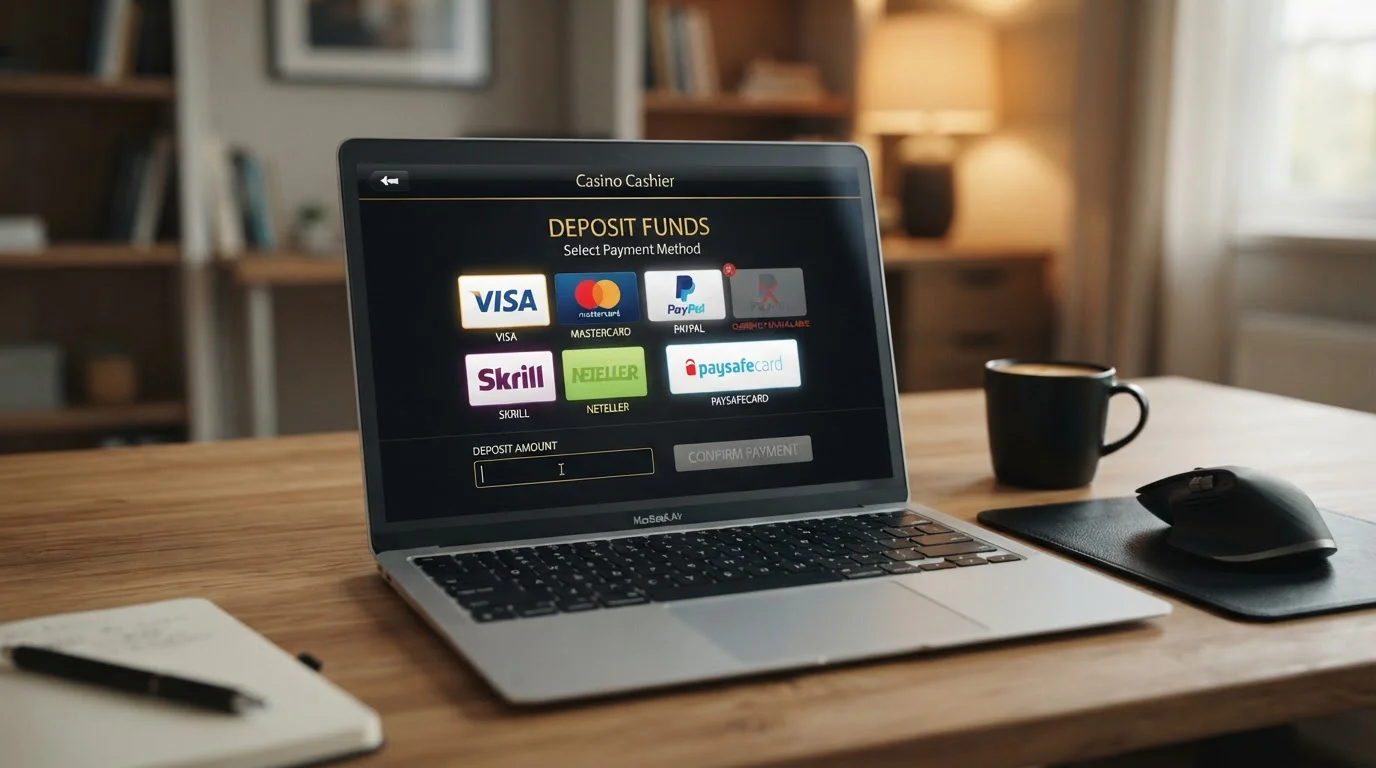
Offshore casinos are gambling websites licensed outside Great Britain—typically in Curaçao, Malta (for non-UKGC operations), Kahnawake or Anjouan—that accept British players without holding a UK Gambling Commission licence, which is an offence on the operator’s part. Many such sites take UK registrations, and a smaller subset list Interac in their cashiers.
Listing Interac does not mean UK players can use it.
Most offshore casinos that display Interac as a payment option geo-restrict the method to Canadian accounts. The restriction operates in two ways: by IP geolocation (the cashier hides or greys out Interac if it detects a UK IP address) or by account currency (Interac becomes available only after you set your casino account to CAD, which requires verifying a Canadian address or providing a Canadian bank statement). A UK resident with a UK bank account and a GBP-denominated casino balance cannot complete an Interac deposit even at an offshore site that lists the method. The casino’s payment processor checks the bank account’s country of domicile or the currency of the intended transaction and refuses the request.
The pattern is consistent. Offshore operators integrate Interac to serve Canadian players. UK players see the logo in marketing screenshots or payment-method lists but encounter a dead end at the cashier stage. The few UK forum reports of “offshore Interac deposits” almost always trace back to players who hold dual residency, maintain a Canadian bank account from a prior address, or misconfigured their casino account currency and later corrected it.
Offshore casinos licensed in Curaçao, Anjouan, and similar jurisdictions operate under lighter payment-method oversight than UKGC operators. They can list dozens of methods and leave regional availability up to the payment processor’s discretion. That flexibility explains why Interac appears on offshore cashier pages at all—but it does not make the method functional for UK bank accounts.
Which offshore casinos accept Interac and UK players?
Offshore casinos licensed in Curaçao, Malta (non-UKGC), Kahnawake and Anjouan accept UK registrations, and a subset list Interac. In practice most geo-restrict it to Canadian accounts by IP or currency, so UK players hit a “not available for your region” message. Functional Interac access usually needs a Canadian bank account from prior residency.
Are offshore casinos that list Interac safe for UK players?
Offshore casinos accepting UK players operate without UKGC oversight. Curaçao, Anjouan and Kahnawake have lighter consumer protection: no GamStop integration, no affordability checks, limited dispute resolution, and no requirement to disclose how your funds are protected. If a withdrawal dispute arises, UK law offers little recourse because the operator holds no UK licence.
UK Payment Alternatives That Work Like Interac
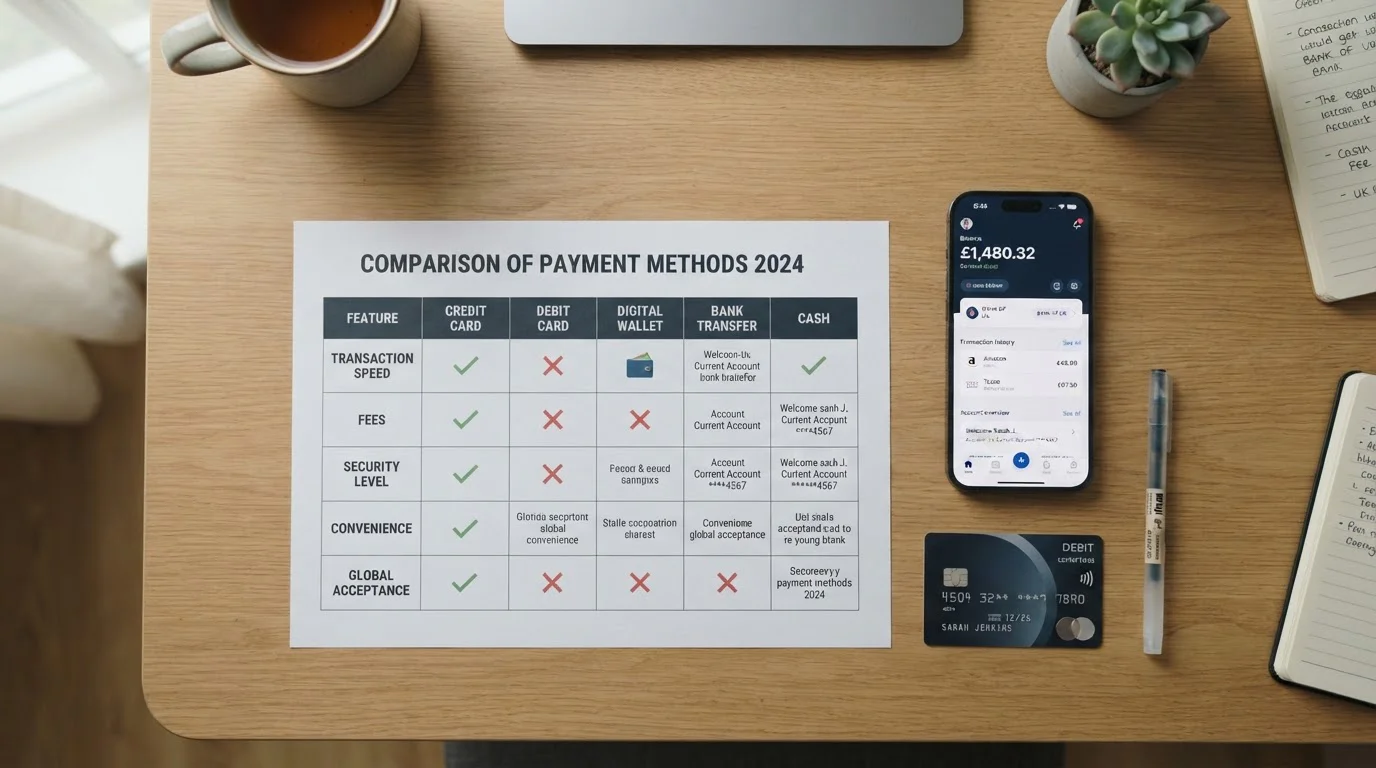
Interac does not work for UK players. Five UK-accessible payment methods deliver similar functionality—instant or near-instant deposits, bank-account-direct or e-wallet models, wide acceptance at UKGC-licensed casinos—without requiring a Canadian bank account.
| Payment Method | Type | Deposit Speed | Withdrawal Speed | Fees | UKGC Casino Acceptance |
|---|---|---|---|---|---|
| Trustly | Instant bank transfer | Instant | 24–48 hours | £0 deposit, casino-dependent withdrawal | 50+ casinos |
| PayPal | E-wallet | Instant | 24 hours average | £0 deposit and withdrawal (most casinos) | 80+ casinos |
| Skrill | E-wallet | Instant | 24 hours average | £0 deposit, 1–2% withdrawal fee common | 100+ casinos |
| Apple Pay | Mobile wallet | Instant | Limited support (2–5 days via underlying card) | £0 deposit, casino-dependent withdrawal | 30+ casinos |
| Visa/Mastercard Debit | Debit card | Instant | 2–5 business days | £0 deposit and withdrawal (most casinos) | 100% of UKGC casinos |
Trustly — Instant Bank Transfer for UK Players
Trustly Group AB is a Swedish fintech founded in 2008, licensed as a payment institution by the Swedish Financial Supervisory Authority, passported across the EU under PSD2 and authorised by the FCA for its UK business. Trustly integrates with UK Open Banking rails and enables direct bank-account-to-casino transfers without requiring a separate Trustly account, card details, or intermediary wallet. The service covers major UK banks: Barclays, HSBC, Lloyds, NatWest, Santander, and dozens of smaller institutions.
The deposit flow mirrors Interac e-Transfer’s simplicity. You select Trustly in the casino cashier, pick your bank from a list, authenticate via your online banking login (the same credentials you use to check your balance or pay bills), and approve the transaction. Funds credit your casino balance instantly. The casino never sees your banking login or account details—authentication happens inside your bank’s own portal, with Trustly acting as a secure relay. Two-factor authentication (SMS code, biometric check, hardware token) applies per your bank’s standard security policy.
Trustly is the closest UK equivalent to Interac in mechanical terms. Both bypass card networks, authenticate through existing online banking, and deliver instant deposits without a separate e-wallet setup. The difference is geography: Trustly operates within UK Open Banking infrastructure, Interac within Canada’s proprietary network. For a UK player accustomed to Interac from Canadian casino reviews, Trustly delivers the same user experience.
Withdrawal support varies by casino. A growing number of UKGC operators accept Trustly withdrawals, which process in 24–48 hours once the casino completes its compliance checks. Deposit limits sit between £10 and £25,000 per transaction depending on your bank’s fraud-prevention settings. Trustly charges no fees on the deposit side; your bank may apply its own transfer fee (rare for domestic Open Banking transactions), and some casinos charge a percentage fee on Trustly withdrawals (check the cashier terms before withdrawing). Around 50+ UKGC-licensed casinos accepted Trustly as of 2026, with adoption accelerating as Open Banking infrastructure matures.
PayPal — Trusted E-Wallet with Fast Payouts
PayPal Holdings, Inc. is a US-based e-wallet and payment processor founded in 1998, licensed by the FCA as an e-money institution in the UK. PayPal operates a pre-funded wallet model: you load GBP into your PayPal balance via bank transfer or debit card, then deposit from that balance to the casino. Alternatively, you link a UK debit card or bank account to PayPal and let the wallet pull funds on demand during a casino deposit. Either way, the casino sees only your PayPal credentials, not your bank details.
PayPal has the highest brand recognition and trust among UK players of any e-wallet. Fast withdrawals (24 hours average once the casino approves) and ubiquitous two-factor authentication are baseline features. The main limitation: not all UKGC casinos accept PayPal. Around 80+ operators do as of 2026, but some avoid PayPal due to its merchant fee structure (higher than most payment processors, cutting into operator margins). If your preferred casino supports PayPal, it is the smoothest deposit and withdrawal experience you will find at a UK-licensed site.
Deposit limits are casino-set, commonly £10 to £10,000. Withdrawal limits follow the same bands. Fees: PayPal charges no fee to fund your wallet from a UK bank account or debit card, and most UKGC casinos absorb PayPal’s merchant fee on deposits and withdrawals (meaning £0 cost to the player). A small minority of casinos pass through a 1–2% withdrawal fee; the cashier page states this before you commit. PayPal’s buyer and seller protection does not extend to gambling transactions, so dispute resolution follows the casino’s complaints procedure rather than PayPal’s claim system.
Skrill — E-Wallet Built for Online Gaming
Skrill Limited (trading name) is owned by Paysafe Group, which acquired the service in 2015. Founded in 2001 as Moneybookers and rebranded Skrill in 2011, the e-wallet is FCA-authorised in the UK and licensed across the EU under PSD2 passporting. Skrill targets online gaming and international money transfers, making it the most widely accepted e-wallet at UKGC casinos—over 100 operators supported Skrill as of 2026.
Skrill works like PayPal: you open a Skrill account, fund it via UK bank transfer or debit card, then deposit from your Skrill balance to the casino. Deposits are instant. Withdrawals process in 24 hours on average once the casino approves. Skrill’s merchant fees are lower than PayPal’s, which explains its broader casino acceptance. The trade-off: Skrill’s brand recognition among non-gamers is weaker, and the service has no consumer dispute-resolution mechanism comparable to PayPal’s buyer protection (which, again, does not cover gambling anyway).
Skrill offers a VIP programme for high-volume users: lower transaction fees, higher limits, and priority support after you cross certain monthly turnover thresholds. Deposit limits at casinos commonly range from £10 to £10,000+, with some operators accepting higher amounts for VIP accounts. Withdrawal fees are a sticking point. Many UKGC casinos charge a 1–2% fee on Skrill withdrawals, and Skrill itself charges £5.50 to transfer GBP from your Skrill balance to your UK bank account. Always check the fee structure before committing to Skrill as your primary method.
One unique feature: cryptocurrency integration. Skrill lets you convert GBP to Bitcoin, Ethereum, and a handful of other coins inside your wallet. Crypto gambling is niche at UKGC casinos (no UKGC-licensed operators accept crypto deposits), so this feature matters more for international money transfers than UK casino play. Still, it is there if you need it.
Apple Pay — One-Tap Mobile Deposits
Apple Pay is a mobile-wallet payment service by Apple Inc., launched in 2014 and available on iPhone, iPad, Apple Watch, and Mac. Apple Pay is not a payment institution—it tokenises existing debit or credit card payments. You add a Visa Debit or Mastercard Debit card (credit cards are banned for UK gambling) to your Apple Wallet, then authenticate casino deposits with Face ID, Touch ID, or your device passcode. The casino receives a one-time token instead of your actual card number, which protects against data breaches.
Apple Pay delivers the fastest deposit experience of any UK payment method. One tap, biometric auth, done. No typing card details, no switching to a banking app, no intermediary login. Deposits are instant. The catch: withdrawal support is limited. Most UKGC casinos cannot process withdrawals back to Apple Pay because the service does not function as a standalone account—it is a tokenisation layer on top of your debit card. Withdrawals go to the underlying card or require a separate method (bank transfer, e-wallet). Processing time for card withdrawals is 2–5 business days, slower than e-wallets.
Around 30+ UKGC-licensed casinos accepted Apple Pay as of 2026, with adoption concentrated among mobile-optimised operators. Deposit limits mirror your underlying debit card’s limits, typically £100 to £5,000 per transaction. Fees: none at the casino level, though your card issuer’s standard terms apply. Apple Pay works best as a deposit-only method paired with an e-wallet for withdrawals.
Visa and Mastercard Debit Cards — Universal Acceptance
Visa and Mastercard debit cards are issued by every UK bank and accepted at 100% of UKGC-licensed casinos. Deposits are instant. Withdrawals take 2–5 business days after the casino’s compliance check, reflecting standard card-network processing time. No separate account setup, no intermediary wallet, no learning curve. You already have the card; the casino already accepts it.
Debit cards are the baseline UK payment method. Credit cards have been banned for gambling since April 2020 under LCCP 5.1, so only debit works. Deposit limits are casino-set, commonly £10 to £5,000 per transaction, with your bank’s fraud-prevention systems applying additional caps if a transaction looks unusual. Withdrawal limits follow similar bands. Fees: most UKGC casinos charge £0 for debit card deposits and withdrawals, though a minority pass through a 1–2% withdrawal fee (the cashier states this upfront).
The main drawback: slower withdrawals than e-wallets. Where PayPal and Skrill deliver funds in 24 hours, debit card withdrawals take 2–5 business days for the card network to process the credit. If withdrawal speed matters, pair debit card deposits with an e-wallet for cashouts. If simplicity and universal acceptance matter more, debit cards need no supplementary method.
What is the best Interac alternative for UK casino players?
Trustly is the closest UK equivalent to Interac: instant bank-account-direct transfers via Open Banking, no separate wallet, authenticated through your online banking login. PayPal and Skrill offer fast withdrawals but need an e-wallet account; debit cards are universally accepted but slower to pay out (2–5 business days).
How does Trustly compare to Interac for UK players?
Trustly and Interac share a core design: both authenticate through your online banking login and transfer funds directly from your bank to the merchant, with no intermediary wallet. The difference is geography—Interac runs on Canada’s proprietary network and needs a Canadian bank account, while Trustly uses UK Open Banking.
How Interac Deposits Work (If You Have Access)
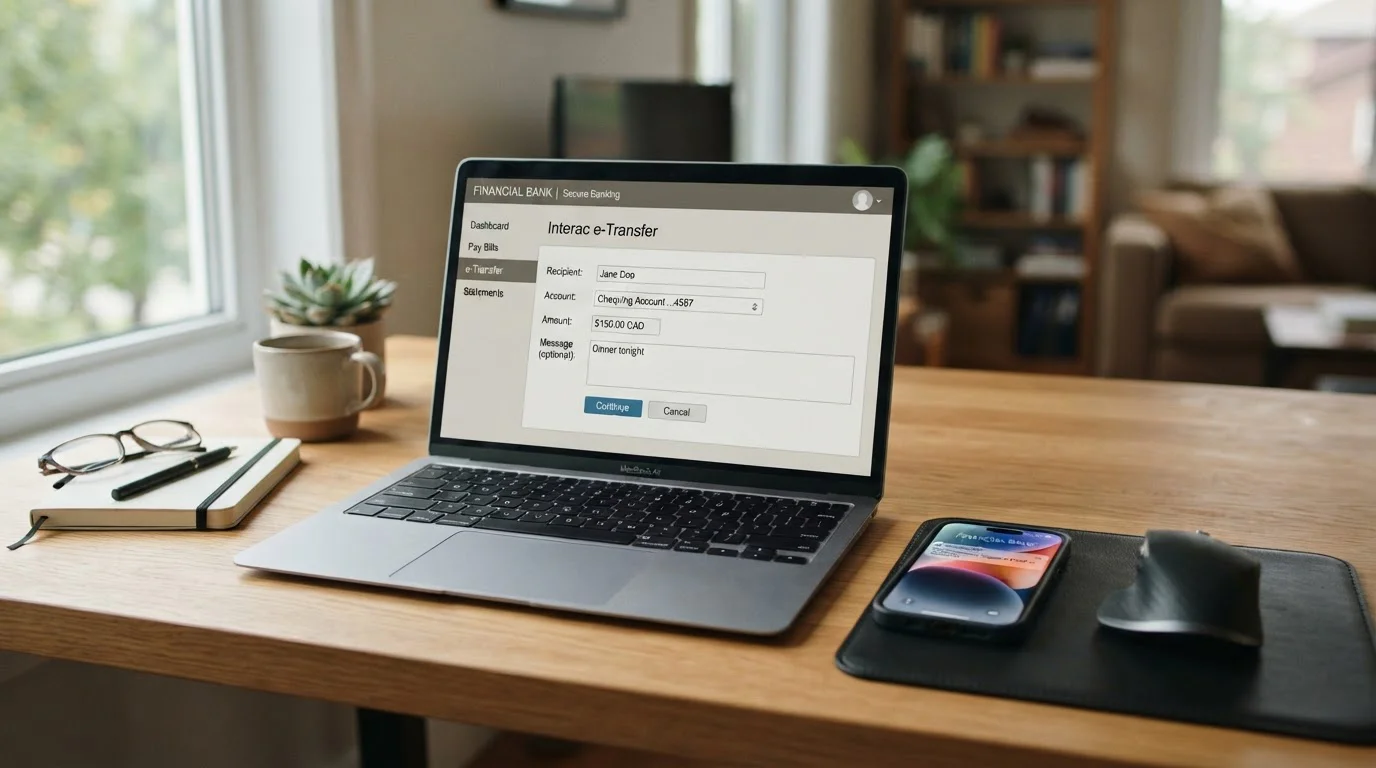
This section applies to UK residents who maintain a Canadian bank account from prior residency, dual nationals with Canadian banking relationships, or anyone curious about the mechanics. If you hold a UK bank account only, skip to the alternatives above.
Interac e-Transfer Deposit Process
Interac e-Transfer is the deposit method most Canadian-facing casinos accept. The flow runs through your Canadian online banking portal, not the casino’s cashier page.
You select Interac e-Transfer in the casino cashier. The casino provides an email address or auto-deposit alias (a unique identifier tied to the casino’s receiving account). You log into your Canadian bank’s online banking or mobile app, navigate to the Interac e-Transfer section, and initiate a transfer to that email or alias. You enter the deposit amount (in CAD), optionally add a security question and answer (some casinos skip this step and use auto-deposit), and confirm. The transfer leaves your account immediately.
The casino receives the e-Transfer notification within minutes. If you used a security question, the casino’s payment processor answers it automatically and accepts the funds. If the casino uses auto-deposit, the funds credit your casino balance without manual intervention. Typical deposit speed: instant to 15 minutes. Your bank’s two-factor authentication (SMS code, biometric check, hardware token) applies to the e-Transfer the same way it applies to bill payments or person-to-person transfers.
Withdrawals reverse the flow. The casino initiates an e-Transfer to your registered email address. You receive a notification, log into your online banking, and accept the transfer by answering the security question (if one was set). Once the casino releases it, the e-Transfer usually lands within minutes of acceptance. Some casinos configure withdrawals as auto-deposit, in which case the funds credit your account automatically once the casino releases them. Withdrawal processing time: 24–72 hours for the casino’s compliance check, then 1–3 business days for the e-Transfer to arrive (though most land same-day once released).
Interac Debit vs Interac e-Transfer
Interac Debit and Interac e-Transfer are distinct products, and the distinction matters for online casino play.
Interac Debit is the point-of-sale and online debit card payment system. Your Canadian bank issues you a debit card with an Interac logo. At a physical casino or retail location, you tap or insert the card, enter your PIN, and the payment debits your chequing account. Online, Interac Debit functions like any other debit card: you enter the card number, expiry, and CVV. Some Canadian casinos accept Interac Debit for deposits, but most prefer e-Transfer because e-Transfer has no chargeback risk.
Interac e-Transfer is an account-to-account bank transfer initiated through online banking. No card number is involved. You authenticate through your bank’s login, not by typing card details into a merchant’s form. E-Transfer transactions are non-reversible once accepted, which makes them attractive to casinos. Debit card payments can be disputed through the card network’s chargeback process, though success rates for gambling disputes are low.
For online casino deposits from Canada, Interac e-Transfer is the dominant method. It is faster, cheaper (no merchant card-processing fees), and more secure from the casino’s perspective. Interac Debit works but is less common.
Fees, Limits and Processing Times
Interac e-Transfer fees are bank-dependent. Most Canadian banks charge $0 for e-Transfers under certain account tiers (premium chequing accounts, business accounts) and $0.50 to $1.50 per transfer for basic accounts. Some banks bundle a set number of free e-Transfers per month. Casino side: typically $0 fee for deposits. Withdrawals may incur a $1–2 fee plus any bank charges, though many casinos absorb the cost.
Deposit limits sit at two layers. Your bank sets a daily e-Transfer cap, commonly $3,000 CAD per 24-hour period for personal accounts (higher for business accounts). The casino sets its own per-transaction limit, commonly $10 to $3,000 CAD. If you need to deposit more than $3,000 in one session, you split it across multiple days or request a limit increase from your bank (subject to fraud-prevention review).
Withdrawal limits follow similar bands. Casinos commonly cap Interac e-Transfer withdrawals at $3,000 to $5,000 per transaction. High rollers withdraw in multiple instalments or request a bank wire for amounts above the e-Transfer ceiling.
Processing times: deposits are instant to 15 minutes. Withdrawals take 24–72 hours for the casino’s compliance and anti-money laundering checks, then 1–3 business days for the e-Transfer to land in your account (most casinos release same-day once checks clear). Interac e-Transfer operates 24/7, so weekends and holidays do not delay the transfer itself—only the casino’s internal review schedule.
Can I deposit with Interac if I have a Canadian bank account but live in the UK?
Only in limited circumstances, and not at a UK-licensed site. Interac e-Transfer needs an active Canadian bank account and debits your Canadian chequing account. UKGC casinos don’t offer Interac at all, and offshore sites that list it usually require a verified Canadian address—and playing offshore means giving up UK consumer protection and GamStop.
Interac Withdrawals and Payout Speed
Interac e-Transfer withdrawals work for Canadian bank accounts only. If you deposited via Interac, you can withdraw via Interac to the same Canadian bank account you deposited from (casinos enforce this for anti-money laundering compliance). Typical payout speed: 24–72 hours for the casino to review and approve the withdrawal, then 1–3 business days for the e-Transfer to reach your bank. Many casinos release Interac withdrawals same-day once KYC checks clear, making total turnaround time closer to 24–48 hours.
UK players without Canadian bank accounts cannot withdraw via Interac. Offshore casinos that geo-restrict Interac deposits to Canadian accounts also restrict Interac withdrawals the same way. If you deposited at an offshore casino by another method and now want to withdraw, the casino will require a UK-accessible withdrawal method (bank transfer, e-wallet, debit card). Mixing deposit and withdrawal methods is common at offshore sites but adds verification steps—expect to provide proof of ownership for both the deposit source and the withdrawal destination.
What fees do UK payment alternatives charge compared to Interac?
Interac e-Transfer costs $0 to $1.50 per transfer in Canada. Among UK alternatives, Trustly, PayPal and Visa/Mastercard debit are free for deposits and withdrawals at most UKGC casinos; Apple Pay is free for deposits; Skrill is free to deposit but charges 1–2% on some withdrawals plus £5.50 to move money to a UK bank.
Interac Bonuses and Promotions
Interac-specific bonuses do not exist at UK casinos because UK casinos do not accept Interac. Offshore casinos that serve Canadian players sometimes offer deposit bonuses tied to Interac e-Transfer (e.g. “10% extra on Interac deposits”), but these promotions exclude UK-registered accounts due to the geo-restriction on the payment method itself.
UK players using Trustly, PayPal, Skrill, or debit cards at UKGC-licensed casinos qualify for standard welcome bonuses and reload offers. Payment-method exclusions are common: some UKGC casinos exclude Skrill and Neteller deposits from bonus eligibility (a legacy of bonus abuse patterns from the mid-2010s). PayPal and debit card deposits almost always qualify. Trustly deposits qualify at most casinos. Apple Pay deposit eligibility varies. Check the bonus terms before depositing.
Interac’s appeal in Canada centres on speed, low fees, and no bonus restrictions (most Canadian casinos treat Interac deposits the same as any other method for bonus purposes). UK players get the same baseline experience with Trustly and debit cards—fast deposits, low or zero fees, full bonus eligibility.
What UK Players Should Know Before Choosing Offshore Casinos
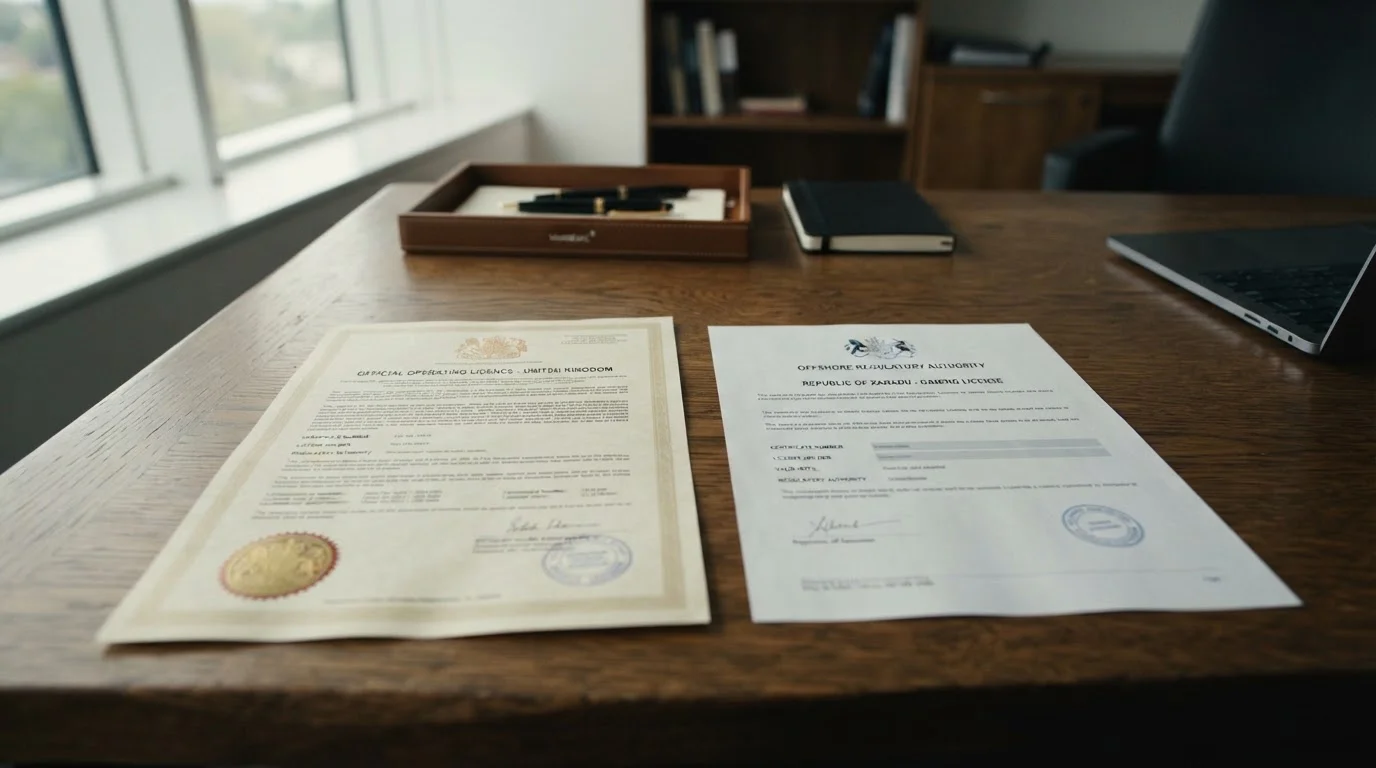
Offshore casinos accept UK players but operate outside UKGC jurisdiction. The regulatory and consumer-protection gap is real, and the differences described in this section line up as follows:
| Protection | UKGC-Licensed Casino | Offshore Casino (Curaçao, Anjouan, Kahnawake) |
|---|---|---|
| GamStop self-exclusion | Mandatory | Not part of GamStop |
| Affordability checks | Required for high-spending players | Minimal or none |
| Fund protection | Protection level must be disclosed | No UK disclosure requirement |
| Dispute resolution | Approved ADR provider, binding on the operator | Complaints to the licensing body, limited enforcement |
| Deposit limits | Enforced across all payment methods | Voluntary, may not carry across methods |
| Interac for UK accounts | Not offered | Usually geo-restricted to Canadian accounts |
Licensing and Consumer Protection Gaps
UKGC-licensed casinos must tell players how well their funds are protected if the business fails (not protected, medium or high protection), integrate with GamStop (the national self-exclusion scheme), conduct affordability checks on high-spending players, and resolve disputes through independent alternative dispute resolution (ADR) services approved by the Commission. Operators that breach these rules face fines, licence suspension, or revocation. The UKGC maintains a public register of licensees and publishes its enforcement actions.
Offshore casinos licensed in Curaçao, Anjouan, Kahnawake, and similar jurisdictions face lighter requirements. Curaçao’s historic eGaming licensing structure does not mandate segregated player-fund accounts, does not require ADR integration, and applies minimal affordability or responsible-gambling checks. Kahnawake Gaming Commission enforces stricter technical standards than Curaçao but does not integrate with UK-specific protections like GamStop. Malta Gaming Authority (MGA) operates a two-tier system: MGA-licensed operators serving the UK under UKGC remote operating licences follow UKGC rules; MGA-licensed operators serving non-UK markets (including UK players who register anyway) follow MGA’s own lighter framework.
If a UK player deposits £1,000 at a Curaçao-licensed casino and the casino goes insolvent, there is no statutory protection scheme covering that deposit. The player becomes an unsecured creditor. If the same player deposits £1,000 at a UKGC-licensed casino and the operator fails, the outcome depends on the protection level the operator disclosed: some UKGC operators hold player funds in segregated or trust accounts, others do not, and you can check which before depositing. The risk is not hypothetical—several Curaçao-licensed casinos closed without refunding player balances between 2020 and 2026, with no recourse for affected players.
GamStop and Self-Exclusion
GamStop is the UK’s national self-exclusion scheme. Any player can register (free, online, takes five minutes) and block themselves from all UKGC-licensed gambling sites for six months, one year, or five years. Every UKGC operator must integrate GamStop into its registration and login systems. Attempting to open an account or deposit while self-excluded triggers an automatic block.
Offshore casinos are not part of GamStop. A player who self-excludes via GamStop can still register and deposit at Curaçao, Anjouan, or Kahnawake-licensed sites. Some offshore operators voluntarily honour GamStop exclusions if a player provides proof, but this is not mandatory and enforcement is patchy. For players managing gambling problems, offshore casinos represent a self-exclusion bypass whether intentional or not.
Offshore sites often market themselves directly to people who have self-excluded. That is the opposite of what self-exclusion is for: it exists because a player decided they needed protection, and an offshore account removes that protection at exactly the wrong moment. If you have self-excluded and feel pulled towards offshore sites, free and confidential help is available from GamStop, GamCare (0808 8020 133) and BeGambleAware.
Payment Security and Dispute Resolution
Payment security at offshore casinos depends on the operator’s voluntary policies rather than regulatory mandate. Reputable offshore operators (typically those holding multiple licences or processing high monthly volumes) use SSL encryption, two-factor authentication, and PCI DSS-compliant payment processors. Sketchy operators cut corners. There is no consistent baseline.
Dispute resolution is the bigger issue. UKGC-licensed casinos must register with an approved ADR provider such as IBAS or eCOGRA; the Gambling Commission itself does not resolve individual complaints. If a UK player has a complaint—a withdrawal refused, a bonus term misapplied, a game malfunction—that player can escalate to the ADR after exhausting the casino’s internal complaints process. The ADR’s decision is binding on the operator. An operator that ignores an ADR ruling risks regulatory action from the UKGC.
Offshore casinos have no equivalent binding mechanism. Curaçao eGaming offers a complaints email address, but its response rate and enforcement power are minimal. Kahnawake Gaming Commission has a formal complaints process with better engagement but no jurisdiction over UK law. If a UK player wins a dispute against an offshore casino and the casino refuses to pay, the player’s recourse is to file a civil claim in the casino’s home jurisdiction (usually Curaçao or Malta), which is expensive and impractical for amounts under five figures. Many players write off offshore disputes as unrecoverable.
The payment-method trade-off: offshore casinos that list Interac (geo-restricted to Canadians) or offer crypto deposits (which UKGC casinos do not) attract UK players seeking those options. The price is reduced dispute protection and no regulatory safety net if the operator acts in bad faith.
Responsible Gambling and Payment Controls
UKGC-licensed casinos offer deposit limits (daily, weekly, monthly), loss limits, session time limits, and reality checks (pop-up reminders of time spent gambling). Players set these controls in their account settings, and the casino enforces them at the transaction level. Payment-method integration: some UKGC operators block further deposits once a player hits their limit until the cooling-off period expires. E-wallets, Trustly, and debit cards integrate smoothly with these controls because the casino sees each transaction in real time.
Offshore casinos may offer deposit limits as a voluntary feature but do not enforce them consistently. Payment-method integration is weaker. If a UK player sets a daily deposit limit at an offshore casino and then deposits via a different payment method (switching from card to e-wallet, or using a new card), the limit may not carry across. Responsible-gambling tools at offshore sites are opt-in conveniences, not regulatory obligations.
For players using payment methods as harm-reduction tools—setting lower limits on Trustly deposits, blocking card gambling transactions via their UK bank’s app, using PayPal’s spending controls—UKGC casinos honour those controls. Offshore casinos may bypass them depending on how the payment processor routes the transaction. The control gap is another consumer-protection trade-off in the offshore model.
GamCare and BeGambleAware provide free confidential support for UK residents. The National Gambling Helpline (0808 8020 133) operates 24/7. UKGC-licensed casinos display these resources prominently and offer direct links to counselling services. Offshore casinos may link to international support organisations but lack the integration depth and mandatory referral pathways that UKGC operators follow.
Payment method choice intersects with harm reduction in practical ways. E-wallets like PayPal and Skrill create a psychological buffer—you fund the wallet first, then gamble from that pre-set balance—which some players find helpful for budgeting. Direct debit card deposits offer no such buffer. Trustly’s instant bank-transfer model sits in between: you see your bank balance during authentication, which provides a reality check, but the transaction completes in seconds without forcing a cooling-off period. Choose the method that aligns with your self-control strategy, not just convenience.
Why UK Players Keep Seeing Interac on Casino Sites
Interac is unavailable to UK bank accounts, yet the logo turns up regularly in front of British players. Three things explain most of those sightings, and knowing them makes it easier to ignore the noise.
First: Canadian casino content reaches UK readers. Casino review pages and promotions written for Canada are not walled off from British visitors, and in that market Interac is the default deposit method, so it is presented as a standard option alongside Visa and Mastercard. A UK reader who sees it listed that way can reasonably assume it works here too. The confusion grows when the same offshore casino serves both Canadian and UK customers: the Interac logo appears in its payment-method marketing, but the cashier hides the option the moment a UK address or GBP currency is detected.
Second: the name sounds like a category. Interac reads like a generic term—”interact” with your bank, instant transfer—so it is easy to mistake it for instant bank transfer in general rather than a specific Canadian network. A UK player looking for that kind of payment actually wants Trustly or Pay by Bank, which do the same job through UK Open Banking. The branding overlap between Interac e-Transfer, Interac Debit, and Interac Instant (a legacy product name) adds to the muddle.
Third: offshore marketing. Some offshore operators advertise Interac prominently on pages aimed at a broad audience even though they restrict it to Canadian accounts. A UK visitor who signs up expecting Interac finds it missing and is steered towards the cashier’s other options—debit card, e-wallet or crypto—at a site that holds no UKGC licence. If a payment logo is what drew you to an unlicensed casino, treat that as a warning sign rather than a convenience: the site still offers none of the protections described in this guide.
The practical result is simple. Seeing Interac on a casino page tells you that the site is aimed at Canadian players, not that the method will work for a UK account. For a UK player, the right comparison is between UK instant-payment methods, covered in the sections above and below.
Comparing Deposit Methods: Speed, Cost, and Acceptance
Choosing a payment method involves three variables: how fast deposits and withdrawals process, what fees apply, and which casinos accept it. The table earlier summarised these for the five main UK alternatives. Here is the applied breakdown.
Speed. Trustly, PayPal, Skrill, Apple Pay, and debit cards all deliver instant deposits. Withdrawal speed separates them. PayPal and Skrill average 24 hours once the casino approves (casino processing time is 24–48 hours, then the e-wallet credit is instant). Trustly withdrawals take 24–48 hours total (casino processing plus bank transfer time). Debit card withdrawals take 2–5 business days for the card network to process the credit. Apple Pay withdrawal support is rare; when available, it routes to the underlying debit card and takes 2–5 days.
If you prioritise fast cashouts, PayPal or Skrill wins. If you rarely withdraw (most players deposit far more often than they withdraw), deposit speed matters more, and all five methods tie.
Cost. Trustly, PayPal, and debit cards charge £0 for deposits at nearly all UKGC casinos. Skrill deposits are also free. Apple Pay deposits are free. Withdrawal fees vary. PayPal and debit cards typically charge £0 for withdrawals. Skrill withdrawal fees are 1–2% at many casinos, plus Skrill charges £5.50 to transfer GBP from your Skrill balance to your UK bank account (so a £500 casino withdrawal might cost £5.50 + £10 casino fee, total £15.50). Trustly withdrawal fees are casino-dependent; some charge a flat £5, others charge 1–2%, some absorb the cost. Apple Pay withdrawal fees follow the underlying debit card terms.
If you prioritise zero fees, PayPal or debit cards win. Skrill is economical for deposits but expensive for withdrawals unless you leave funds in your Skrill balance for future deposits elsewhere.
Acceptance. Debit cards: 100% of UKGC casinos. Skrill: 100+ casinos. PayPal: 80+ casinos. Trustly: 50+ casinos. Apple Pay: 30+ casinos. Broader acceptance means fewer registration headaches—you pick a casino, know your payment method will work, and sign up. Narrow acceptance means checking the cashier page before registering.
For maximum flexibility, carry a debit card and one e-wallet (PayPal or Skrill). That combination covers 100% of UKGC casinos and gives you a fast-withdrawal option when the casino supports it.
The Interac Misconception and What It Reveals About Payment Geography
The persistent belief that Interac should work in the UK reveals a broader confusion about how payment networks scale across borders. Players assume that if a payment method is popular in one developed economy (Canada), it should port seamlessly to another (UK). That assumption breaks against the reality of payment-system architecture.
Interac is not a card network like Visa or Mastercard, which operate globally by licensing their rails to banks in dozens of countries. Interac is a domestic interbank network owned by Canadian financial institutions for Canadian financial institutions. Its business model does not include international expansion. The closest analogy: Interac is to Canada what the Faster Payments Service is to the UK—a national infrastructure project that works brilliantly within its borders and not at all beyond them.
Open Banking rails in the UK (which Trustly and other instant bank-transfer services use) represent a different architectural approach. Open Banking is an API standard mandated by regulators (the Competition and Markets Authority in the UK, PSD2 in the EU) that forces banks to open their transaction data and payment-initiation capabilities to licensed third parties. Any payment institution licensed under PSD2 can plug into that infrastructure and offer instant bank transfers across the UK and EU. Interac predates Open Banking by three decades and operates on a closed member network rather than an open API standard.
The takeaway: payment-method portability depends on architecture, not popularity. A method can be ubiquitous in one country and structurally impossible in another even when both countries have mature banking systems and high internet penetration. For UK players, the useful question is not which brand but which category: instant bank transfers, which Open Banking delivers via Trustly and similar providers.
A Note on VPNs and Geo-Restriction Workarounds
Some UK players ask whether using a VPN to spoof a Canadian IP address would let them access Interac at offshore casinos. Short answer: no, and attempting it creates more problems than it solves.
Offshore casinos that list Interac check two things: your account’s registered country (set during registration, verified via ID documents) and your account currency (CAD, GBP, EUR, etc.). IP geolocation is a tertiary check. Even if you connect via a Canadian VPN server and the cashier displays Interac as available, the deposit will fail when the payment processor checks your bank account’s country of domicile. Interac e-Transfer requires a Canadian bank account authenticated through Canadian online banking. A UK bank account cannot complete that authentication no matter what IP address you are connecting from.
The second issue: using a VPN to misrepresent your location violates most offshore casinos’ terms of service. If the casino detects VPN use during a security review (common during large withdrawal requests), it can void your winnings, confiscate your balance, and close your account. The terms-of-service clause is standard boilerplate at Curaçao and Kahnawake-licensed sites. Whether the casino enforces it depends on the operator’s goodwill and whether your account shows other red flags, but the contractual basis for confiscation exists.
Third issue: UKGC enforcement. The UK Gambling Commission does not pursue individual players for using offshore casinos (the Gambling Act 2005 makes it illegal for unlicensed operators to target UK customers, but it does not criminalise UK residents gambling at those sites). However, using payment fraud techniques—misrepresenting your location to access restricted services—could theoretically trigger bank fraud-prevention systems or payment-processor blacklists if detected at scale. Practically, this is rare, but the risk exists.
The simpler path: use a UK-accessible payment method at a UKGC-licensed casino. You get faster deposits, better consumer protection, binding dispute resolution, and no terms-of-service landmines. The “offshore Interac workaround” fantasy solves a problem that does not need solving.
What Happens When You Try to Deposit With Interac From a UK Account
Curiosity drives some players to test whether Interac might work despite the warnings. Here is what actually happens.
You register at an offshore casino that lists Interac in its payment-method marketing. During registration, you select “United Kingdom” as your country and GBP as your account currency. You verify your account with a UK passport or driving licence and a UK utility bill. The casino approves your account.
You navigate to the cashier to make your first deposit. The payment-method list displays: Visa/Mastercard, Skrill, Neteller, Bitcoin, bank transfer. Interac is not visible. You check the casino’s payment-methods page (the static informational page, not the live cashier). Interac is listed there, with a small note: “Available for Canadian players only” or “Available in CAD currency.”
You contact live chat. The agent confirms: “Interac is only available if your account is in Canadian dollars. You can change your account currency, but you will need to verify a Canadian address.” You ask what happens if you verify a Canadian address but deposit from a UK bank account. The agent says the payment processor will reject the transaction because the bank account does not match the verified address. The casino’s anti-money laundering policy requires deposit sources to match the account holder’s verified country of residence.
If the casino does not geo-restrict Interac in the cashier and you somehow proceed to the payment-processor portal (rare, but sloppy operators exist), you hit the wall at the banking-authentication stage. Interac e-Transfer requires logging into your Canadian bank’s online banking. The payment processor redirects you to a login page listing Canadian banks: RBC, TD, Scotiabank, BMO, CIBC, and dozens of credit unions. Your UK bank is not on the list. There is no manual entry field for a foreign bank’s login. The transaction cannot proceed.
In theory, if you held a Canadian bank account with online banking access, you could complete the e-Transfer even while physically located in the UK, but only at an offshore site without UK protections. That scenario applies to dual residents, recent immigrants, or Canadians working abroad temporarily. For a UK resident with no Canadian banking relationship, the path is blocked at every stage.
Interac in the Broader Payments Landscape
Interac’s Canada-only status is unusual but not unique. Most countries have a dominant domestic payment method that does not export. Australia has BPAY and POLi. South Africa has Ozow and Capitec Pay. Brazil has Pix. The Philippines has GCash. Nigeria has OPay and Paystack. India has UPI. Each of these methods dominates its home market—often processing more transaction volume than Visa and Mastercard combined within that country—but remains functionally invisible beyond the border.
The exceptions: methods that expanded internationally via deliberate business-development efforts. PayPal started in the US and now operates in 200+ countries. Skrill (originally UK/EU-focused) expanded globally through acquisitions and partnerships. Trustly (Swedish origin) spread across Europe via PSD2 passporting. Those expansions required regulatory licences in each target market, integration with local banking systems, and localised customer support. Interac has not pursued that path.
The card networks (Visa, Mastercard) achieved global reach by licensing their payment rails to issuing banks worldwide. A UK-issued Visa card works at a Canadian merchant because the Canadian merchant’s acquiring bank connects to Visa’s global network, which routes the transaction back to the UK issuing bank. Interac has no such network. It is a closed domestic system: Canadian banks talking to each other. Adding a UK bank would require that bank to join Interac Corp. as a member, integrate Interac’s technical standards, and agree to Interac’s governance. No UK bank has done this because UK Open Banking already solves the instant-bank-transfer use case domestically, and the Canadian market alone does not justify the integration cost.
The result: Interac remains Canadian infrastructure, exported nowhere. For UK players, the lesson is that payment-method research must account for geography. A method’s popularity in one market says nothing about its availability in yours.
Should UK Players Keep Searching for Interac Casinos?
No. The search is a dead end. UKGC-licensed casinos do not accept Interac and will not accept it in any foreseeable future because the infrastructure gap is unbridgeable without Interac Corp. expanding its member network to UK banks. Offshore casinos that list Interac geo-restrict it to Canadian accounts, making it inaccessible to UK players unless they maintain Canadian banking relationships from prior residency.
UK players who value the features Interac provides—instant deposits, bank-account-direct transfers, no separate wallet setup—should use Trustly. Trustly replicates Interac’s mechanics within the UK Open Banking framework. Players who prioritise fast withdrawals should use PayPal or Skrill. Players who want universal acceptance and zero setup should stick with Visa or Mastercard Debit.
The offshore casino route trades consumer protection for marginal payment-method variety. Interac is not among the varieties that actually work. Even the offshore operators that list Interac gate it behind Canadian account verification. The supposed workaround solves nothing.
Choose the method that fits the banking system you actually use.
Casino Deposit Methods UK 2026 — Compare Payment Options
Content created by the «casinopayoptions-uk.com» team