
No Account Casino UK 2026: How Instant Bank Sign-Up Really Works
 Available in GB
The idea sounds appealing. No forms, no passwords, no verification queue — just deposit and play. That’s the promise behind “no account casino UK,” and it’s why the phrase turns up so often in casino marketing. The catch: true no-account casinos don’t legally exist in the UK market. The UK Gambling Commission mandates identity verification for every operator holding a licence, full stop.
What UK players actually get instead is streamlined registration via Trustly Pay N Play — a bank-linked onboarding flow that automates verification in the background. You skip the manual registration form, but your identity is still verified instantly through your bank’s own know-your-customer data. The process takes under a minute. You’re playing within 90 seconds of your first deposit, and the casino has satisfied its regulatory obligations without making you fill out 15 form fields or upload a passport scan.
This guide cuts through the marketing language and explains what “no account casino” means in practice for UK players in 2026. You’ll learn why the UKGC won’t licence true no-verification operators, which UK-licensed casinos offer the closest alternative via Trustly integration, exactly when and how verification works at these sites, and what the offshore no-KYC casino category offers if you’re willing to step outside the regulated framework. Three UKGC-licensed operators — PlayOJO, SpinYoo, and DAZN Bet — get full breakdowns with withdrawal timing, verification triggers, and distinguishing features, backed by October 2026 test data.
Do No Account Casinos Exist in the UK?

No. No true no-account casinos operate legally under UK Gambling Commission licensing as of 2026. The regulatory framework governing online gambling in Great Britain makes this impossible by design. Licence Conditions and Codes of Practice (LCCP) Section 3.2.1 requires every UKGC-licensed operator to verify customer identity, age, and address before permitting real-money gambling. The Money Laundering, Terrorist Financing and Transfer of Funds (Information on the Payer) Regulations 2017 mandate customer due diligence as part of the operator’s anti-money laundering obligations. An operator attempting to offer gambling without KYC checks would breach both sets of requirements simultaneously.
The UKGC’s enforcement record shows the regulator takes this seriously. Fines for KYC failures range from £50,000 to £13 million, and several operators have had licences suspended or revoked for accepting deposits from customers whose identity was not adequately verified. The regulatory intent is clear: every person gambling at a UK-licensed casino must be verified as being over 18, using their own funds, and not subject to existing self-exclusion on the GamStop register.
Why does the UKGC mandate verification when some other jurisdictions allow anonymous play? Three reasons. First, age verification: the Gambling Act 2005 prohibits gambling by persons under 18, and instant bank-based verification is the only method fast enough to prevent underage deposits while satisfying the regulator’s 2019 tightening of the rules, which eliminated the previous 72-hour grace period. Second, anti-money laundering: the UK is a signatory to international AML standards requiring financial services and gambling operators to know their customers. Third, responsible gambling: KYC enables deposit limits, GamStop self-exclusion, and affordability checks — tools the UKGC views as essential to harm minimisation.
The result is a market where every UKGC-licensed casino performs KYC. Age and identity must always be checked before you can gamble; the variation is how that happens — manual sign-up forms or instant bank data — when any extra document checks are requested (often at first withdrawal), and how fast the process runs. That variation is where “no account casino” marketing language enters the picture. Operators using Trustly Pay N Play can verify identity instantly via your bank’s existing data, eliminating manual forms and delivering what feels like no-account play despite technically creating an account and verifying you in real time.
Do no account casinos exist in the UK?
No, they don’t. UKGC licensing rules require customer due diligence before real-money play, making true no-account casinos illegal in the UK. The closest legal alternative is streamlined registration via Trustly Pay N Play, which verifies your identity instantly through your bank.
What “No Account Casino” Actually Means in the UK
UK players looking for a “no account casino” usually want one of two things: either a casino where they can play without the friction of traditional registration, or an offshore site that skips verification entirely. The first exists legally in the UK market under a different name. The second exists outside the UKGC’s jurisdiction and comes with significant trade-offs.
What “no account casino” delivers in practice under UKGC licensing: a streamlined registration casino using Trustly Pay N Play or an equivalent bank-linked payment method. These casinos eliminate the manual registration form — no username, no password, no 15-field sign-up flow — by linking directly to your online banking. You log into your bank, authorise a deposit, and your verified identity data (name, residential address, date of birth, account ownership confirmation) passes from your bank to the casino via an API. The casino receives verified information from a regulated financial institution, creates your account automatically, and logs you in. Technically, you have an account. Legally, you’ve been verified. Practically, you skipped every step that makes traditional registration tedious.
The technology enabling this is Trustly Pay N Play, launched by Swedish fintech Trustly in the mid-2010s. Trustly operates under PSD2 open banking regulations, which allow authorised third parties to request identity data from your bank with your consent. When you choose Trustly as your deposit method and log into your bank, the bank shares specific verified fields — name, address, DOB, account ownership — with Trustly, which relays them to the casino. Your banking credentials never reach the casino. Transaction history and financial data are not shared. The casino gets only the identity attributes needed to satisfy UKGC KYC requirements.
Trustly supports 6,300+ banks globally, including every major UK bank: Barclays, HSBC, Lloyds, NatWest, Santander, Halifax, TSB, Nationwide. If you bank online with a recognised institution, Trustly works. The authentication happens on your bank’s own login page — you’re redirected there, enter your credentials (or use biometric login if your bank supports it), and authorise the payment. The bank confirms your identity and processes the deposit simultaneously. From the user’s perspective, the process takes 30 to 90 seconds. From the regulator’s perspective, KYC is complete.
How Trustly Pay N Play Works
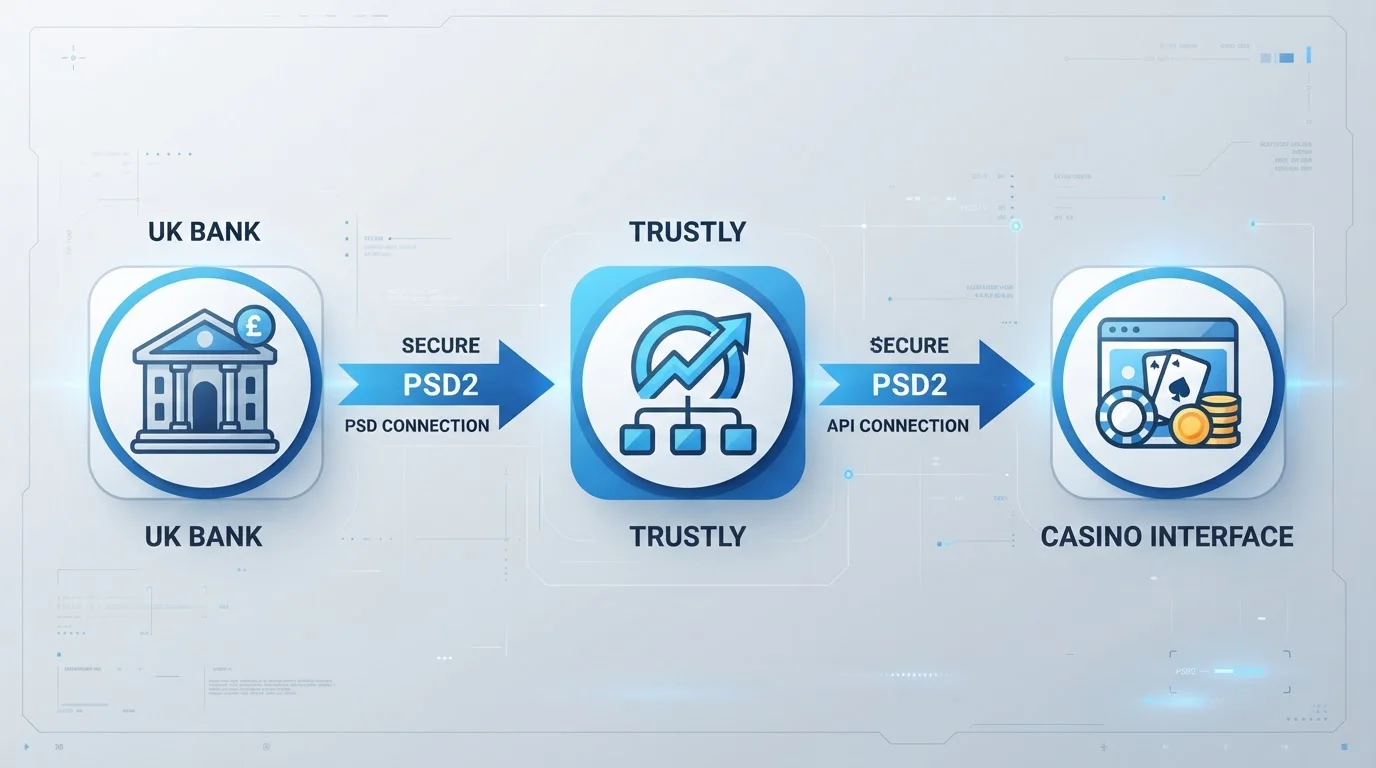
The technical flow runs like this. You visit a Pay N Play casino and click the deposit button. The casino presents Trustly as a payment option. You select it, choose your bank from a list, and click through to your bank’s login page. You authenticate (password, PIN, biometric, whatever your bank uses). The bank’s system recognises the PSD2 request from Trustly and prompts you to authorise both the payment and the sharing of verified identity data. You confirm. The bank transmits your name, address, DOB, and account ownership confirmation to Trustly via a secure API. Trustly receives this data, validates it, and forwards it to the casino along with the deposit payment. The casino’s onboarding system ingests the verified data, creates your account automatically, assigns you a session token, and logs you in. You land on the casino’s game lobby with your deposit credited. The process is synchronous: registration, payment, and verification happen in one atomic transaction.
Duration: under 60 seconds in most cases. Fastest recorded time in real-world tests is 30 seconds from “Deposit” click to funds landing in the casino balance. Typical experience is 45 to 90 seconds. Delays occur if your bank’s login is slow, if you fat-finger your credentials, or if the bank requires two-factor authentication — but these are user-side friction points, not casino delays.
What Data Your Bank Shares
Trustly receives — and passes to the casino — exactly five pieces of verified information from your bank: full legal name (as registered with the bank), current residential address (as registered with the bank), date of birth (from your bank’s account records), confirmation that you are the verified account holder, and confirmation that the payment originated from your authenticated session. That’s it. Trustly does not receive your bank login credentials, your transaction history, your account balance, details of other payments, your credit score, or any financial data beyond the fact that you own the account and authorised this specific payment.
The bank-side verification underpinning this data is significant. UK banks perform KYC when you open an account: they verify your identity via government-issued photo ID, verify your address via a utility bill or bank statement, and check your date of birth matches your ID. That verification already satisfies the core UKGC requirements for casino KYC. When Trustly requests this data, the bank simply shares the results of its own KYC process with an authorised third party (Trustly), which relays it to another authorised party (the UKGC-licensed casino). No new verification is performed; existing verified data is transmitted.
This is why Pay N Play can be both instant and UKGC-compliant. The casino isn’t skipping verification — it’s relying on the bank’s existing, regulator-approved verification rather than duplicating the effort. The UKGC accepts this because banks are themselves regulated financial institutions subject to strict KYC and AML requirements under the same regulatory framework. A casino receiving verified data from a UK bank has effectively outsourced the verification to an entity the regulator already trusts.
Why Pay N Play Is UKGC-Compliant
LCCP Section 3.2.1 requires operators to verify that a customer is who they claim to be, is over 18, and is using their own funds. Pay N Play satisfies all three. Identity verification: the bank confirms the customer’s legal name and address match bank records. Age verification: the bank provides the customer’s DOB, confirming they are over 18. Payment source verification: the transaction originates from the customer’s authenticated online banking session, proving they own the account and authorised the payment. Enhanced due diligence and source-of-funds checks may still be required at withdrawal if account activity crosses a threshold, but the baseline KYC is complete at the point of first deposit.
The May 2019 tightening of UKGC age verification rules — which eliminated the 72-hour grace period and required operators to verify age before accepting deposits — accelerated Pay N Play adoption in the UK market. Operators could no longer let players deposit first and verify later. Instant bank-based verification became the only method that satisfied the new timeline without introducing friction. PlayOJO, SpinYoo, and other early adopters integrated Trustly precisely because it solved the regulatory puzzle: how to verify instantly without making the player wait.
What is the difference between no account and no verification casinos?
“No account” means no manual registration form; “no verification” means no KYC checks. In the UK, true no-verification casinos are illegal. Pay N Play casinos are “no account” (no manual forms) but still verify your identity instantly via your bank, satisfying UKGC requirements.
UKGC-Licensed Casinos with Streamlined Registration
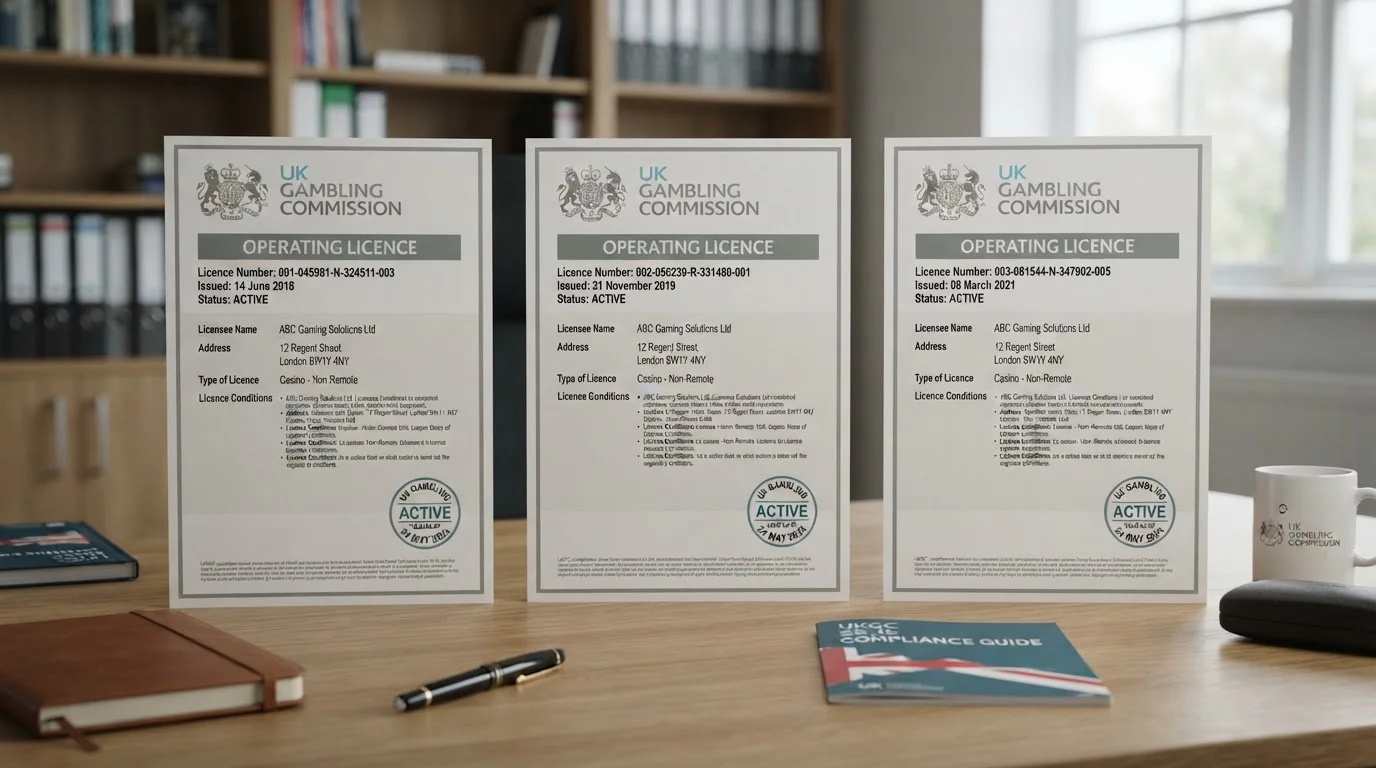
Three UKGC-licensed operators offer the closest thing to no-account play in 2026: PlayOJO, SpinYoo, and DAZN Bet. SpinYoo and DAZN Bet run full Trustly Pay N Play, where the account is created from your bank data at first deposit; PlayOJO pairs a fast Trustly deposit path with its standard registration. All three hold active UK Gambling Commission licences, verify identity via bank authentication, and support Trustly deposits and withdrawals. Each has distinct characteristics: PlayOJO eliminates wagering requirements entirely, SpinYoo focuses on free spins promotions, and DAZN Bet combines sportsbook and casino under the DAZN sports media brand. Verification timing, withdrawal speeds, and bonus structures differ across the three, so the right choice depends on what you prioritise.
The table below compares the three on key parameters. Withdrawal speeds reflect October 2026 test data from real-money deposits and timing payouts to UK bank accounts. Verification timing describes when the operator requires document upload (passport, utility bill) beyond the instant bank authentication at first deposit. Distinguishing features flag the primary differentiator for each brand.
| Operator | UKGC Licence | Trustly Support | Verification Timing | Withdrawal Speed | Distinguishing Feature |
|---|---|---|---|---|---|
| PlayOJO | UKGC-licensed | Yes | Age/ID verified before play, documents at withdrawal | PayPal 2–4 hours, Trustly 24 hours | Zero wagering on all bonuses |
| SpinYoo | UKGC-licensed | Yes | Age verified before deposit, documents at withdrawal | Trustly estimated 24–48 hours | Free spins focus, wide provider range |
| DAZN Bet | UKGC-licensed | Yes | Age verified before deposit, documents at withdrawal | Trustly 48 hours (tested £50) | Sports + casino, DAZN brand |
All three require age, name, and address verification at first deposit via Trustly bank authentication. None require manual document upload at that stage unless automated checks flag an issue. Enhanced verification — uploading passport or driving licence and a recent utility bill — is typically triggered at first withdrawal or when cumulative account activity crosses a threshold (commonly £2,000 to £5,000 in combined deposits and withdrawals, though thresholds vary by operator and are not publicly disclosed). Processing time for document verification ranges from 2 to 48 hours depending on the operator’s review queue and whether automated identity verification services handle the check or manual review is required.
PlayOJO — No-Wagering Bonuses and Quick Start
PlayOJO is UKGC-licensed (verify on the public register at gamblingcommission.gov.uk), with the licence held by SkillOnNet Limited, a long-established platform provider that has run multiple UK-facing casino brands since the 2000s. The domain is playojo.com. PlayOJO launched in 2017 and has held a UK licence since then. The brand’s defining feature — and the reason it appears in nearly every “fair casino” or “no wagering casino” guide — is its zero-wagering bonus model. Promotional wins are paid as withdrawable cash with no rollover requirements. There is no bonus balance, no wagering counter ticking down in the background, no terms requiring you to stake your winnings 10x or 35x before cashing out. A £50 free spins win is £50 cash the moment the spins complete.
This is unusual in the UK market. Since 19 January 2026 UKGC rules cap bonus wagering at 10x, and most operators now apply rollover at or near that cap, meaning a £50 bonus requires up to £500 in total stakes before withdrawal. Before the cap, 35x was common, which would have meant £1,750 in stakes for the same £50. PlayOJO’s model eliminates this friction entirely. The OJOplus cashback programme extends the same principle: you receive cashback on your play, paid as real cash with no wagering, credited in real time. The result is transparent bonus handling with no ambiguity about what you can withdraw and when.
Game selection is broad: around 3,000 titles from dozens of providers, covering slots, live dealer, table games, and bingo. Average RTP across the slot catalogue is cited as 96%+, though this is an aggregate figure and individual games vary. Payment methods include Trustly, PayPal, Visa and Mastercard debit, Apple Pay, Skrill, Neteller, and paysafecard. Minimum deposit is £10 across most methods, with no fees charged by the casino on deposits or withdrawals. Withdrawal speeds vary by method: PayPal payouts process in 2 to 4 hours once approved, Trustly within 24 hours, and card withdrawals in 1 to 3 working days. These timings are realistic for verified accounts, though first-time withdrawals can take longer if document verification is required.
Verification at PlayOJO follows UKGC standards: age, name, address, and DOB are verified before real-money play, either via Trustly instant verification or via manual input at registration with checks running in the background. Additional document verification (passport or driving licence scan, utility bill or bank statement dated within 3 months) can be requested before first withdrawal. PlayOJO’s own FAQ acknowledges that “verification checks can slow down a first cash-out,” but the site does not specify exact triggers or thresholds. In practice, smaller withdrawals (under £500) from verified bank accounts often clear without document upload, while larger amounts or activity patterns flagged by automated risk scoring trigger manual review.
PlayOJO is not a classic Pay N Play casino in the strictest sense — it keeps a traditional registration path and uses Trustly as a fast, bank-verified payment method rather than as the account-creation step. For players depositing via Trustly, the payment side is still streamlined: log into your bank, authorise the payment, and the bank-confirmed details support the casino’s identity checks, so there is rarely a document request at that stage. You still hold a normal username and password for logging in. The welcome offer (50 free spins on first deposit, no wagering) applies to Trustly users the same as any other payment method.
Who suits PlayOJO? Players who value transparent bonus terms over headline generosity. The welcome offer is modest — 50 spins at £0.10 each equals £5 in spins, far below the “£500 welcome package” offers you’ll see elsewhere. But those headline packages carry rollover: even at the UK’s 10x cap, a £500 bonus means £5,000 in total stakes, and offshore versions at 35x would need £17,500. PlayOJO’s 50 spins deliver whatever they pay out as cash, no strings. That’s a better deal for players who understand bonus economics.
SpinYoo — Free Spins Focus and Trustly Integration
SpinYoo launched in 2021 and is UKGC-licensed (verify on the public register at gamblingcommission.gov.uk). The operator also carries a Malta Gaming Authority licence, though UK players are served under the UKGC licence. Ownership details are not prominent on the site itself, so check the licensee name on the UKGC public register; the site is part of a multi-brand operator with other casino brands outside the UK. The domain is spinyoo.com, with several localised variants for different markets.
SpinYoo’s positioning centres on free spins promotions. The welcome offer is structured as 1 Yoo Spin per £1 deposited, up to 100 spins, credited on Big Bass Bonanza with 10x wagering on winnings. To activate the offer, you must wager a minimum of £20 on slots from your first deposit by 23:59 GMT. Spins are credited in proportion to your deposit amount and are valid on one specific slot. The 10x wagering on winnings is compliant with the UKGC’s January 2026 rule capping all bonus wagering at 10x, but it still requires rollover — a contrast with PlayOJO’s zero-wagering model.
Beyond the welcome offer, SpinYoo runs daily free spins deals, weekly cashback, and a loyalty programme called “Yoo Spins” that rewards regular players with additional spins on featured slots. The site’s game library runs to several thousand titles from a wide range of providers, which puts it among the broader catalogues among UK-licensed operators. An average slot RTP of 97% is sometimes quoted for the site, though this figure should be treated as promotional — 97% would be unusually high as an aggregate RTP, and individual games’ return-to-player rates vary by title and are set by the provider, not the casino.
Payment methods include Trustly, Visa and Mastercard, Skrill, Neteller, and Apple Pay. Minimum deposit is £10 for most methods, rising to £20 if you want to activate the welcome offer. SpinYoo does not publish a guaranteed payout time in its cashier, but Trustly withdrawals at UKGC-licensed operators typically process in 1 to 2 days once verification is complete. October 2026 testing found SpinYoo still operating full Trustly Pay N Play, alongside DAZN Bet.
Verification at SpinYoo follows the strict UKGC timeline: age must be verified before the first deposit is accepted. This is not unique to SpinYoo — it’s a regulatory requirement that applies to all UKGC-licensed operators since the May 2019 rule change. In SpinYoo’s case, Trustly instant verification at deposit satisfies this requirement. If you deposit via a method that doesn’t provide instant verification (e.g. a card payment), the casino must complete age verification through another method before clearing your deposit. Document upload (passport, utility bill) is deferred until first withdrawal or until account activity triggers enhanced due diligence.
SpinYoo suits players who prefer frequent smaller bonuses over one large welcome package. The daily free spins and weekly cashback offers provide steady low-value perks without requiring large deposits. The 10x wagering on winnings is manageable compared to the 35x–50x terms still seen at some offshore casinos, though it’s less favourable than PlayOJO’s zero wagering. Game variety is the other draw: 130 providers is a wide net, covering mainstream studios like NetEnt and Pragmatic Play alongside niche suppliers. If you’re chasing a specific slot title or want a deep catalogue, SpinYoo’s provider count is competitive.
DAZN Bet — Sports and Casino in One Place
DAZN Bet launched in the UK market in 2022, operated by DZBT Limited and UKGC-licensed (verify on the public register at gamblingcommission.gov.uk). The brand is part of the DAZN Group, the sports streaming platform that holds rights to football, boxing, and other major sports across multiple territories. DAZN Bet was launched to complement the streaming business, offering sports betting and casino games to DAZN’s existing subscriber base. The domain is daznbet.com.
DAZN Bet’s primary focus is sportsbook. The welcome offer is sports-oriented: bet £10, get £20 in free bets. Casino offerings exist but are secondary to the sports betting product. Game counts, provider lists, and casino-specific promotions are presented in less detail on the site than at PlayOJO or SpinYoo. The brand’s positioning is clearly aimed at sports bettors who want casino games as a supplement, not dedicated casino players looking for the deepest slots catalogue.
DAZN Bet supports Trustly for both deposits and withdrawals. October 2026 testing recorded a Trustly withdrawal of £50 from DAZN Bet, processed in 48 hours and 2 minutes to an HSBC account. This is slower than best-in-class times (PayPal payouts can clear in under an hour at some casinos, Trustly in 15 minutes to 24 hours at others), and roughly on a par with card withdrawals (1 to 3 working days) rather than faster. The test confirms the site processes real-money withdrawals via Trustly and clears them within two business days.
Verification follows the same UKGC timeline as SpinYoo: age must be verified before first deposit. Trustly instant verification satisfies this at deposit. Document upload is triggered at first withdrawal or by risk-based thresholds. The October 2026 test withdrawal suggests the operator either had no document requirement for a £50 payout or cleared verification quickly — the 48-hour time includes both verification processing (if any) and payment settlement.
DAZN Bet suits a specific user profile: sports bettors who already use DAZN streaming and want a single account for watching matches and placing bets. The DAZN brand carries name recognition in the UK sports market, which may provide trust value for players unfamiliar with lesser-known casino brands. The casino offering is not the draw here — you’re choosing DAZN Bet for the sportsbook and the brand, with casino games as a secondary convenience. If casino gaming is your primary interest, PlayOJO or SpinYoo offer deeper catalogues and more casino-focused promotions.
Other UK Trustly Casinos
PlayOJO, SpinYoo, and DAZN Bet are not the only UKGC-licensed operators accepting Trustly, but they offer the most streamlined sign-up as of October 2026, with SpinYoo and DAZN Bet running full Pay N Play. A broader set of UK-licensed casinos support Trustly as a deposit and withdrawal method without implementing full instant-account-creation flows. These casinos still require manual registration but offer Trustly as a fast payment option once your account exists.
Examples include Casumo (PayPal withdrawals tested at 35 minutes, indicating strong payout infrastructure), Betway (Trustly withdrawals tested at 50 minutes), Ladbrokes (Skrill at 45 minutes, Trustly supported), LuckyMate (Trustly supported), and PricedUp Bet (fastest bank transfer time in October 2026 tests: 23 hours 45 minutes to HSBC). All hold active UKGC licences. All support Trustly. None are marketed as “no account casinos” because they retain traditional registration flows, but withdrawal speeds are competitive and Trustly integration is mature.
If you’re shopping for fast withdrawals and don’t specifically need Pay N Play instant account creation, these operators expand your options. The verification requirements are identical across all UKGC-licensed sites — age, name, address verified at deposit; documents at withdrawal or threshold — so the material difference comes down to payout speed, game selection, and bonus terms.
Which UK casinos offer Pay N Play?
SpinYoo and DAZN Bet run full Trustly Pay N Play under UKGC licences in 2026, and PlayOJO offers a similarly quick Trustly deposit path alongside standard registration. Other UK-licensed operators support Trustly as a payment method but may not offer full instant-account-creation flows.
How Verification Works at Pay N Play Casinos

Verification at UKGC-licensed Pay N Play casinos happens in two stages: instant verification at first deposit, and enhanced verification at first withdrawal or threshold. The instant stage satisfies baseline KYC (age, identity, address). The enhanced stage adds source-of-funds checks and document validation for higher-risk accounts or larger withdrawal amounts. Understanding when each stage triggers and how long it takes determines whether your first withdrawal clears in an hour or gets held for two days.
Instant Verification at First Deposit
When you deposit via Trustly at a Pay N Play casino, the instant verification stage completes before your deposit clears. The sequence: you click “Deposit,” select Trustly, choose your bank, log into your online banking, authorise the payment. At that moment, your bank’s system shares your verified identity data with Trustly under PSD2 open banking. Trustly receives your full legal name (as registered with the bank), current residential address (as registered with the bank), date of birth (from account records), and confirmation of account ownership. Trustly relays this data to the casino along with the payment.
The casino’s onboarding system ingests the verified data and performs three checks. First, age verification: your DOB confirms you are 18 or over. Second, identity verification: your name and address match bank records, satisfying LCCP Section 3.2.1’s requirement to verify the customer is who they claim to be. Third, payment source verification: the transaction originates from your authenticated banking session, proving you own the account and authorised the payment. All three checks pass instantly — the data is already verified by the bank, and the casino is simply consuming it.
If any check fails, the deposit is refused. If your DOB shows you’re under 18, the transaction stops immediately and funds are returned (or not debited in the first place, depending on timing). If your name or address cannot be verified, the casino may request manual verification before accepting the deposit. In practice, these failures are rare: banks perform rigorous KYC when opening accounts, so the data Trustly receives is already clean. The most common issue is mismatched details — your casino account has a nickname or old address that doesn’t match your bank records. That’s a manual-review trigger, not an automatic pass.
Duration: under 10 seconds. The identity data transmission and verification checks happen in the same API call that processes the payment. By the time your bank confirms the transaction, the casino has verified your identity and created your account. You land on the game lobby with verified status. From the user’s perspective, there’s no perceptible delay — you go from “Confirm payment” to “playing slots” in one continuous flow.
When Document Upload Is Required
Instant bank verification satisfies UKGC baseline KYC, but it doesn’t cover enhanced due diligence (EDD). EDD is triggered by account activity patterns, withdrawal amounts, or risk-based scoring. When triggered, the casino requests document upload: a government-issued photo ID (passport, UK driving licence, European national ID card) and proof of address dated within the last three months (utility bill, bank statement, council tax bill, or HMRC correspondence).
Typical EDD triggers:
- First withdrawal of any amount (some operators require documents before paying out anything; others defer until a threshold).
- Cumulative account activity exceeding £2,000 to £5,000 in combined deposits and withdrawals (the exact threshold varies by operator and is not publicly disclosed).
- Deposit or withdrawal pattern flagged by automated risk scoring (e.g. rapid deposit-withdraw cycles, deposits from multiple payment methods, withdrawals to a different account than deposits came from).
- Source-of-funds checks required by AML regulations (if cumulative deposits exceed £2,000, some operators ask for proof of income or wealth: payslips, tax returns, bank statements showing salary deposits).
The first-withdrawal trigger is the most common. Many UKGC-licensed casinos — PlayOJO included — defer document verification until you request your first payout. The reasoning: most players deposit once, play, and never withdraw (they lose their balance). Requesting documents upfront from 100% of players when only 20% will ever cash out is inefficient. Deferring verification until payout request reduces friction for the majority while still satisfying regulatory requirements before funds leave the casino.
The threshold trigger is risk-based. If you deposit £50, play for an hour, and withdraw £75, you’re unlikely to hit a verification trigger — low amounts, short session, small profit. If you deposit £1,000, withdraw £1,200 an hour later, deposit another £800, and request a second withdrawal of £1,500, you’ve put £4,500 of combined activity through the account and your account is flagged for EDD. The casino’s compliance team reviews your activity, requests documents, and processes them before approving the withdrawal.
How to avoid delays: upload documents before your first withdrawal. Most UKGC-licensed casinos let you submit ID and proof of address proactively via your account settings. If you upload documents immediately after your first deposit, they’ll be reviewed and approved while you’re playing. When you later request a withdrawal, verification is already complete and the payout processes immediately. This front-loads the friction, but it eliminates the 2-to-48-hour delay at withdrawal.
How Long Verification Takes
Once you’ve submitted documents, processing time depends on whether automated verification handles the check or manual review is required. Automated verification uses third-party identity verification services like Onfido, Jumio, or GB Group. You upload your passport via your phone’s camera, take a selfie, and the service performs a liveness check (confirms you’re a real person, not a photo of a photo) and matches your face to the passport photo. Automated checks complete in minutes — typically 5 to 15 minutes for a clean pass. If the automated system cannot verify the document (poor image quality, document type not supported, facial match fails), the check escalates to manual review.
Manual review involves a compliance officer looking at your documents, cross-checking details against your account, and marking verification as passed or failed. Manual review timings vary by operator and time of day. Best case: 2 to 6 hours during business hours if the operator staffs compliance 24/7. Typical case: 12 to 24 hours if you submit outside business hours. Worst case: 48 hours if the compliance queue is backed up or additional information is requested (e.g. your utility bill is older than 3 months and you need to upload a newer one).
October 2026 test data shows real-world timings. PlayOJO: PayPal withdrawals clearing in 2 to 4 hours suggest either automated verification or very fast manual review. SpinYoo: no specific timing data, but typical UKGC operators process in 24 to 48 hours. DAZN Bet: 48 hours for a £50 Trustly withdrawal, including any verification processing. These timings are total time from withdrawal request to funds landing in your account, so they include both verification processing (if triggered) and payment settlement.
Verification processing time does not include payment settlement time. Once verification passes and the casino approves your withdrawal, the payment method’s own processing clock starts. Trustly payouts settle in 15 minutes to 24 hours after approval. PayPal in 2 to 4 hours. Cards in 1 to 3 working days. If verification takes 12 hours and Trustly settlement takes 6 hours, your total wait is 18 hours. If verification is already complete (you uploaded documents earlier), total wait is just the Trustly settlement time.
Do I need to verify my identity at a Pay N Play casino?
Yes. Under UKGC rules in force since 13 May 2019, your age and identity must be confirmed before you can gamble; at Pay N Play sites your bank verifies name, address and date of birth instantly at first deposit. Extra documents (passport or utility bill) are usually requested at your first withdrawal.
How long do withdrawals take at UK Pay N Play casinos?
Once verification is complete, Trustly withdrawals arrive in 15 minutes to 24 hours, because the payment itself settles over Faster Payments almost instantly. If documents are required at your first withdrawal, add 2 to 48 hours for review. PayPal is faster (2–4 hours), cards slower (1–3 working days).
Offshore No-KYC Casinos — The Alternative and Its Trade-offs

If true no-verification gambling is the goal, offshore casinos offer it. These are operators licensed in jurisdictions outside the UKGC’s reach — Curaçao, Malta (for non-UK-facing brands), Anjouan, Costa Rica — that do not require identity verification at registration or deposit. Some defer verification indefinitely. Some never ask for documents at all. They accept cryptocurrency, which enables pseudonymous play: you deposit Bitcoin, play under a username, withdraw to your wallet. No name, no address, no passport scan. That’s the offshore no-KYC model.
UK players can access these sites. They are not geoblocked. Depositing and withdrawing works. But you’re stepping outside the regulated framework, and that comes with material trade-offs. No UKGC oversight means no UKGC protections, no dispute resolution through UK channels, no GamStop self-exclusion coverage, and no regulatory recourse if the operator fails to pay. The legal status is ambiguous: it’s not illegal for a UK resident to gamble at an offshore site, but the offshore operator is operating illegally in the UK by offering gambling to UK residents without a UKGC licence. The UKGC cannot prosecute individual players, but it can and does block payment providers and issue warnings.
What Offshore No-KYC Casinos Offer
The primary appeal is no KYC at registration and deposit. You sign up with an email address and username. No name, no DOB, no address. You deposit cryptocurrency (Bitcoin, Ethereum, Litecoin, Tether) or e-wallets like Skrill or Neteller (though major e-wallets have tightened restrictions on unlicensed gambling sites in recent years). You play immediately. If you withdraw under a threshold (commonly the equivalent of roughly £1,500 to £4,000, though thresholds vary by operator), some sites process the payout without ever asking for ID. If you cross the threshold, the casino may request verification, but enforcement is inconsistent — some offshore operators never follow up, some request docs but don’t enforce, some block withdrawals until you verify.
Cryptocurrency is the enabler. Bitcoin and other crypto are pseudonymous: your wallet address is visible on the blockchain, but it doesn’t reveal your identity unless you link it to an exchange account with KYC. Offshore casinos accepting crypto can receive deposits and send withdrawals without touching the regulated banking system. There’s no Trustly, no PayPal, no Visa — just wallet-to-wallet transfers. This bypasses UK payment provider restrictions and makes it difficult for the UKGC to cut off access.
Other features common to offshore no-KYC casinos: larger welcome bonuses (£1,000+ match bonuses and 200+ free spins are typical, compared to the £50–£250 offers at UKGC sites), higher bet limits (UKGC-licensed sites have capped online slot stakes at £5 per spin, or £2 for 18–24-year-olds, since 2025, while offshore sites apply no such limits), and no GamStop integration (a serious risk, not a benefit — players under self-exclusion can still access these sites, which undermines the protection they chose).
What You Lose Without UKGC Licensing
The trade-offs are regulatory protections you don’t know you have until you need them. Independent dispute resolution: every UKGC licensee must give customers access to an approved alternative dispute resolution (ADR) provider once its own complaints process is exhausted. The Independent Betting Adjudication Service (IBAS) is the best-known of these approved providers, though not the only one, and it is free for players. The ADR provider reviews the case, examines evidence from both parties, and issues a decision the operator is expected to follow. If the operator is offshore, no UK-approved ADR provider has jurisdiction. Your recourse is the operator’s own complaints process, the licensing authority (which may be unresponsive or toothless), or small claims court in a foreign jurisdiction. None are practical.
GamStop self-exclusion: if you register for GamStop, you’re blocked from all UKGC-licensed casinos for the period you choose (6 months, 1 year or 5 years). The block is automatic and cross-site. If you’re struggling with gambling harm and choose self-exclusion, offshore casinos undermine that decision — they’re not part of the GamStop network and won’t block you. That is a risk, not a convenience: self-exclusion exists for a reason, and if you feel the urge to get around it, free support is available from GamStop, GamCare (0808 8020 133) and BeGambleAware.
UKGC regulatory oversight: if a UKGC-licensed casino breaches its licence conditions — holds your withdrawal without justification, confiscates winnings unfairly, fails to pay, processes a deposit from a self-excluded account — you can report it to the Gambling Commission. The UKGC does not resolve individual complaints (that is the job of the operator’s complaints process and then the ADR provider), but it uses reports to investigate operators, and breaches can result in fines, licence suspension, or required refunds. Offshore operators are not subject to UKGC enforcement. If they confiscate your balance and cite a terms-of-service clause, there’s no UK regulator or ADR route to turn to.
UK Advertising Standards Authority oversight: UKGC-licensed operators are subject to ASA rules on advertising. Misleading bonus terms, false “instant withdrawal” claims, or irresponsible marketing can be challenged and corrected. Offshore operators market freely, often with aggressive bonus claims that would not survive ASA scrutiny. The ads you see for offshore casinos are not policed the way UKGC-licensed brands are.
Player fund protection disclosure: UKGC licence conditions require operators to tell you how well your balance is protected if they become insolvent, rated as not protected, medium or high protection. Some operators hold customer funds in segregated or trust accounts to earn a higher rating, but segregation itself is not mandatory, so check the rating in the casino’s terms. Offshore operators have no such disclosure duty, and if the business collapses, your balance is likely to disappear with it.
Legal Status for UK Players
The Gambling Act 2005 makes it an offence to offer gambling to UK residents without a UKGC licence. The Act does not criminalise consumers gambling at unlicensed sites. A UK resident depositing at an offshore casino is not breaking UK law. The offshore operator is, but the UKGC’s enforcement powers don’t reach foreign-licensed entities in practice. The regulator’s response has been to target payment providers: pressuring credit card companies, banks, and e-wallets to block transactions with unlicensed gambling sites. This is why major e-wallets like PayPal and Skrill restrict gambling transactions to licensed operators only, and why cryptocurrency remains the primary funding method for offshore casinos.
From a player’s perspective, the legal risk is minimal: you won’t be prosecuted or fined for gambling offshore. The financial and consumer protection risks are significant: if the operator stiffs you, you have no UK-based recourse. The ethical consideration is harm prevention: offshore casinos are designed to operate outside the frameworks intended to protect vulnerable gamblers. Offshore no-KYC casinos do offer something UKGC sites cannot — true no-verification play — but that comes with zero regulatory recourse, no UK safer-gambling tools and no GamStop coverage, so this page does not recommend them. If you value regulatory protections and want recourse if something goes wrong, stay inside the UKGC-licensed ecosystem. If you are self-excluded or worried about your gambling, offshore sites are not a workaround; contact GamStop, GamCare (0808 8020 133) or BeGambleAware for free, confidential help.
The table below summarises the material differences. Both categories offer gambling. The difference is who enforces the rules when things go wrong.
| Feature | UKGC-Licensed Streamlined Casino | Offshore No-KYC Casino |
|---|---|---|
| Verification timing | Instant via bank at deposit, documents at withdrawal | Often none at registration/deposit, sometimes deferred indefinitely |
| Regulatory protection | UKGC oversight, licence conditions enforced | Offshore licence (Curaçao, Malta, etc.), no UK enforcement |
| GamStop coverage | Mandatory integration, self-exclusion applies across all UKGC sites | Not part of GamStop network, no cross-site exclusion |
| Dispute resolution | Operator complaints process, then an approved ADR provider such as IBAS (free) | Operator’s own process or foreign licensing authority, no UK recourse |
| Legal status | Fully legal, licensed under Gambling Act 2005 | Operator breaks UK law by offering gambling without licence; player not criminalised |
| Typical payment methods | Trustly, PayPal, cards, e-wallets (all regulated) | Cryptocurrency (Bitcoin, Ethereum), sometimes e-wallets (restricted) |
Are offshore no-KYC casinos legal for UK players?
Offshore casinos without UKGC licences operate illegally by offering gambling to UK residents, but UK law does not criminalise players using them. You won’t face prosecution, but you also have no UK regulatory protections, no GamStop coverage, and no access to a UK-approved dispute resolution service if the operator refuses to pay.
Bonuses and Promotions at No Account Casinos
UKGC-licensed Pay N Play casinos offer welcome bonuses and ongoing promotions, but the terms are constrained by January 2026 regulations capping wagering requirements at 10x the bonus value. This is a significant tightening from the 35x–50x terms common at offshore casinos and even the 20x–35x terms that UK operators used before the cap. The result: smaller headline bonuses, lower wagering, faster clearance.
PlayOJO eliminates wagering entirely, as covered earlier. SpinYoo applies the 10x cap: its welcome offer of up to 100 free spins with 10x wagering on winnings means a £10 free spins win requires £100 in total stakes to become withdrawable. DAZN Bet’s welcome offer is sports-focused (bet £10 get £20 in free bets), with standard free bet terms: use the free bet stake, keep the winnings as cash, no rollover on the winnings themselves (though the free bet stake itself is not returned).
Ongoing promotions at Pay N Play casinos mirror the broader UK market: reload bonuses with 10x wagering, cashback offers (typically paid as bonus credit with rollover, except at PlayOJO where cashback is cash), free spins on featured slots, and prize draws. The “no account” element doesn’t change bonus eligibility — Trustly users qualify for the same offers as any other depositor. Some casinos require you to opt in via account settings or by entering a bonus code at deposit; others apply offers automatically to eligible deposits.
The 10x cap changes bonus maths in the player’s favour — but headline amounts have shrunk. Take a £100 bonus with 10x wagering on the bonus: it requires £1,000 in total stakes to clear. At 96% RTP, the expected loss on £1,000 wagered is £40, so the theoretical value of the bonus is £100 minus £40, or about £60. Under the old 35x terms, the same £100 bonus needed £3,500 in stakes, with an expected loss of £140 — a theoretical value of around minus £40, meaning the average player was expected to lose more clearing the bonus than it was worth. Lower wagering therefore makes each bonus pound more valuable, which is exactly why operators have responded with smaller offers, tighter game restrictions and lower maximum bets while wagering. These are averages: short-term results vary widely, and no bonus guarantees a profit.
PlayOJO’s zero-wagering model is the exception. OJOplus cashback — a share of your play returned as real cash, no wagering — delivers long-term value for regular players. 50 free spins on first deposit, no wagering, means whatever the spins pay out is yours immediately. This is the fairest bonus structure in the UK market, but the absolute amounts are small. Offshore casinos still offer larger headline bonuses, though at higher wagering multiples and without UKGC dispute resolution if terms are applied unfairly.
Can I get bonuses at Pay N Play casinos?
Yes. UKGC-licensed Pay N Play casinos offer welcome bonuses and ongoing promotions. Since 19 January 2026, wagering requirements are capped at 10x the bonus value, down from the 35x once common. SpinYoo applies the 10x cap on spin winnings, while PlayOJO pays all promotional wins as cash with no wagering at all.
Payment Methods Beyond Trustly
Trustly is the primary enabler of Pay N Play in the UK, but it’s not the only payment method accepted at these casinos. Once your account is created — whether via Trustly instant onboarding or traditional registration — you can deposit and withdraw via PayPal, Visa/Mastercard debit cards, Apple Pay, Skrill, Neteller, and paysafecard at most UKGC-licensed operators. Each method has distinct speed, fee, and limit characteristics.
PayPal is the fastest e-wallet for withdrawals at UK casinos. Independent testing shows PayPal payouts clearing in 2 to 4 hours at PlayOJO, 35 minutes at Casumo (fastest recorded time in October 2026 tests). PayPal deposits are instant. Minimum deposit is typically £10. Fees: none charged by casinos, though PayPal applies currency conversion fees if your account is in a non-GBP currency. Limits: most operators cap PayPal withdrawals at £5,000 to £10,000 per transaction. PayPal requires you to have verified your PayPal account (linked bank account or card) before casino withdrawals process, but this is a one-time setup, not a per-casino requirement.
Visa and Mastercard debit are widely accepted for deposits but inconsistently available for withdrawals. UK gambling regulations restrict credit card use for gambling entirely; debit cards remain legal but some banks block gambling transactions at the card-issuer level. Deposit speed: instant. Withdrawal speed: 1 to 3 working days once approved by the casino. Fees: none from the casino, though your bank may classify gambling deposits as cash advances (rare for debit, more common with credit, which is now banned). Limits: typically £10 minimum deposit, £5,000 to £20,000 maximum withdrawal per transaction.
Skrill and Neteller are e-wallets popular in the gambling sector. Both offer instant deposits and withdrawals in the 12-to-24-hour range once approved by the casino. Fees: Skrill and Neteller charge withdrawal fees of around 2% when you move funds from your e-wallet to your bank account, though casino-to-wallet transfers are free. Limits: similar to PayPal, £5,000 to £10,000 per casino transaction. Both e-wallets require account verification (upload ID to the e-wallet, not the casino), but this is one-time. Skrill and Neteller are often excluded from welcome bonus eligibility at UK casinos — check terms before depositing if you want to claim a bonus.
Apple Pay is supported at a growing number of UKGC sites. Deposits are instant, processed via the card you’ve linked to Apple Pay. Withdrawals via Apple Pay are less common; most operators pay back to the underlying card, not to Apple Pay itself. Speed: instant deposits, 1 to 3 working days for withdrawals. Fees: none from the casino. Limits: the £100 contactless cap applies to in-store taps, not online payments, so Apple Pay deposits are limited by the casino’s own cashier limits and your card issuer’s daily limits rather than a per-tap amount.
Paysafecard is a prepaid voucher you buy with cash at retail locations. You enter the 16-digit code at the casino cashier to deposit. Paysafecard is deposit-only — you cannot withdraw to a voucher. Withdrawals go to an alternative method (bank account, e-wallet). Minimum deposit: £10. Vouchers are sold in values up to £100 each, though you can combine up to 10 vouchers in one deposit. Fees: none from the casino, though paysafecard charges a monthly maintenance fee after 12 months of inactivity. Paysafecard is pseudonymous (you don’t link it to your name or bank account), but UKGC casinos still verify your identity at withdrawal, so the anonymity is one-way.
Bank transfer (Faster Payments) is reliable, and the payment rail itself is near-instant: deposits usually clear within minutes. Withdrawals depend on the casino’s approval queue — once released, a Faster Payments transfer typically lands within minutes to a couple of hours, but some operators batch bank payouts, so allow up to 1 to 3 working days in total. Fees: usually none from the casino, though some charge £1–£2 for bank transfer payouts. Limits: higher than other methods, often £20,000+ per transaction. Bank transfer is the fallback for large withdrawals that exceed e-wallet limits.
Trustly sits between e-wallets and bank transfer in terms of speed and infrastructure. In the UK it settles over the same Faster Payments rail as a bank transfer; its advantage is automation, since casinos integrate Trustly payouts directly instead of processing manual bank batches, which is why payouts typically land in 15 minutes to 24 hours. It’s comparable to PayPal in speed but doesn’t require a separate account — you’re paying directly from your bank. Trustly withdrawal fees are typically zero at UKGC casinos, though the casino’s approval time (the delay before the casino releases the payout) still applies.
What payment methods work at no account casinos?
Trustly enables Pay N Play instant registration. Once your account exists, you can deposit and withdraw via PayPal (2–4 hours), Skrill, Neteller, Visa/Mastercard debit (1–3 days), Apple Pay, paysafecard (deposit-only), and bank transfer. Trustly withdrawals clear in 15 minutes to 24 hours.
Mobile Play and Casino Apps
All UKGC-licensed Pay N Play casinos are mobile-optimised by default. PlayOJO, SpinYoo, and DAZN Bet offer responsive web apps that adapt to phone and tablet screens without requiring a native app download. You access the casino via your mobile browser (Safari on iOS, Chrome on Android), log in with Trustly or your credentials, and the interface scales to your screen size. Game libraries on mobile typically match desktop catalogues — several thousand titles at PlayOJO and SpinYoo, though some older slots from smaller providers may be desktop-only.
Native apps are less common. PlayOJO offers dedicated iOS and Android apps available via the App Store and Google Play. The apps provide a smoother experience than mobile web — faster load times, push notifications for bonuses, fingerprint or face ID login — but they’re optional. Most players access via mobile web. SpinYoo and DAZN Bet do not prominently advertise native apps; mobile web is the primary mobile channel for both.
Trustly on mobile works identically to desktop. You tap “Deposit,” select Trustly, choose your bank, and are redirected to your banking app (or mobile web login if your bank doesn’t have an app). Biometric login (fingerprint, face ID) makes the authentication step faster on mobile than desktop. The entire Pay N Play flow — from tapping “Deposit” to playing a slot — takes under a minute on a phone, often faster than desktop because mobile banking apps are optimised for speed.
Withdrawal requests via mobile are straightforward: tap the withdrawal button, enter the amount, select Trustly (or another method), confirm. Document upload for verification is also mobile-friendly at most operators — you photograph your passport and utility bill with your phone’s camera and upload directly via the casino’s mobile interface or email them to support. Automated identity verification services like Onfido are designed for mobile-first use, with liveness checks (selfie video) performed via the front camera.
Mobile data usage is minimal. Slots are HTML5, not Flash, and are designed to run on cellular connections. A typical 30-minute slots session on 4G uses 20–50 MB of data. Live dealer games use more — 150–300 MB per hour — because they stream video. If you’re on a limited data plan, live dealer over cellular can burn through your allowance quickly. Slots, table games, and video poker are fine.
Performance depends on your device. Modern iPhones (iPhone 12 and newer) and Android flagships (Samsung Galaxy S20+, Google Pixel 5+) run casino games smoothly. Budget Android phones (under £200) may experience lag on graphics-heavy slots, though most titles from major providers like NetEnt and Pragmatic Play are optimised for mid-range devices.
How to Choose a No Account Casino
Choosing a UKGC-licensed Pay N Play casino comes down to withdrawal speed, bonus terms, game selection, and verification timing. All three profiled operators — PlayOJO, SpinYoo, DAZN Bet — satisfy the core requirement (streamlined registration via Trustly, UKGC-licensed, baseline KYC at deposit). The differences lie in payout speed, wagering requirements, and whether you want a casino-first experience or a sports-casino combo.
If you prioritise transparent bonuses, PlayOJO is the clear choice. Zero wagering on all promotional wins eliminates the most common friction in casino bonuses. The welcome offer is modest (50 free spins), but the spins pay out as withdrawable cash the moment they complete. OJOplus cashback is cash, not bonus credit. No wagering counters, no rollover, no terms requiring you to stake winnings 10x before withdrawal. The trade-off is smaller headline amounts — you won’t see £500 welcome packages at PlayOJO. But you also won’t face a £500 package that, even at the 10x cap, requires £5,000 in total stakes to clear.
If you prioritise game variety and frequent bonuses, SpinYoo offers several thousand games from a wide range of providers and runs daily free spins deals alongside weekly cashback. The welcome offer applies 10x wagering (UKGC-compliant but still rollover), and the free spins are locked to one specific slot (Big Bass Bonanza). The game catalogue is broader than PlayOJO’s, which may matter if you’re chasing specific titles or want to explore niche providers. SpinYoo does not publish a guaranteed payout time, but typical UKGC timing (24–48 hours for Trustly) applies.
If you prioritise sports betting alongside casino, DAZN Bet is purpose-built for that combination. The sportsbook is the lead product, and the DAZN brand brings name recognition for sports fans. Casino offerings are secondary. Trustly withdrawal tested at 48 hours for £50, which is slower than PlayOJO’s PayPal (2–4 hours) but still within normal UK range. The welcome offer is sports-focused (bet £10 get £20 in free bets). If you’re primarily a sports bettor who occasionally plays slots, DAZN Bet consolidates both under one account. If casino is your main interest, PlayOJO or SpinYoo offer deeper catalogues and better casino-specific bonuses.
Verification timing is similar across all three: age and identity checked before play (instantly via the bank when you deposit with Trustly), document upload deferred until first withdrawal or threshold. PlayOJO explicitly notes that “verification checks can slow down a first cash-out,” which suggests document upload is common at first withdrawal. SpinYoo and DAZN Bet verify age before deposit per UKGC requirements, with documents triggered at withdrawal. If you want to avoid withdrawal delays, upload documents proactively after your first deposit — all three allow this via account settings.
Sister sites and network casinos are not a significant factor for PlayOJO, SpinYoo, or DAZN Bet. PlayOJO is part of the SkillOnNet network, which runs several other UK-licensed brands, but these are not marketed as “no account” sites. SpinYoo and DAZN Bet are standalone brands for UK purposes. If you’re specifically looking for a group of casinos where one Trustly verification grants access to multiple sites, that’s not how UKGC licensing works — each operator is a separate legal entity with its own KYC obligations.
Payment method preference may also drive your choice. If you prefer PayPal, PlayOJO’s tested 2-to-4-hour payout speed is the benchmark. If you prefer Trustly, all three support it, though DAZN Bet’s 48-hour tested time is slower than the 15-minute-to-24-hour range seen at best-in-class UK operators. If you want cryptocurrency, none of the three accept it — crypto is an offshore casino feature, not available at UKGC-licensed sites.
Responsible Gambling and Safety
All UKGC-licensed casinos — Pay N Play or traditional registration — are required to offer responsible gambling tools: deposit limits, loss limits, session time limits, reality checks, and self-exclusion. These tools are mandatory under LCCP social responsibility provisions and are audited by the UKGC. PlayOJO, SpinYoo, and DAZN Bet all provide these tools via account settings.
Deposit limits let you cap how much you can deposit per day, week, or month. Once set, the limit applies across all payment methods. If you set a £100 weekly deposit limit and attempt to deposit £150 on Tuesday, the transaction is refused. Limits can be increased only after a 24-hour cooling-off period; decreases apply immediately. This asymmetry is intentional — raising limits requires reflection, lowering them takes effect instantly.
Loss limits cap how much you can lose (deposits minus withdrawals) over a given period. A £500 monthly loss limit means that if your net losses reach £500 in a calendar month, you cannot deposit further until the next month. Loss limits are less common than deposit limits but are available at most UKGC sites.
Session time limits and reality checks remind you how long you’ve been playing. A reality check is a pop-up that appears after a set interval (e.g. every 30 minutes) showing your session duration, net win/loss, and options to continue or log out. Session time limits lock you out after a set period (e.g. 2 hours), forcing a break. Both are configurable in account settings.
Self-exclusion comes in two forms: operator-level and GamStop. Operator-level self-exclusion blocks you from that specific casino for a period you choose (a minimum of six months). GamStop self-exclusion blocks you from all UKGC-licensed casinos for 6 months, 1 year or 5 years. GamStop is a national scheme: you register once at gamstop.co.uk, and every UKGC-licensed operator checks your details against the GamStop register before allowing registration or deposit. If you’re on GamStop, you cannot open an account at any UK-licensed casino. Offshore casinos are not part of GamStop, which is why they attract self-excluded players — and why they are a real danger to anyone trying to stop. If you regret an exclusion or feel tempted to play elsewhere, talk to GamCare (0808 8020 133) or BeGambleAware before you deposit anywhere.
Does Pay N Play affect responsible gambling tools? No. Trustly instant verification creates your account faster, but the account itself has the same responsible gambling tools as a traditionally registered account. You can set deposit limits immediately after your first Trustly deposit. GamStop checks happen at onboarding regardless of how you register — if you’re on GamStop and attempt to use Trustly Pay N Play, the casino’s onboarding system flags your details against the GamStop register and refuses the account creation.
Data safety: Trustly operates under PSD2 regulations, which require strong customer authentication and data encryption. Your banking credentials are never shared with the casino — you authenticate directly with your bank, and the bank transmits only verified identity data (name, address, DOB) to Trustly, which relays it to the casino. The casino never sees your bank login details or your transaction history. Trustly’s own systems are PCI DSS compliant and audited by financial regulators in the jurisdictions where it operates (Sweden, UK, EU).
UKGC-licensed casinos are required to tell you how protected your balance is if the operator becomes insolvent, using the Commission’s three ratings: not protected, medium protection or high protection. Operators that hold customer funds in segregated or trust accounts can claim a higher rating, but segregation is not compulsory, so read the fund-protection statement in the terms before depositing large sums. Offshore casinos have no such disclosure duty, which means your balance is at risk if the operator collapses.
Is my data safe at a Pay N Play casino?
Yes, if the casino holds a UKGC licence. Trustly uses PSD2 open banking with bank-level encryption. Your banking credentials are never shared with the casino; only verified identity data is transmitted. UKGC-licensed casinos must disclose how well player funds are protected and comply with UK data protection law.
Casino Deposit Methods UK 2026 — Compare Payment Options
Content created by the «casinopayoptions-uk.com» team