
Wirecard UK Casinos 2026: The Collapse Explained & Live Alternatives
 Available in GB
No UK casino accepts Wirecard in 2026, and none will again. The German payment processor filed for insolvency in June 2020 after €1.9 billion vanished from its balance sheet, taking with it one of the gambling industry’s most widely used payment gateways. If you’re looking for a casino that takes Wirecard, you either missed the news or you’re confusing Wirecard with wire transfer—two entirely different things.
This guide unpacks what Wirecard was, why it disappeared, and which payment methods UK players actually use at online casinos today. Debit cards, e-wallets, mobile pay and bank transfers have absorbed Wirecard’s former role, and some work faster and cheaper than Wirecard ever did. The UK Gambling Commission banned credit cards in April 2020—two months before Wirecard collapsed—so the payment landscape shifted twice that year, compounding the disruption for players who hadn’t kept pace.
What follows is not a “best Wirecard casinos” list. It’s an honest account of a scandal, a regulatory pivot, and the alternatives that matter in 2026.
What Happened to Wirecard? (The 2020 Collapse)

Wirecard AG was a Munich-based payment processor that carved out a niche handling transactions for merchants other banks avoided—online gambling, adult content, forex brokers. By 2018 it had joined Germany’s DAX stock index, a remarkable rise for a company that started in 1999 processing payments for pornography sites. The gambling industry, offshore casinos especially, relied on Wirecard’s infrastructure to move money in and out of player accounts.
Then the edifice crumbled. On 18 June 2020, Wirecard announced that €1.9 billion—roughly a quarter of its balance sheet—”probably does not exist.” The admission came after years of Financial Times investigative reporting had flagged accounting irregularities, which Wirecard and its auditors dismissed as smear campaigns. CEO Markus Braun resigned 19 June, was arrested 22 June on fraud charges, and on 25 June 2020 Wirecard filed for insolvency. Chief Operating Officer Jan Marsalek fled; he’s believed to be in Russia and remains a fugitive in 2026.
The collapse was not a liquidity squeeze or a market correction. It was accounting fraud on a scale Germany had not seen since reunification—€1.9 billion fabricated, phantom revenue booked across shell entities in Asia, auditors signing off for eleven consecutive years despite red flags. When the fiction unravelled, Wirecard owed creditors €3.2 billion. In November 2020, Santander Group bought Wirecard’s core payment-processing assets for €100 million, pennies relative to the debt.
Wirecard’s fraud was architectural, not opportunistic. The company reported billions in revenue from payment-processing contracts in Asia—Malaysia, Singapore, the Philippines—that either did not exist or were vastly inflated. It booked cash in bank accounts held by trustees in the Philippines that turned out to be fabricated. Auditors from Ernst & Young signed clean audit reports for eleven consecutive years, despite warnings from short-sellers and journalists that the numbers made no sense. When EY finally demanded to see the cash in June 2020, the trustees could not produce confirmation letters, and the €1.9 billion vanished into admissions of accounting fraud.
The scandal unravelled quickly once the dam broke. Wirecard’s share price, which had peaked near €200 in 2018, fell to under €2 within days of the 18 June admission. By 25 June, the company was insolvent. Creditors—fifteen banks holding €1.75 billion in loans, plus €500 million in bondholder debt—were left with claims against a shell. Markus Braun was arrested, denied bail, and has spent years in custody awaiting trial. Jan Marsalek, the COO who oversaw the Asian operations where most of the fraud occurred, fled Germany on 19 June and has not been seen in public since. German prosecutors believe he is in Russia; Interpol issued a Red Notice.
What This Meant for UK Casino Players
On 26 June 2020—the day after Wirecard’s insolvency filing—the UK Financial Conduct Authority ordered Wirecard Card Solutions UK to cease all regulated activity. Thousands of British fintech users who held prepaid cards issued by Wirecard (Curve, Anna Money, Pockit) were locked out of their accounts overnight, unable to access funds or make payments. The freeze lasted weeks while administrators untangled who held what.
Casino players using Wirecard-processed payments faced disruption but not frozen balances in the same way, because Wirecard acted as the middleman between casinos and banks rather than holding player funds directly. Still, casinos that had integrated Wirecard’s gateway scrambled to swap in replacement processors, and some offshore operators went dark for days while they rerouted payment rails.
Wirecard is gone. Its trial drags on in Munich (Markus Braun pleaded not guilty in December 2022; proceedings continue as of 2026), but the business is dismantled. If a site claims to accept Wirecard in 2026, it is either outdated or lying.
What happened to Wirecard and why did it shut down?
Wirecard collapsed because €1.9 billion did not exist. For years it booked phantom revenue through shell companies in Asia; when auditors demanded proof of the cash, it could not produce it. CEO Markus Braun was arrested, the firm filed for insolvency on 25 June 2020, and the UK regulator froze its operations the next day.
Why UK Casino Payments Changed in 2020

Wirecard’s collapse coincided with a separate regulatory earthquake. On 14 April 2020—ten weeks before Wirecard went bust—the UK Gambling Commission banned credit-card gambling at every casino it licenses. The ban came after a 2019 consultation found that 22% of online gamblers using credit cards were problem gamblers, compared to 14% across all payment methods. The UKGC decided borrowed money and casino deposits were a toxic combination and cut it off entirely via Licence Conditions and Codes of Practice Section 5.1.
The UKGC’s consultation, completed before the ban was announced in January 2020, heard from 137 organisations and 4,600 individuals. The evidence was stark: people gambling with credit were significantly more likely to be problem gamblers, and the practice amounted to gambling with borrowed money—money they did not have. The Commission noted that credit-card gambling accounted for roughly 10-15% of deposits by volume but disproportionately higher percentages of harm. Problem-gambling charities, debt-advice organisations, and consumer groups overwhelmingly supported the ban. The gambling industry resisted, arguing it would push players offshore, but the UKGC proceeded anyway.
Every UKGC-licensed operator—bet365, William Hill, 888 Casino, Casumo, LeoVegas, Betway, Ladbrokes, the lot—stopped accepting Visa Credit, Mastercard Credit, American Express and Diners Club on 14 April 2020. Debit cards remained legal. So did e-wallets, bank transfers, prepaid vouchers and mobile pay. The distinction: debit spends money you have; credit spends money you borrow.
The ban applied universally across all forms of UKGC-licensed gambling—online casinos, sports betting, bingo, poker, lottery. It did not distinguish between credit cards used for small recreational deposits and credit cards funding serious problem gambling; the Commission took the view that the risk applied across the board and a blanket ban was the only enforceable solution. Operators were given three months’ notice (the ban was announced 14 January 2020, enforced 14 April 2020) to update their payment systems and notify customers.
When Wirecard collapsed in late June, UK players faced a double disruption. The credit-card ban had already narrowed deposit options; Wirecard’s implosion then forced offshore operators (which never fell under the UKGC’s jurisdiction) to rebuild their payment stacks mid-year. Some players assumed the UKGC had “banned all cards”—not true, debit cards worked fine—while others still look for Wirecard at casino cashiers today, unaware the processor no longer exists.
Offshore casinos licensed under Curaçao, Malta or Anjouan still accept credit cards from UK players because those jurisdictions set their own rules. The UKGC cannot enforce its credit-card ban beyond British shores, and UK law does not prohibit residents from using offshore gambling sites. What players lose at offshore operators: GAMSTOP self-exclusion integration, access to UK dispute resolution through an approved ADR provider such as IBAS, and the January 2026 rule capping bonus wagering at 10x. The credit-card deposits and lighter affordability checks still found offshore are exactly the features UK rules removed to reduce harm—not a reason to go there.
The 2020 pivot reshaped UK casino banking permanently. Wirecard’s collapse was a historical footnote in that shift, but the UKGC ban was the structural change. In 2026, debit and e-wallets dominate the UKGC-licensed market, while offshore operators offer the old flexibility at the cost of UK regulatory protections.
Can I still use a credit card at UK online casinos?
No, not at any UKGC-licensed casino. The UKGC banned credit-card gambling on 14 April 2020 to stop people depositing with borrowed money. Debit cards work fine—every operator takes Visa Debit and Mastercard Debit. Offshore sites in Curaçao or Malta still accept credit cards, but without GAMSTOP or UK protections.
Debit Cards — The Universal Wirecard Replacement
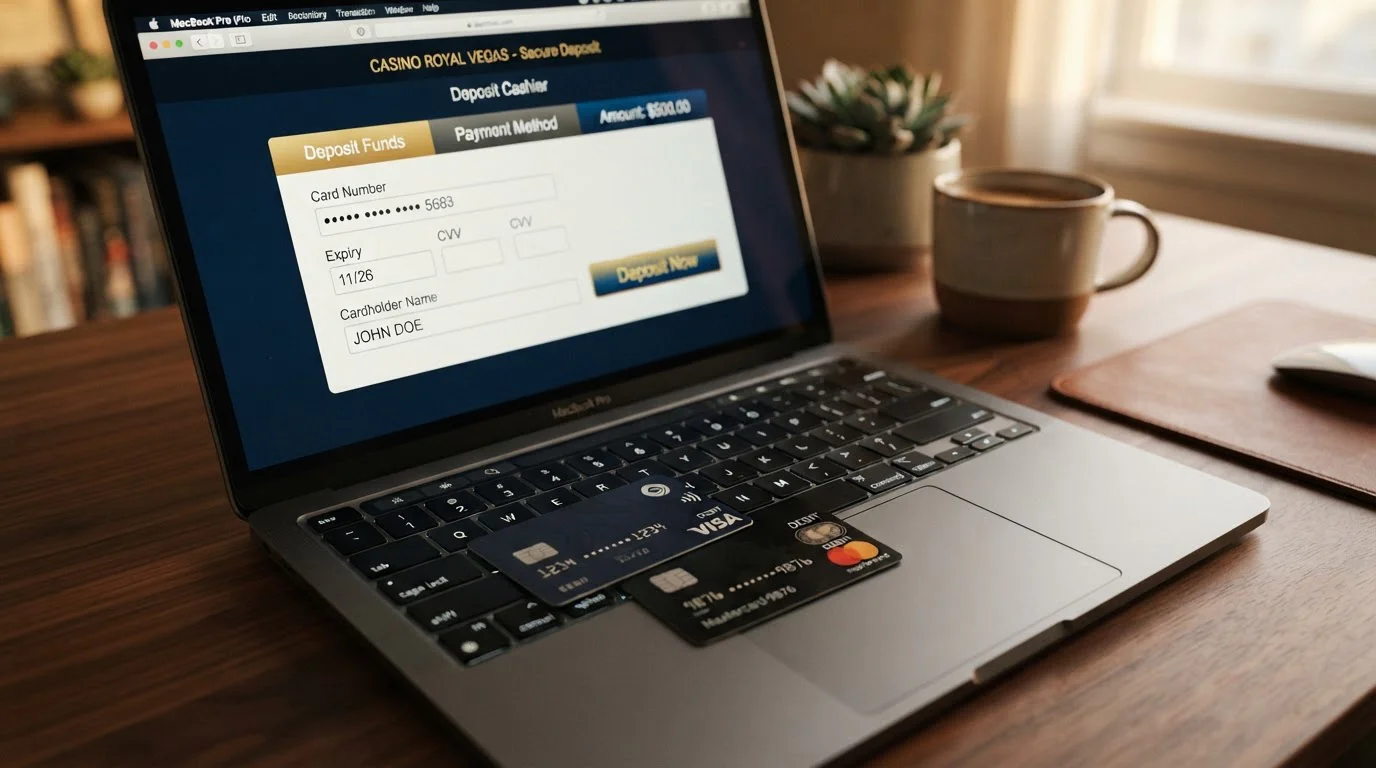
When Wirecard vanished and credit cards were banned, debit cards absorbed the gap. Every UKGC-licensed casino in 2026 accepts Visa Debit and Mastercard Debit; acceptance is universal, setup is zero (you already have a bank card), and deposits land instantly. Withdrawals return to the same card you deposited with—an anti-money-laundering requirement—and take anywhere from one hour to five business days depending on the operator.
Visa Debit & Mastercard Debit
Visa and Mastercard are the payment networks; your UK bank (Barclays, HSBC, Lloyds, Santander, Nationwide, Monzo, Starling, Revolut) issues the card with their branding. When you deposit £50 at an online casino, the transaction routes through Visa or Mastercard’s network to your bank, which debits your current account instantly. Withdrawals reverse the flow: the casino pushes funds back to the card, your bank receives them two to five business days later (or faster at outlier operators), and the money appears in your account.
The baseline deposit minimum at UKGC casinos is £5—bet365, Paddy Power, William Hill, Ladbrokes and Betfred all set that floor for debit cards. A handful go lower: DragonBet accepts £1 deposits across Visa Debit and Mastercard Debit. At the top end, LeoVegas and 888 Casino ask for £10. Maximum deposits sit between £10,000 and £50,000 per transaction, varying by operator and sometimes by your account history (high-rollers negotiate higher limits directly).
Withdrawal speed is where debit cards lag e-wallets. The standard timeframe is two to five business days once the casino approves the withdrawal, which itself can take 24 to 48 hours while the operator runs KYC and anti-fraud checks. Casumo is the outlier: a test withdrawal in 2026 landed on a Visa Debit card within one hour, the fastest debit-card payout recorded from a UKGC operator in that testing. Most players wait three to four days.
The delay is structural, not arbitrary. Card withdrawals move through the same Visa and Mastercard networks that handle retail purchases, but those networks were built for pull payments (a merchant charges the customer’s card), not push payments (a casino sends money to the customer’s card). When a casino initiates a withdrawal to your debit card, it files what the card networks call a “merchant credit” or “original credit transaction”—essentially a refund to a card that was never charged that specific amount. Your bank receives the transaction, runs it through fraud checks (is this casino legitimate? Is this customer’s card still active? Does the withdrawal amount match recent deposits?), then credits your account. Each step adds hours.
No operator charges fees for debit-card deposits or withdrawals. Visa, Mastercard and UK banks do not levy gambling-specific fees on domestic GBP transactions. If you deposit in a foreign currency (EUR, USD), your bank applies its standard foreign-exchange markup, typically 2–3%, but GBP-to-GBP casino transactions cost nothing. William Hill’s support documentation states explicitly: “William Hill doesn’t charge any fees for Debit Card transactions.”
The anti-money-laundering rule complicates things slightly: withdrawals must return to the card you deposited with. If you deposited £200 with your Barclays Visa Debit and £300 with your Monzo Mastercard Debit, then win £800, the casino is required to return £200 to the Barclays card and £300 to the Monzo card before any excess (£300) can be sent to an alternative method like PayPal or bank transfer. You cannot deposit with one card and withdraw to another—the trail must close.
Maestro, Mastercard’s older debit brand, has already gone in the UK: British banks stopped issuing Maestro cards in 2023, and Mastercard is phasing the brand out globally by 2027. If you still have a Maestro card in a drawer, it has most likely expired or been replaced—your bank will have reissued it as a standard Mastercard Debit, which every UKGC casino accepts. Maestro was more common in Europe than the UK, and its withdrawal from the market reflects Mastercard’s push to standardise on one debit product globally.
| Operator | Min Deposit | Max Deposit | Withdrawal Speed | Fees |
|---|---|---|---|---|
| bet365 | £5 | £50,000 | 2–5 days | £0 |
| William Hill | £5 | £25,000 | 2–5 days | £0 |
| 888 Casino | £10 | £30,000 | 3–5 days | £0 |
| Casumo | £10 | £10,000 | 1 hour–3 days | £0 |
| LeoVegas | £10 | £30,000 | 2–4 days | £0 |
| Betway | £5 | £25,000 | 2–5 days | £0 |
| PartyCasino | £10 | £20,000 | 3–5 days | £0 |
Debit cards are the fallback that never fails. If an e-wallet excludes you from a bonus or charges withdrawal fees, the debit card sitting in your wallet still works at every UKGC-licensed casino, costs nothing, and gets you paid within a week.
Do UKGC-licensed casinos charge fees for debit card deposits?
No. Every UKGC-licensed operator accepts debit-card deposits and withdrawals with zero fees, and Visa, Mastercard and UK banks add no gambling-specific charge on domestic GBP transactions. The only exception is a foreign-currency deposit, where your bank applies its usual 2–3% FX markup—avoided entirely by funding in GBP.
E-Wallets — Speed and Convenience
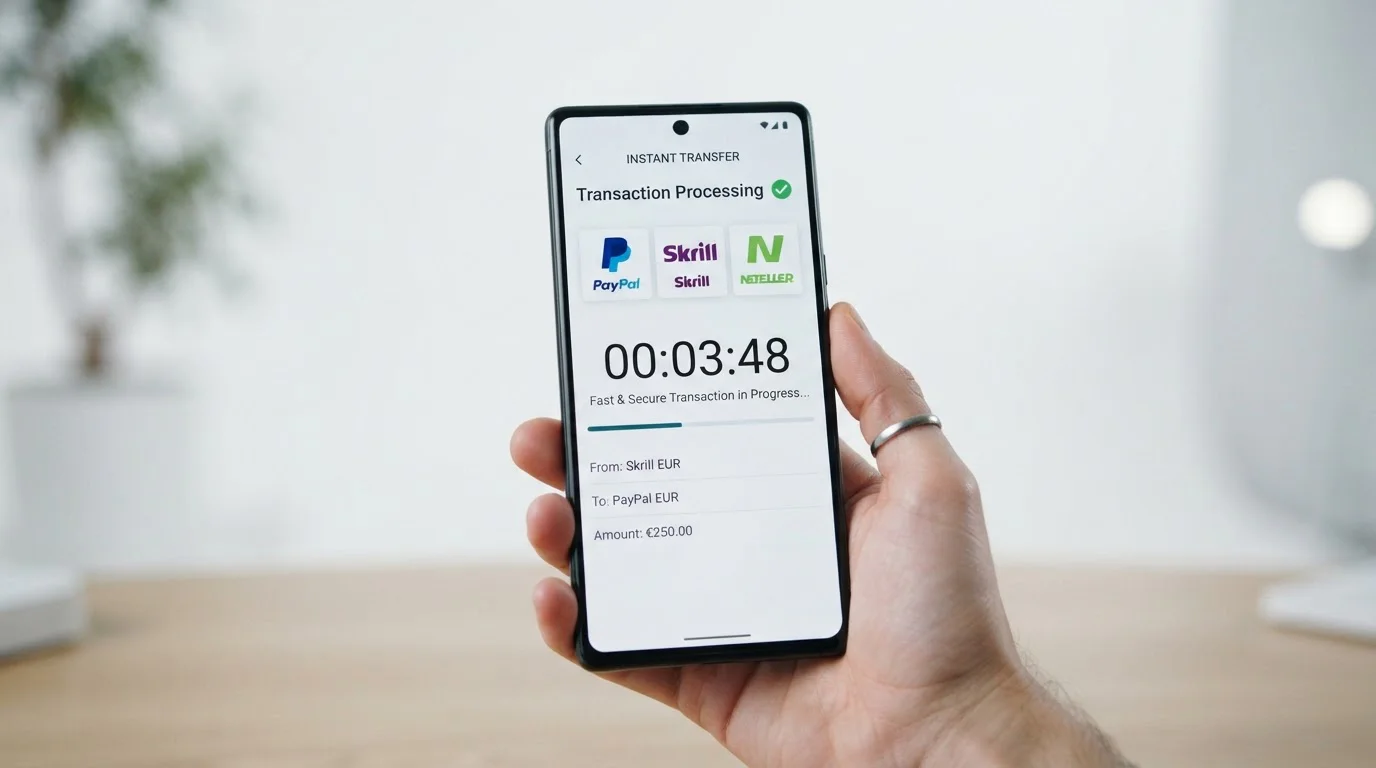
E-wallets—PayPal, Skrill, Neteller—are the speed merchants of UK casino banking. Deposits hit instantly, same as debit cards, but withdrawals arrive in hours rather than days. The trade-off: some wallets charge fees to cash out to your bank account, and several UKGC operators exclude e-wallet deposits from welcome-bonus eligibility to prevent bonus abuse (deposit, claim bonus, withdraw, repeat at another site).
PayPal
PayPal is the most trusted e-wallet in the UK and the fastest way to get your winnings out of a UKGC casino. Testing in 2026 recorded a 35-minute payout at Casumo, under four hours at Betway, and under five hours at Ladbrokes. Top-tier operators typically pay within about four hours—radically faster than the two-to-five-day wait debit cards impose.
PayPal Holdings is a US fintech (NASDAQ: PYPL) regulated in the UK by the FCA. It blocked gambling transactions for years, reversed course in 2019, and now partners with most major UKGC operators: bet365, William Hill, 888 Casino, Casumo, LeoVegas, Betway, PartyCasino, Ladbrokes, Grosvenor, Sky Bet and Foxy Bingo all accept PayPal deposits and withdrawals. Minimum deposit is £10 at most operators. Maximum deposit ranges from £10,000 to £50,000 depending on the casino.
The killer feature: zero fees. PayPal does not charge UK consumers for gambling deposits or withdrawals, and UKGC operators do not charge PayPal-specific fees either. Contrast this with Skrill (5% fee to withdraw GBP from your Skrill account to your UK bank) and Neteller (2.5% fee), and PayPal’s advantage is clear. You deposit £500, win £800, withdraw £1,300 to PayPal, and hours later you move £1,300 from PayPal to your bank account without a penny lost to fees.
PayPal deposits qualify for welcome bonuses at most UKGC operators. Skrill and Neteller do not, because those wallets became vehicles for bonus hunters cycling deposits across multiple casinos to clear wagering requirements quickly. PayPal avoided that stigma, so when a UKGC casino offers 50 free spins on a £10 deposit, your PayPal tenner counts.
The 35-minute Casumo payout is an outlier, not a guarantee. Betway’s under-four-hours result is more typical of top-tier operators, while Ladbrokes clocks in under five hours. Smaller or slower UKGC casinos may take 12 to 24 hours. Still, even the slow end of the PayPal range beats debit cards by days.
Skrill
Skrill—formerly Moneybookers—is PayPal’s scrappier rival and Neteller’s sibling: both are owned by Paysafe Group. It’s FCA-regulated, and widely accepted at offshore casinos because it asks fewer questions than PayPal and integrates easily into Curaçao-licensed operators’ payment stacks. Among UKGC operators, acceptance is narrower: William Hill, 888 Casino, Betway, PartyCasino, Ladbrokes and Sky Bet take Skrill deposits, but bet365 and Casumo block it to prevent bonus abuse.
Deposits are instant. Minimum is £10. Withdrawals from casino to Skrill account take 45 minutes to 24 hours (Ladbrokes hit 45 minutes in independent testing, the fastest Skrill payout on record). The problem surfaces when you want the money in your UK bank account: Skrill charges a 5% fee to withdraw GBP from your Skrill wallet to your bank. Win £1,000, withdraw to Skrill, then move it to your bank—you lose £50. That fee is waived for Skrill VIP users, but VIP status requires sustained high volume.
Skrill deposits are excluded from welcome bonuses at most UKGC operators. The exclusion appears in the fine print: “Deposits via Skrill or Neteller do not qualify.” The rationale: bonus hunters used Skrill’s instant deposits and low-friction withdrawals to cycle through multiple casinos, claim bonuses, clear wagering, withdraw, repeat. Operators caught on and blacklisted the method.
If you gamble at offshore casinos, Skrill is more useful than at UKGC sites. Curaçao operators that still accept credit cards also love Skrill because it moves money quickly and regulatory scrutiny is lighter than PayPal’s. But for UK-licensed play, PayPal wins on fees and bonus eligibility unless you already hold a Skrill VIP account.
Neteller
Neteller is Skrill’s sister brand—same Paysafe Group ownership, same FCA regulation, similar acceptance pattern at UKGC casinos, and the same bonus exclusion. William Hill, 888 Casino, Betway, PartyCasino and Ladbrokes accept it; bet365 and Casumo do not. Minimum deposit £10, withdrawal speed typically one to 24 hours. Neteller runs on the same Paysafe infrastructure as Skrill, so expect payout times in a similar range; check the operator’s cashier page for its own stated processing time.
The fee is lower than Skrill’s but still present: Neteller charges 2.5% to withdraw GBP from your Neteller account to a UK bank. Win £1,000, cash out to Neteller, transfer to your bank—you pay £25. Better than Skrill’s 5%, worse than PayPal’s zero.
Neteller was historically popular among high-stakes players and offshore-casino regulars because it supported higher transaction limits and imposed fewer verification hoops than mainstream banks. In 2026, that edge has dulled. PayPal raised its gambling limits, UKGC operators implement the same KYC checks regardless of payment method, and the 2.5% withdrawal fee makes Neteller a second choice unless you already use it for non-gambling fintech purposes.
Like Skrill, Neteller deposits do not qualify for welcome bonuses at UKGC casinos. The exclusion is near-universal. If you want to claim a free-spins offer or a matched deposit, use a debit card or PayPal.
| Method | Withdrawal Speed | Operator Fee | E-wallet to Bank Fee | Operators Accepting | Bonus Eligibility |
|---|---|---|---|---|---|
| PayPal | 35 min–24 hours | £0 | £0 | bet365, William Hill, 888, Casumo, LeoVegas, Betway, PartyCasino, Ladbrokes | Yes |
| Skrill | 45 min–24 hours | £0 | 5% (waived for VIP) | William Hill, 888, Betway, PartyCasino, Ladbrokes, Sky Bet | No |
| Neteller | 1–24 hours | £0 | 2.5% | William Hill, 888, Betway, PartyCasino, Ladbrokes | No |
Which payment method is fastest for withdrawals at UK casinos?
PayPal is the fastest widely accepted method, with payouts recorded at 35 minutes at Casumo, under four hours at Betway, and under five at Ladbrokes in 2026 testing. Skrill managed 45 minutes at Ladbrokes. Debit cards take two to five business days, bank transfers three to seven.
Why are Skrill and Neteller excluded from welcome bonuses at some casinos?
Bonus hunters used their instant deposit-and-withdrawal flow to cycle through casinos—deposit, claim a bonus, clear wagering, cash out, repeat. Operators responded by barring Skrill and Neteller deposits from welcome offers: you can still fund with them, but the deposit won’t trigger the bonus. PayPal’s stricter verification kept its abuse volumes lower, so it stays eligible.
Mobile Pay and Bank Transfer
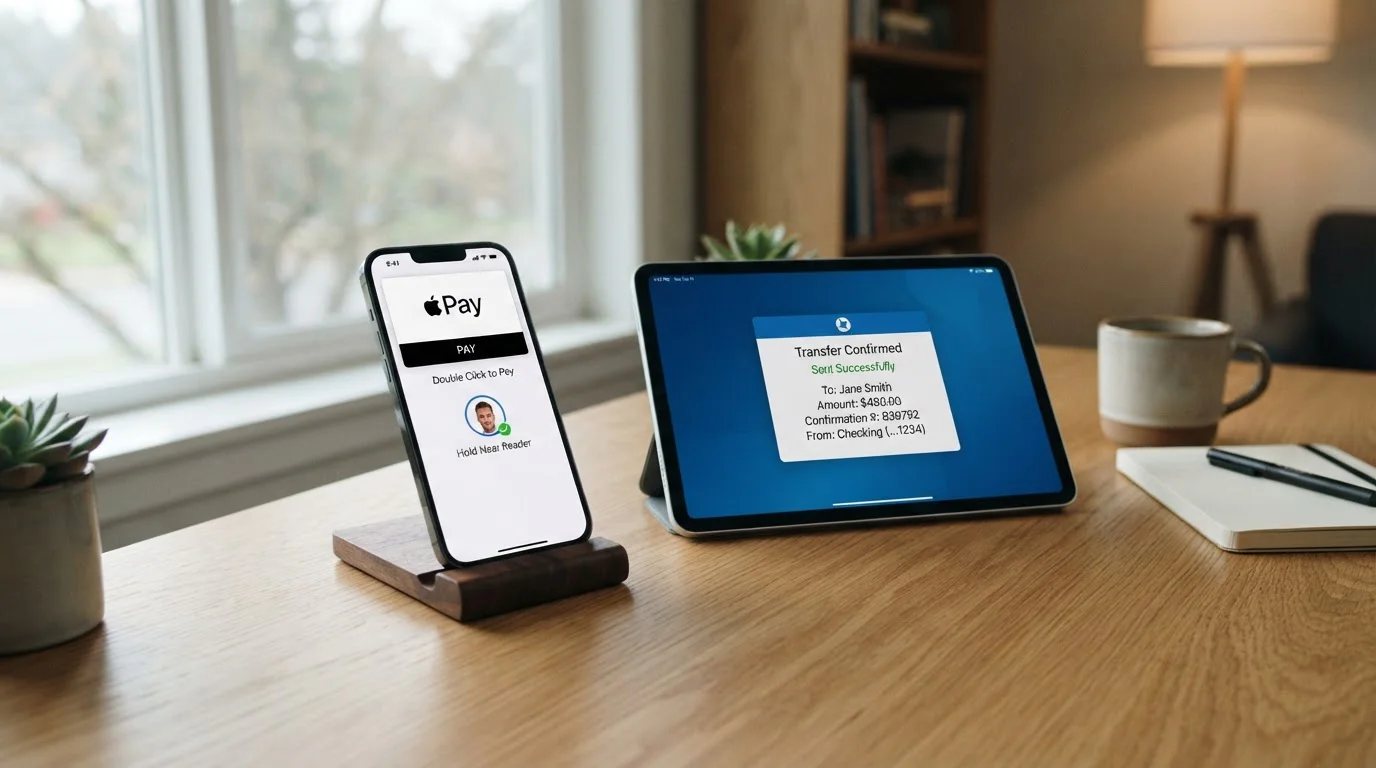
Mobile pay and bank transfer occupy opposite ends of the convenience spectrum. Apple Pay gets you playing in seconds with a Face ID tap; bank transfer moves five-figure sums slowly but with the highest deposit limits in UK casino banking.
Apple Pay
Apple Pay is a debit card in mobile drag. When you add a Visa Debit or Mastercard Debit to Apple Wallet, then deposit at a casino using Apple Pay, the transaction runs through the underlying card—Visa or Mastercard process it, your bank debits your account, the casino receives the funds instantly. Apple is the authentication layer (Face ID, Touch ID), not the payment rail.
Deposits are instant. Minimum deposit is £1 at DragonBet, £5 at bet365, Paddy Power and William Hill, £10 at LeoVegas and 888 Casino—same floors as standard debit-card deposits because Apple Pay is a debit-card deposit. Withdrawals do not “return to Apple Pay” (there’s nowhere for money to sit in Apple Wallet); they return to the underlying debit card, processed as standard card withdrawals, taking two to five business days.
Apple Pay is accepted at bet365, William Hill, 888 Casino, LeoVegas, Betway, BoyleSports, Highbet and most other UKGC operators that invested in mobile-optimised cashiers. No operator charges an Apple Pay-specific fee. Apple does not charge consumers for using Apple Pay at gambling sites. The transaction is free at every layer.
The UX advantage is speed and convenience on mobile. Open the casino app, tap deposit, authenticate with Face ID, done—funds land in three seconds. No typing card numbers, no fumbling for a physical card. The authentication happens on-device: your fingerprint or face never leaves your iPhone, and the casino never sees your actual card number. Apple Pay generates a one-time token for each transaction, which the casino’s payment processor receives instead of your card details. If the casino’s database is breached, your card information is not exposed because it was never stored there.
The downside: Apple Pay only works on iPhone (with Wallet app) or Apple Watch, and withdrawals still take days because they’re routed as debit-card returns, not to an Apple Pay balance. There is no “Apple Pay account” where winnings sit. The money returns to the Visa Debit or Mastercard Debit card you linked to Apple Wallet, following the same two-to-five-day timeline as any debit-card withdrawal.
Google Pay works identically for Android users—same debit-card underpinning, same instant deposits, same card-return withdrawals, same tokenisation security. BetVictor sets a £5 Google Pay minimum; most others match their debit-card floors. Acceptance at UKGC operators is growing but not yet universal; check the cashier before assuming it’s there. Google Pay is slightly less common than Apple Pay at UK casinos in 2026, largely because Apple Pay launched earlier and captured the premium segment where casino apps are more polished.
Bank Transfer / Open Banking
Bank transfer is the oldest method and the slowest, unless you use Open Banking—a modern wrapper that turns a three-day crawl into an instant deposit. Traditional bank transfer (you manually send funds from your bank to the casino’s sort code and account number) takes one to three business days for deposits, three to seven days for withdrawals. Open Banking (branded as Trustly, Pay by Bank, or Instant Bank Transfer at UK casinos) connects your bank account to the casino via API under PSD2 regulation, authenticating you through your bank’s own app and moving money in real time.
Trustly is the dominant Open Banking provider at UKGC casinos. Deposits are instant—you select Trustly at the cashier, pick your bank from a list (Barclays, HSBC, Lloyds, Santander, Nationwide, Monzo, Starling, NatWest, dozens more), authenticate via your bank’s app, and funds land immediately. Withdrawals via Trustly are supposed to be faster than traditional bank transfer (Betway recorded a 50-minute Trustly payout in independent testing), but three to five business days is more common in practice.
The authentication flow is worth understanding because it explains why Open Banking is both instant and secure. When you choose Trustly at the casino cashier, you are redirected to Trustly’s interface, where you select your bank. Trustly then redirects you to your bank’s own login page—Barclays’ mobile banking, HSBC’s app, Lloyds’ online portal, whatever you normally use. You authenticate using your bank’s credentials (username, password, two-factor SMS or biometric), but those credentials never pass through Trustly or the casino. Your bank confirms to Trustly “yes, this person is our customer and has authorised a £100 transfer to this merchant,” Trustly relays that confirmation to the casino, and your bank debits your account. The casino never sees your bank login; Trustly never stores your credentials. It’s API-based read-and-write access under PSD2, the EU and UK regulation that forces banks to open their systems to licensed third-party providers.
Minimum deposits for bank transfer are high relative to cards and e-wallets. bet365 sets a £100 minimum for bank transfer deposits (the highest floor among UKGC operators), justified by the higher per-transaction cost banks charge merchants for processing bank transfers. Other operators set £10 to £20 minimums. Maximum deposits are stratospheric: £100,000 per transaction at bet365, the highest deposit limit among the operators covered here. High-rollers who want to move six figures in one go use bank transfer because the other methods top out at £50,000 or less.
No operator charges fees for bank-transfer deposits or withdrawals. Your bank may charge for faster payments (typically free for consumer accounts in the UK, but business accounts sometimes pay per transaction). Trustly, Pay by Bank and other Open Banking providers are free to consumers—they make money from merchants, not players.
Bank transfer is overkill for casual deposits. If you’re putting £20 on a slot session, a debit card or e-wallet is faster and easier. If you’re moving more than the £50,000 that the most generous debit-card limits allow in one go, bank transfer (especially via Trustly or Open Banking for instant crediting) is the only method with the headroom. The £100,000 cap at bet365 is the highest single-transaction limit among the operators covered here in 2026.
What is the minimum deposit at UK online casinos?
Minimum deposits vary by operator and method. The lowest is £1 at DragonBet (debit card and Apple Pay). The most common floor is £5 (bet365, William Hill, Ladbrokes, Betfred) or £10 (LeoVegas, 888 Casino, Casumo). PayPal, Skrill and Neteller typically ask £10; bank transfers often require £100 because they cost operators more to process.
What is Open Banking and which casinos accept it?
Open Banking links your bank account directly to the casino through a secure API under PSD2, bypassing card networks—you authorise it in your own bank’s app and funds move in real time. Trustly is the leading provider, accepted at bet365, William Hill, LeoVegas, Betway and Casumo. Deposits are instant; withdrawals take three to five days.
Prepaid Vouchers and Offshore Options
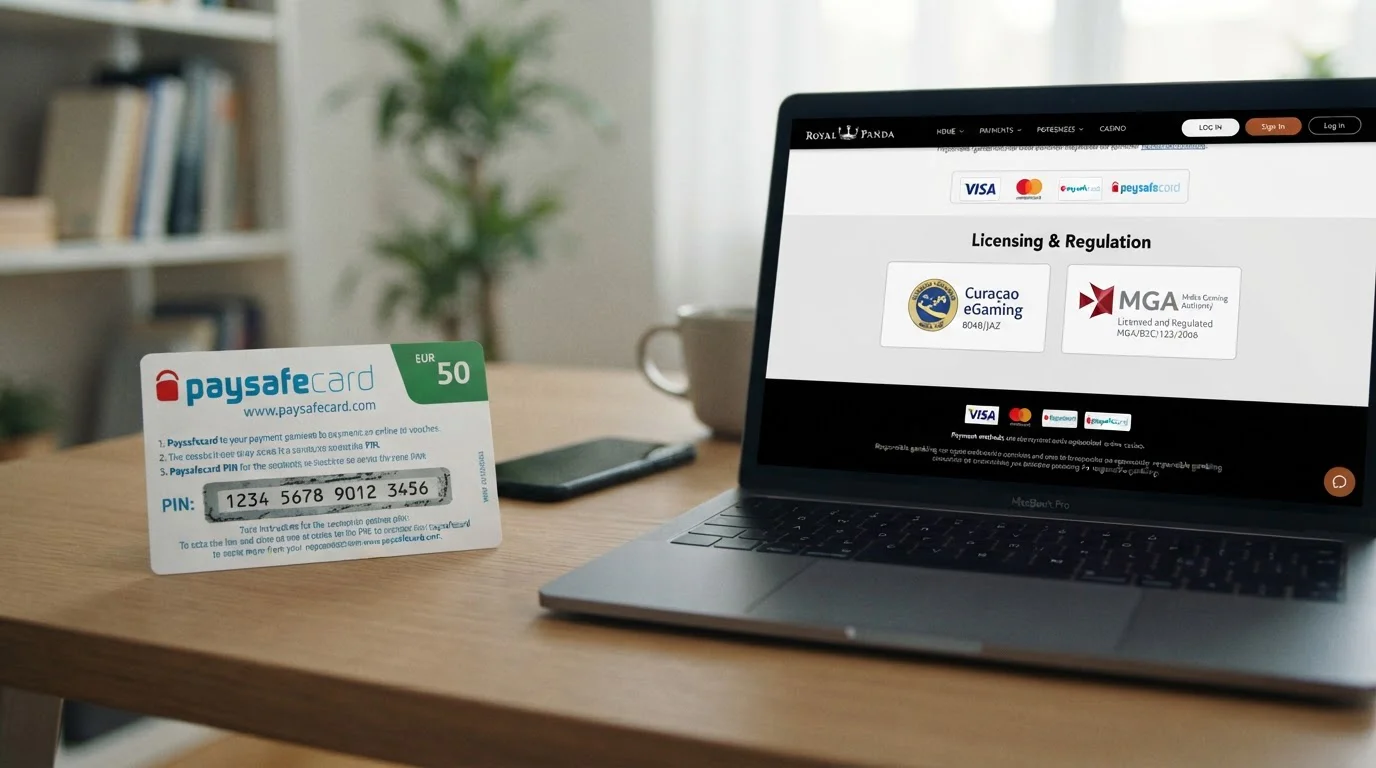
Prepaid vouchers (Paysafecard) and offshore casinos are niche routes for players who want anonymity or credit-card access respectively. Neither is a Wirecard replacement in the strict sense, but both fill gaps in the 2026 UK payment landscape.
Paysafecard is a prepaid voucher you buy with cash at retail (corner shops, petrol stations, newsagents across the UK). You receive a 16-digit PIN, enter it at the casino cashier, and the voucher amount is credited instantly. No bank account required and no card details shared with the casino. Several UKGC operators accept Paysafecard (LeoVegas, 888 Casino, PartyCasino), though it’s less common than cards or e-wallets. Minimum deposit is typically £10. Vouchers are sold in fixed values up to £100, the maximum for a single voucher; you can combine up to ten PINs in one payment (up to £1,000), but casinos often set lower limits. Withdrawals cannot return to Paysafecard—you must nominate a bank account or e-wallet, which defeats the anonymity angle on the way out.
Paysafecard appeals mainly to players without a bank card and to those who budget in cash: once a £20 voucher is spent, it is spent, which makes it a natural spending cap. The cash-purchase-at-retail model means no card details are ever shared with the casino. Once redeemed, the casino knows you deposited via Paysafecard but not which retail location you bought it from. Paysafecard itself does not perform identity checks when you buy a standard voucher; the retailer scans the voucher, you pay cash, you receive the PIN. Do not mistake that for anonymous gambling, though: UKGC operators must verify your age and identity before you can deposit or play at all, so your casino account is fully identified from the start, and withdrawals have to go to a bank account or e-wallet in your own name. If you are using vouchers to keep gambling out of sight of a partner or your bank because it is getting out of hand, that is a signal to talk to GamCare (0808 8020 133) or BeGambleAware.
Offshore casinos licensed in Curaçao, Malta (MGA), Anjouan or other non-UK jurisdictions still accept credit cards from UK players because the UKGC’s 14 April 2020 ban does not extend beyond British licences. In 2026, only offshore operators will take a Visa Credit or Mastercard Credit deposit from a UK player—and gambling with borrowed money is exactly the harm the UK ban was designed to stop. Those sites often accept Skrill, Neteller, Bitcoin and other cryptocurrencies as well; payment flexibility is their pitch, but it comes without UK protections.
The trade-off: offshore casinos sit outside UK consumer protection. No GAMSTOP integration: offshore sites cannot see a GAMSTOP exclusion, which is a reason for self-excluded players to stay away, not a loophole—self-exclusion exists for a reason, and free support is available from GAMSTOP, GamCare (0808 8020 133) and BeGambleAware. No UKGC dispute resolution (if a withdrawal is delayed or bonus terms disputed, the UKGC has no jurisdiction). No January 2026 10x wagering cap (offshore operators set their own bonus terms, often 35x or higher). Payment speed and reliability vary wildly—some Curaçao operators pay out in hours, others stall for weeks.
Offshore licensing is not inherently fraudulent. Malta Gaming Authority (MGA) is a legitimate regulator with strict standards; MGA-licensed operators like LeoVegas and Betsson operate in multiple European markets legally. Curaçao eGaming issues licences more liberally and enforces less vigorously, but thousands of Curaçao-licensed casinos operate without major incident. The risk is not that every offshore casino is a scam; the risk is that when something goes wrong—a withdrawal is denied, a game malfunctions, a bonus dispute arises—you have no recourse to a UK regulator. UKGC-licensed operators answer to the Gambling Commission and face licence suspension or revocation for breaches; offshore operators answer only to their home jurisdiction, which may or may not care about a UK player’s complaint.
UK law does not prohibit residents from using offshore gambling sites. The Gambling Act 2005 makes it an offence for an operator to advertise unlicensed gambling to UK consumers, but does not criminalise UK players using those sites. The risk is consumer protection, not legality.
Are offshore casinos legal for UK players?
UK law does not stop residents gambling at offshore-licensed sites—the Gambling Act 2005 targets operators, not players. The trade-off is steep: no GAMSTOP, no UK dispute resolution via an approved ADR provider such as IBAS, and no 10x wagering cap. Offshore sites still take credit cards, which UK rules banned to reduce harm.
How to Choose the Right Payment Method

Wirecard is gone, and the methods that replaced it each suit different priorities. Speed, fees, bonus eligibility, deposit limits—pick the axis that matters to you and the choice narrows itself.
For speed, PayPal wins among widely accepted methods. Thirty-five minutes to 24 hours (around four at top-tier operators) beats debit cards (two to five days) and bank transfers (three to seven days) by a margin that matters if you want your winnings tonight rather than next week. Skrill and Neteller match PayPal’s speed but lose on fees: 5% and 2.5% respectively to cash out to your UK bank, versus PayPal’s zero.
For bonus eligibility, debit cards and PayPal count; Skrill and Neteller do not. If you plan to claim a welcome offer—free spins, matched deposit, whatever the casino dangles—deposit with a Visa Debit, Mastercard Debit, or PayPal. Skrill and Neteller deposits are excluded from most UKGC bonus terms because operators blacklisted them to curb bonus abuse.
For high deposits, bank transfer (especially via Trustly or Open Banking) is the only method with six-figure headroom. bet365’s £100,000 bank-transfer cap dwarfs the £10,000–£50,000 card and e-wallet limits. If you’re funding a serious bankroll, bank transfer is the only realistic option.
For zero hassle, debit cards are universal. Every UKGC-licensed casino accepts Visa Debit and Mastercard Debit, no account setup required, zero fees, and you already have one in your wallet. Withdrawals are slow, but the method never fails.
For mobile convenience, Apple Pay (iPhone) or Google Pay (Android) shaves seconds off the deposit flow with Face ID or fingerprint authentication. Under the hood it’s a debit-card transaction, so withdrawal speed and limits match standard debit cards, but the UX on mobile is cleaner.
| Method | Speed (Withdrawal) | Fees | Acceptance | Best For |
|---|---|---|---|---|
| Debit Card | 2–5 days (1 hour at Casumo) | £0 | 100% UKGC operators | Universal fallback, bonus eligibility |
| PayPal | 35 min–24 hours | £0 | Most UKGC operators | Speed, zero fees, bonus eligibility |
| Skrill | 45 min–24 hours | 5% (wallet to bank) | Some UKGC operators, most offshore | Offshore play, fast withdrawals despite fee |
| Neteller | 1–24 hours | 2.5% (wallet to bank) | Some UKGC operators, most offshore | Offshore play, lower fee than Skrill |
| Apple Pay | 2–5 days (card return) | £0 | Most UKGC operators | Mobile UX, instant deposits |
| Bank Transfer | 3–7 days (50 min–5 days via Trustly) | £0 | All UKGC operators | High deposits (£100k+ at bet365) |
How long do PayPal withdrawals take at UK casinos?
PayPal withdrawals from UKGC casinos take 35 minutes to 24 hours. Testing in 2026 recorded 35 minutes at Casumo, under four hours at Betway, and under five at Ladbrokes; top-tier operators typically pay within about four hours, slower ones within 12 to 24. Moving the money from PayPal to your bank is instant and free.
Is Wirecard still available at UK online casinos in 2026?
No. Wirecard AG filed for insolvency on 25 June 2020 after €1.9 billion went missing, and the UK Financial Conduct Authority froze its UK subsidiary the next day. Its assets were sold to Santander in November 2020. Wirecard processes payments for no casino, UK or offshore—any site claiming otherwise is outdated or fraudulent.
Casino Deposit Methods UK 2026 — Compare Payment Options
Content created by the «casinopayoptions-uk.com» team