
Best UK Casinos That Accept Open Banking — Tested Withdrawal Speeds 2026
 Available in GB
Open Banking swept through UK online casinos faster than most payment innovations. By 2026, it’s the default instant bank transfer method at licensed operators, replacing the three-to-five-day wire transfers that used to make withdrawals feel like an ordeal. The technology is straightforward: your bank confirms the payment through its own app, biometrics handle authentication, and the casino never sees your card details or login credentials.
What sets Open Banking apart isn’t just the instant deposits — debit cards do that too. It’s the withdrawal speed when operators implement it properly, the lack of card decline risk, and the way it enables real-time affordability checks that the UK Gambling Commission now requires. This guide identifies which UKGC-licensed casinos accept Open Banking in 2026, compares their actual withdrawal times, and explains how the technology differs from traditional bank transfers and card payments.
The twelve operators below were selected using three filters: active UKGC licence, Open Banking or instant bank transfer support in the cashier, and enough published information to compare withdrawal speeds and player experience. Four were tested for end-to-end withdrawal times in September 2026. The rest are high-street brands or established online operators that list Pay by Bank or bank transfer in their cashiers.
What Is Open Banking and How Does It Work at UK Online Casinos?
Open Banking is the UK’s implementation of the Second Payment Services Directive, launched in January 2018 after the Competition and Markets Authority’s retail banking investigation. The framework allows Financial Conduct Authority-regulated payment providers to initiate bank transfers on your behalf with your explicit consent. Casinos integrate providers like Trustly, TrueLayer, or Yapily into their cashiers — you see “Pay by Bank,” “Open Banking,” or “Instant Bank Transfer” as an option alongside cards and e-wallets.
The mechanism bypasses card networks entirely. When you deposit, you select your bank from a list, authenticate the payment in your banking app (usually via fingerprint or Face ID), and return to the casino. Funds credit instantly because the payment runs over the UK’s Faster Payments Service, which settles in under sixty seconds. The casino receives confirmation directly from your bank through the provider’s API. No sixteen-digit card number, no CVV, no credentials stored on a casino server.
The Technology Behind Open Banking Payments
Three layers sit between your bank and the casino. First, the casino contracts with a payment initiation service provider — Trustly dominates UK iGaming, but TrueLayer, Yapily, Token.io, and Plaid also operate here. Second, that provider holds FCA authorisation to request payments from UK banks on behalf of third parties. Third, your bank’s API receives the payment request, you confirm it through your own banking interface, and the bank pushes the funds via Faster Payments.
Authentication happens in your bank’s environment, not on the casino’s site. If you’re on mobile and your bank’s app is installed, the redirect opens it directly. On desktop, you authenticate through your bank’s web interface. Either way, the casino never touches your login credentials. Once you confirm, the provider notifies the casino that the payment succeeded, and your balance updates.
Trustly processes most Open Banking transactions at UK casinos. The Swedish fintech established UK iGaming relationships early and handles both deposits and withdrawals through the same integration. TrueLayer, a UK-based provider, powers instant banking at newer operators and platforms built on modern tech stacks like Playbook Engineering. Some casinos run Open Banking through their platform provider’s native integration — Betable, Skill On Net, and White Hat Gaming all offer Pay by Bank as part of their turnkey casino systems.
How to Deposit Using Open Banking at a UK Casino
The deposit flow takes under a minute if your bank is on the supported list. You open the casino cashier, select “Pay by Bank” or “Open Banking,” and enter the amount. The cashier shows a list of UK banks — select yours. If you’re on mobile, your bank’s app opens automatically. On desktop, you’re redirected to your bank’s login page. Authenticate with biometrics, passcode, or whatever method your bank requires. Approve the payment. You’re redirected back to the casino, and your balance reflects the deposit immediately.
Minimum deposits typically sit at five to ten pounds, depending on the operator’s cashier settings rather than the Open Banking rail itself. Maximum per-transaction limits vary by bank and by casino. Retail current accounts commonly cap Faster Payments at ten thousand pounds per day, which indirectly limits Open Banking deposits. Some casinos set their own per-transaction caps — usually five to ten thousand pounds for instant bank transfers. If you need to deposit more, you’ll either split it across transactions or use a manual bank transfer, which isn’t instant but has higher limits.
No fees apply to Open Banking deposits at UKGC-licensed casinos. The operator pays the provider’s transaction fee, which runs between 0.25% and 1%. Card costs are not dramatically higher on paper — UK consumer debit interchange is capped at 0.2%, although gambling merchants also pay scheme fees and acquirer margins on top — so the bigger attraction for casinos is operational. Players deposit for free, and casinos process Open Banking transactions smoothly because there’s no card decline risk and no chargeback window.
How to Withdraw Using Open Banking
Withdrawals follow the reverse path, but speed depends on the casino’s internal processing time, not the payment rail. Once the casino approves your withdrawal — after verification, anti-money laundering checks, and bonus wagering completion — the payout is pushed back to your bank account via Faster Payments. That final leg takes under a minute. The bottleneck is how long the casino holds the withdrawal for review.
The fastest operators clear Open Banking withdrawals in under twenty-four hours end-to-end. The slowest stretch it to three or four days. The difference isn’t the technology — it’s how quickly the compliance team approves the payout. Casinos that brand withdrawals as “instant” or “same-day” have streamlined their internal checks, often using Open Banking’s real-time transaction data to verify affordability and source of funds automatically.
If you deposited via Open Banking, most operators require your first withdrawal to return to the same bank account. This is an anti-money laundering requirement, not a technical limitation. If you want to withdraw to a different method — say, you deposited via Open Banking but want a withdrawal to PayPal — some casinos allow it after additional verification. Others don’t. Check the cashier’s withdrawal rules before your first deposit if method flexibility matters to you.
What’s the difference between Open Banking and a traditional bank transfer?
Traditional bank transfers run on BACS (three working days) or CHAPS (same-day, but your bank typically charges £25–£35). Open Banking runs on Faster Payments: instant, available 24/7 including weekends, and free to the player. A “bank transfer” deposit at a UK casino usually means Open Banking unless it is explicitly labelled BACS or wire transfer.
The user experience differs sharply. With a traditional bank transfer, you’d log into your bank separately, manually enter the casino’s sort code and account number, add a reference code, and wait three days for the casino to match your payment and credit your balance. With Open Banking, you click one button in the casino cashier, authenticate in your bank app, and your balance updates in seconds. The old method required the casino to reconcile incoming transfers against pending deposits. The new method confirms instantly through the API.
What is Open Banking and how does it work at UK online casinos?
Open Banking lets you deposit and withdraw at UK casinos by authorising a bank-to-bank payment, bypassing card networks. The casino never sees your login or card details. Payments settle instantly via Faster Payments, regulated by the FCA under PSD2. It is faster than traditional bank transfers and more secure than storing card details.

Top UK Casinos That Accept Open Banking in 2026
The twelve casinos below all hold active UKGC licences and accept Open Banking deposits and withdrawals. They’re ordered by tested withdrawal speed where a test is available, then by brand recognition and player volume. Four operators — PricedUp Bet, SpinYoo, DAZN Bet, and Luckymate — were tested end-to-end in September 2026 with real deposits, play, and withdrawals via bank transfer to an HSBC account. The measured times include the casino’s internal processing, not just the payment rail.
The rest are either high-street brands with Pay by Bank in their cashiers (Paddy Power, Coral, Sky Vegas, Grosvenor) or established online operators that list bank transfer or Pay by Bank as a payment method (Casumo, Betway, SlotsMagic, Oreels). Here are the key parameters side by side, with a closer look at each operator below.
| Operator | UKGC Licence | Withdrawal Speed | Min Deposit | Distinguishing Feature |
|---|---|---|---|---|
| PricedUp Bet | UKGC-licensed | 23h 45m (tested Sept 2026) | £1 | Fastest tested withdrawal, Playbook platform, odds boosts |
| SpinYoo | UKGC-licensed | 1d 15h (tested Sept 2026) | £10 | Free spins specialist, White Hat Gaming, Trustly confirmed |
| DAZN Bet | UKGC-licensed | 2d 18h (tested Sept 2026) | £10 | DAZN Group sports brand, Trustly, competitive sports odds |
| Luckymate | UKGC-licensed | 3d 4h (tested Sept 2026) | See operator T&Cs | No-wagering bonuses, 0% margin sports markets, around 1,800 games |
| Paddy Power | UKGC-licensed | Instant (claimed) | See operator T&Cs | High-street household name, Flutter Entertainment, instant Pay by Bank |
| Coral Casino | UKGC-licensed | 1–3 days | £5 | Founded 1926, Entain plc, land-based heritage, Gibraltar licence |
| Sky Vegas | UKGC-licensed | Instant (claimed) | See operator T&Cs | No-wagering free spins, casino-only, Sky Betting & Gaming, Revolut Pay |
| Casumo | UKGC-licensed | 24h–3 days | See operator T&Cs | Gamification pioneer, around 3,500 games |
| Betway | UKGC-licensed | 2–24h e-wallets, 1–5d bank | £5 | Global brand, Super Group NYSE, several hundred games, hybrid sports+casino |
| SlotsMagic | UKGC-licensed | Hours–1 day | £10–£20 | Thousands of games (largest here), SkillOnNet platform, slots focus |
| Grosvenor Casino | UKGC-licensed | 15 min (claimed) | £5 | 52 land-based venues, Rank Group plc, Instant Bank Transfer Fast Withdrawals |
| Oreels | UKGC-licensed | Under 4h avg (claimed) | See operator T&Cs | Mobile-first design, Betable platform, launched 2017 |
PricedUp Bet — Fastest Withdrawals in Independent Testing
PricedUp Bet is UKGC-licensed (verify on the public register at gamblingcommission.gov.uk), with the licence held by Off Course Bookmakers Limited, a company that’s been in the UK bookmaking business since 1986. The online platform launched in 2024 on the Playbook Engineering tech stack, positioning itself as a speed-focused operator with transparent odds and fast payouts. The casino offers around 1,200 games alongside sports betting across twenty-five markets, and the welcome offer sits at Bet £40 Get £20 Free Bets with no complex wagering ladders.
Open Banking is a primary payment method here, and testing in September 2026 measured the end-to-end withdrawal time at twenty-three hours and forty-five minutes from request to funds landing in an HSBC account. That’s the fastest verified time among UK casinos tested. The minimum deposit is one pound, which is unusually low and makes PricedUp accessible for small-stakes players. Withdrawals clear in fifteen to thirty minutes according to the operator’s marketing, though the real-world test showed the internal processing added most of the twenty-four-hour window. Once approved, the payout hits your bank in under a minute via Faster Payments.
SpinYoo — Free Spins Specialist with Fast Payouts
SpinYoo is UKGC-licensed (verify on the public register at gamblingcommission.gov.uk) and also holds a Malta Gaming Authority licence. The casino launched in 2021 and runs on White Hat Gaming’s aggregation platform, which pulls games from over forty-five software providers. The promotional structure leans heavily on free spins: up to one hundred spins on your first deposit, weekly cashback, daily spins deals, and a loyalty programme that converts points into spins or bonus credit.
Trustly powers the Open Banking integration here, confirmed in UK casino testing. The September 2026 withdrawal benchmark came in at one day and fifteen hours — second-fastest in the tested group. PayPal withdrawals clear in twenty-four hours, debit cards take one to three days. The casino’s game library exceeds one thousand titles, with a strong emphasis on slots and a lighter touch on table games and live dealer. If you’re after a spins-heavy bonus programme and faster-than-average withdrawals via Open Banking, SpinYoo’s a solid mid-tier pick.
DAZN Bet — Sports-First Operator with Instant Banking
DAZN Bet is owned by DZBT Limited, part of the DAZN Group, the global sports streaming conglomerate. The UK casino launched in 2022 and is UKGC-licensed (verify on the public register at gamblingcommission.gov.uk). The brand is sports-first — broad market coverage, competitive odds, no live streaming as of 2026 — with a casino component that offers around 1,500 games. The welcome offer is Bet £10 Get £20 Free Bets, and the minimum deposit sits at ten pounds.
Trustly confirmed as the Open Banking provider. The September 2026 withdrawal test recorded two days and eighteen hours end-to-end, making DAZN Bet third-fastest in the group. PayPal withdrawals clear in two to four hours, card withdrawals take one to three business days. The casino is mobile-optimised and built for players who came for sports betting and stayed for slots. If you’re a DAZN subscriber or sports fan, the brand recognition carries weight, and the withdrawal speed sits comfortably in the faster half of UK operators.
Luckymate — No-Wagering Bonuses and Competitive Speed
Luckymate launched in 2025 and is UKGC-licensed (verify on the public register at gamblingcommission.gov.uk), with the licence held by Anakatech Interactive Limited. The platform is a hybrid sports and casino operation with roughly 1,800 to 2,000 games from more than forty providers. The sports side features zero-percent-margin markets on select football and tennis events, which is rare and appeals to sharp bettors. The casino side emphasises live dealer depth and mobile-first design.
The September 2026 withdrawal test measured three days and four hours, placing Luckymate fourth in the tested group. The operator claims twenty-four to forty-eight-hour withdrawal times in its marketing, so the real-world result ran longer than advertised. The standout feature is the no-wagering bonus structure: free spin winnings from the welcome offer are paid as cash with no rollover requirement. That’s player-friendly and removes the usual bonus trap where winnings stay locked until you’ve wagered them several times over — up to ten times under the UKGC’s January 2026 cap, and thirty or forty times under the terms that were common before it.
Paddy Power — Household Name with Instant Pay by Bank
Paddy Power is one of the UK’s best-known bookmakers, founded in 1988 and now owned by Flutter Entertainment, the largest gambling group globally. The brand operates across sports and casino with a full-spectrum offering: hundreds of slots, live casino, jackpots, and market-leading sports coverage. The UKGC licence is held through Flutter group companies; you can check the licensee’s details and any regulatory history on the Gambling Commission’s public register.
Pay by Bank is listed as a deposit and withdrawal method for UK and Ireland customers, available on mobile and desktop. The official help centre states that Pay by Bank withdrawals “appear in your bank immediately,” which aligns with the instant Faster Payments rail once the casino approves the payout. There is no timed withdrawal test for Paddy Power in this guide, so treat “immediately” as the time after the casino approves the payout rather than from the moment you request it. The brand’s household recognition and high-street legacy make it a trust anchor for players who value established names over new entrants.
Coral Casino — High-Street Legacy and Entain Trust
Coral was founded in 1926, making it one of the oldest bookmakers in the UK. The brand is now part of Entain plc, which had a market cap of £8.7 billion in April 2026. Coral operates under a UKGC licence held by an Entain group company (the account number can be checked on the Gambling Commission’s public register) and holds a Gibraltar licence as well. The land-based presence includes shops across UK high streets, and the online casino offers over one thousand games.
The minimum deposit is five pounds for most methods, ten for PayPal. The welcome offer is one hundred free spins after depositing and playing ten pounds on slots. PayPal withdrawals clear in under twenty-four hours, card withdrawals take one to three business days. Bank transfer is listed in the cashier; at UK-licensed operators this is normally an instant Open Banking payment rather than a manual transfer, but check that the option is presented as Pay by Bank or instant bank transfer before you deposit. Coral’s appeal is the Entain backing and the high-street heritage. Like several large UK groups, Entain has faced UKGC regulatory action in the past, so look at the enforcement section of the public register if regulatory history matters to you.
Sky Vegas — No-Wagering Free Spins and Instant Withdrawals
Sky Vegas launched in 2013 as a casino-focused brand under Sky Betting & Gaming, which is owned by Flutter Entertainment. Sky Vegas is UKGC-licensed through the Sky Betting & Gaming operating company, and you can confirm the account number on the Gambling Commission’s public register. The casino offers eleven hundred games — slots, live casino, jackpots, instant wins — with no sportsbook. The Sky brand (known for Sky Sports and Sky TV) gives the operator household-name recognition in the UK.
Pay by Bank is confirmed as a deposit and withdrawal method, with the support documentation stating that withdrawals via Pay by Bank are instant. Revolut Pay is also supported as a one-click payment option for UK customers using GBP. The standout feature is the no-wagering structure on free spin promotions: fifty free spins plus two hundred additional spins on your first deposit, with winnings paid out immediately rather than locked behind a rollover requirement. That’s rare and player-friendly. Card withdrawals to debit cards that support Visa Fast Funds typically land within hours of approval; cards without it take one to three working days.
Casumo — Gamification Pioneer with Thousands of Games
Casumo was founded in 2012 in Malta and is UKGC-licensed (verify on the public register at gamblingcommission.gov.uk) through Casumo Services Limited. The operator also holds a Malta Gaming Authority licence. The casino pioneered gamification in online gambling: an adventure theme, loyalty levels, trophies, missions, and a progression system that rewards play with bonus credit and spins. The game library runs to around thirty-five hundred titles, though the exact count shifts as provider agreements are added or ended.
The welcome bonus is fifty percent match up to one hundred pounds on the first deposit, though some promotions push it to one hundred percent. PayPal withdrawals clear in twenty-four hours, debit cards take one to three working days. Bank transfer is listed in the cashier; check that it appears as an instant Pay by Bank option, rather than a manual transfer, before you deposit. As with any operator, the UKGC public register shows the licensee’s regulatory history if you want to review it before signing up. The gamification system is still the main differentiator, though many competitors have copied elements of it.
Betway — Global Brand with UK Strength
Betway launched in 2006 and is now owned by Super Group, a company listed on the New York Stock Exchange. The operator is UKGC-licensed (verify on the public register at gamblingcommission.gov.uk), plus licences from the Malta Gaming Authority and Gibraltar. Betway is a hybrid sportsbook and casino with over five hundred games on the casino side — slots, live dealer, jackpots, crash games, Slingo — and global sports coverage. The minimum deposit and withdrawal is five pounds.
Withdrawals via e-wallets take two to twenty-four hours, bank transfers and debit cards take one to five days. Bank transfer is listed in the cashier; confirm that it is offered as an instant Pay by Bank option before you deposit, since a manual transfer would be much slower. The brand operates across Europe, Africa, and the Americas, making it one of the more globally recognised names in this list. Like several large UK operators, Betway has faced UKGC regulatory action in the past, so the public register is worth a look if regulatory history matters to you. The hybrid sportsbook-and-casino model suits players who want one balance for both.
SlotsMagic — 8,000+ Games and Slots Focus
SlotsMagic is UKGC-licensed (verify on the public register at gamblingcommission.gov.uk), with the licence held by SkillOnNet Limited. SkillOnNet runs multiple white-label casino brands, including PlayOJO, and SlotsMagic is one of the flagship properties. The game count is the highest in this list: over eight thousand titles. The name signals the specialisation — this is a slots-first casino, though live dealer and table games are available.
The welcome bonus varies by promotion but typically lands around £300 match or a £90 package with fifty free spins. E-wallets (PayPal, Skrill, Neteller) clear within hours, Visa takes twenty-four hours after approval, bank transfer is supported. Skill On Net platforms integrate Open Banking natively, so SlotsMagic’s bank transfer option is likely to run on Open Banking infrastructure; the cashier will show whether it is presented as an instant bank payment. SlotsMagic does not publish a single minimum deposit for every method, but Skill On Net brands typically set it between ten and twenty pounds, so check the cashier before depositing. The UKGC public register lists the licensee’s details and any regulatory history.
Grosvenor Casino — Land-Based Heritage and Fast Withdrawals
Grosvenor Casinos is owned by Rank Group plc, a company listed on the London Stock Exchange and founded in 1937. The Grosvenor brand includes fifty-two land-based casino venues across the UK, plus the online platform. Grosvenor is UKGC-licensed through a Rank Group company, and you can confirm the account number on the Gambling Commission’s public register. The online casino offers a full spectrum: slots, live casino, poker, table games.
Instant Bank Transfer is listed as a payment method with a minimum deposit of five pounds. The marketing claims Fast Withdrawals clear in fifteen minutes for PayPal and Instant Bank Transfer. E-wallet withdrawals (PayPal, Skrill, Neteller) follow similar timelines, debit card withdrawals take one to three working days. The welcome offer is £40 bonus plus one hundred free spins, though terms vary. The land-based heritage is the trust anchor here — players who’ve visited a Grosvenor venue in person often gravitate to the online platform because the brand feels familiar. The Rank Group’s public-company status and a corporate history dating back to 1937 add credibility.
Oreels — Mobile-First Design and Fast Payouts
Oreels launched in 2017 and operates under a UKGC licence held by Betable Limited; check the account number on the Gambling Commission’s public register before depositing. The operator also holds a Gibraltar Gambling Commission licence. The platform runs on the Betable technology stack, which powers several UK-facing casinos. The game library sits around five hundred titles — slots, live tables, jackpots, casual games — with support for English and German.
The welcome offer is modest: twenty free spins on Big Bass Splash plus a one hundred percent first deposit match up to twenty-five pounds. That low cap appeals to small-stakes players and removes the pressure to deposit large amounts to maximise a bonus. The marketing positions Oreels as a fast-payout specialist, claiming most withdrawals land instantly with an average processing time under four hours. There is no timed test for Oreels in this guide, so treat that as an operator claim rather than measured data. The mobile-first design is evident in the interface, which suits Pay by Bank well: on a phone, the cashier hands you straight to your banking app to approve the payment. As with every operator here, the UKGC public register shows the licensee’s regulatory history.
Which UK online casinos accept Open Banking / Pay by Bank deposits?
All twelve casinos in the comparison table accept Open Banking deposits. The fastest tested withdrawals are PricedUp Bet (23h 45m), SpinYoo (1d 15h), DAZN Bet (2d 18h) and Luckymate (3d 4h). High-street brands such as Paddy Power, Coral, Sky Vegas and Grosvenor support Pay by Bank, with Casumo, Betway, SlotsMagic and Oreels completing the list.
Do Open Banking deposits qualify for casino welcome bonuses?
Most UK casinos treat Open Banking deposits the same as debit card deposits for bonus eligibility: a qualifying Pay by Bank deposit triggers the welcome offer. Some casinos exclude e-wallets like Skrill and Neteller from promotions, but Open Banking and bank transfers are rarely excluded. Always check the bonus terms, which state which methods qualify.
Deposits and Withdrawals — Speed, Limits, and Fees
Open Banking deposits credit instantly at UK casinos, matching the speed of debit cards and e-wallets. Withdrawals are where the differences emerge, because while the payment rail is instant, the casino’s internal processing determines when your payout actually reaches your bank. This section breaks down deposit speed and limits, withdrawal benchmarks, fees, and verification requirements.
Deposit Speed and Limits
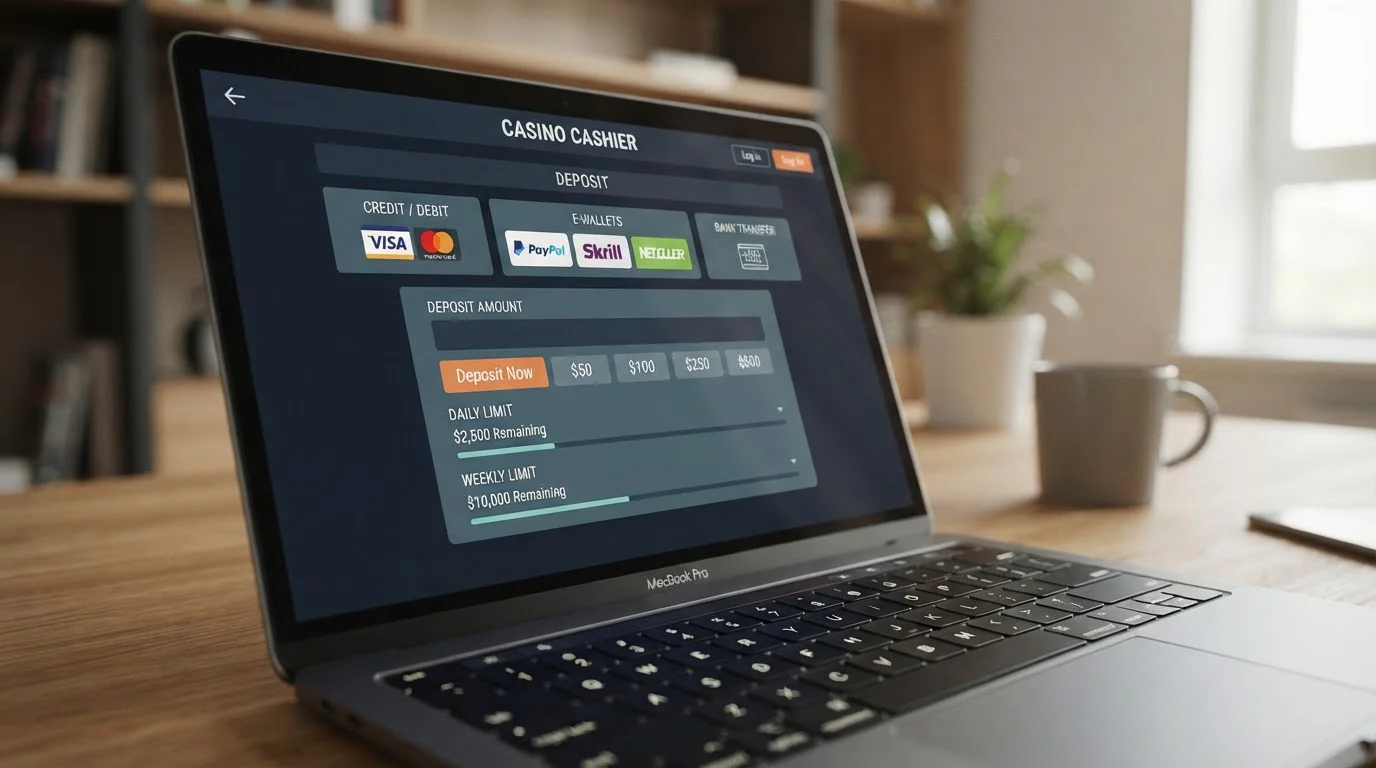
Every Open Banking deposit is instant because the payment runs over Faster Payments, which settles in under sixty seconds. Once you authenticate the payment in your banking app and return to the casino, your balance updates immediately. There’s no pending period, no manual reconciliation, no three-day BACS window. Deposit speed is uniform across all UK casinos that accept Open Banking — the rail itself is the constant.
Minimum deposits typically range from five to ten pounds, set by the casino’s cashier configuration rather than the Open Banking provider. PricedUp Bet’s one-pound minimum is an outlier. Maximum per-transaction limits depend on two factors: your bank’s daily Faster Payments cap and the casino’s own per-transaction limit. Retail current accounts in the UK commonly cap Faster Payments at ten thousand pounds per day, though business accounts and premium personal accounts may have higher limits. Casinos often set their own caps for instant bank transfers — five to ten thousand pounds is typical. If you need to deposit more, you’ll either split it across multiple transactions or use a manual bank transfer, which isn’t instant but supports higher amounts.
No fees apply to Open Banking deposits at UKGC-licensed casinos. The operator pays the provider’s transaction fee, which ranges from 0.25% to 1%. Debit card interchange in the UK is capped at 0.2%, so the headline fee is not where Open Banking wins; once scheme fees, acquirer margins for gambling merchants, chargebacks and declines are counted, bank payments are often simpler and more predictable to run. That is why casinos push Open Banking: there’s no chargeback risk, and card decline rates (which can hit 10% to 15% on high-velocity gambling transactions) don’t exist with bank-to-bank transfers.
Withdrawal Speed — What to Expect in 2026
Withdrawal speed has two components: the casino’s internal processing time and the payment rail’s settlement time. The rail is instant — once the casino approves your withdrawal, Faster Payments delivers it to your bank in under a minute. The casino’s processing time is the variable. Some operators approve withdrawals within hours. Others take three or four days.
The September 2026 tests measured end-to-end times from withdrawal request to funds landing in an HSBC account. PricedUp Bet cleared in twenty-three hours and forty-five minutes. SpinYoo took one day and fifteen hours. DAZN Bet came in at two days and eighteen hours. Luckymate stretched to three days and four hours. Those are real-world results that include the casino’s compliance checks, not just the payment rail.
Operators that brand their withdrawals as “instant” or “same-day” have streamlined their internal processes. Sky Vegas, Paddy Power, and Grosvenor all claim instant Pay by Bank withdrawals in their support documentation. That means the compliance team approves payouts quickly, often using Open Banking’s transaction data to verify affordability and source of funds automatically. Casinos that take three or four days are still running manual checks or batching withdrawal approvals rather than processing them in real time.
First withdrawals typically take longer because the casino may request extra documents or run payment checks on top of the identity verification already completed at sign-up. Once that’s done, subsequent withdrawals clear faster. Some casinos still hold withdrawals as “pending” for twenty-four to forty-eight hours while checks run, but UKGC rules no longer let players reverse a pending withdrawal back into their balance — once you request a payout, that money is on its way out of your casino account.
Fees for Open Banking Payments
UK casinos don’t charge players for Open Banking deposits or withdrawals. The operator absorbs the provider’s fee, which is part of the cost of doing business. Some casinos charge fees for other withdrawal methods — traditional bank transfers, cheques, international wire transfers — but Pay by Bank and Open Banking withdrawals are fee-free at every UKGC-licensed operator reviewed here.
Your bank won’t charge you either. Faster Payments is free for retail customers in the UK. If your bank tries to charge a fee for an Open Banking transaction, something’s wrong — either the transaction didn’t actually go through Open Banking (maybe it was processed as a CHAPS transfer by mistake), or your bank is applying a fee structure that shouldn’t apply to standard domestic Faster Payments. That would be rare and worth querying.
The cost picture for casinos is more nuanced than it looks. UK consumer debit card interchange is capped at 0.2%, but gambling merchants also pay card scheme fees and acquirer margins, and they carry the cost of chargebacks and failed deposits. A one-hundred-pound Open Banking deposit costs the casino twenty-five pence to one pound in provider fees, with no chargeback exposure. Over thousands of transactions, that predictability adds up, which is why casinos are keen to shift players toward Open Banking and why some offer faster withdrawal processing for bank transfers than for cards.
Verification Requirements and First Withdrawals
UK gambling regulations have required casinos to verify your identity, age, and address before you can gamble since May 2019 — not just before your first withdrawal. Most of that happens electronically at sign-up. Open Banking helps further because the payment itself confirms you own a UK bank account in your name, which is one more data point the casino can tick off automatically. If the electronic checks can’t confirm everything, or before a first withdrawal, you may still be asked to upload proof of identity (passport or driving licence) and proof of address (utility bill or bank statement dated within the last three months).
Some operators use Open Banking’s transaction history to verify your source of funds in real time. If the UKGC’s affordability check threshold is triggered — currently set at losing one thousand pounds or depositing two thousand pounds within ninety days — the casino must verify that you can afford your gambling spend. Open Banking allows the casino to pull your recent transaction history with your consent, which replaces the old method of manually uploading three months of bank statements and waiting forty-eight hours for a compliance officer to review them. The new process resolves in seconds, which is why this kind of check now causes far less friction than it did a few years ago.
If you deposited via Open Banking, most casinos require your first withdrawal to return to the same bank account. This is an anti-money laundering rule: funds must exit through the same route they entered. If you want to withdraw via a different method later, you’ll need to make a deposit through that method first, play through it at least once, and then withdraw. Some casinos are more flexible and allow mixed withdrawals after additional verification. Check the cashier’s withdrawal policy if method flexibility is important to you.
How long do Open Banking withdrawals take at UK casinos?
Withdrawal times range from under twenty-four hours to three or four days, depending on the casino’s internal processing. The payment rail itself is instant — Faster Payments settles in under a minute — but casinos hold payouts for compliance checks. Tested: PricedUp Bet 23h 45m, SpinYoo 1d 15h, DAZN Bet 2d 18h, Luckymate 3d 4h.
Are there any fees for using Open Banking at UK casinos?
No. UKGC-licensed casinos don’t charge players for Open Banking deposits or withdrawals. The casino pays the provider’s transaction fee, which runs between 0.25% and 1%. Your bank won’t charge you either — Faster Payments is free for UK retail customers. If a fee appears, query it with your bank; it shouldn’t apply.
What are the deposit and withdrawal limits for Open Banking at UK casinos?
Minimum deposits typically range from £5 to £10, with PricedUp Bet’s £1 an outlier. Maximum per-transaction limits depend on your bank’s Faster Payments cap (commonly £10,000 a day for retail accounts) and the casino’s own limit (usually £5,000 to £10,000). Withdrawal minimums sit around £5 to £10; larger amounts go via manual bank transfer.
Open Banking vs Other UK Payment Methods
Open Banking competes with three established payment methods at UK casinos: debit cards, e-wallets, and traditional bank transfers. Each has strengths and weaknesses depending on your priorities — speed, security, fees, or convenience. This section compares Open Banking against the alternatives and explains when to choose which method.
Open Banking vs Debit Cards
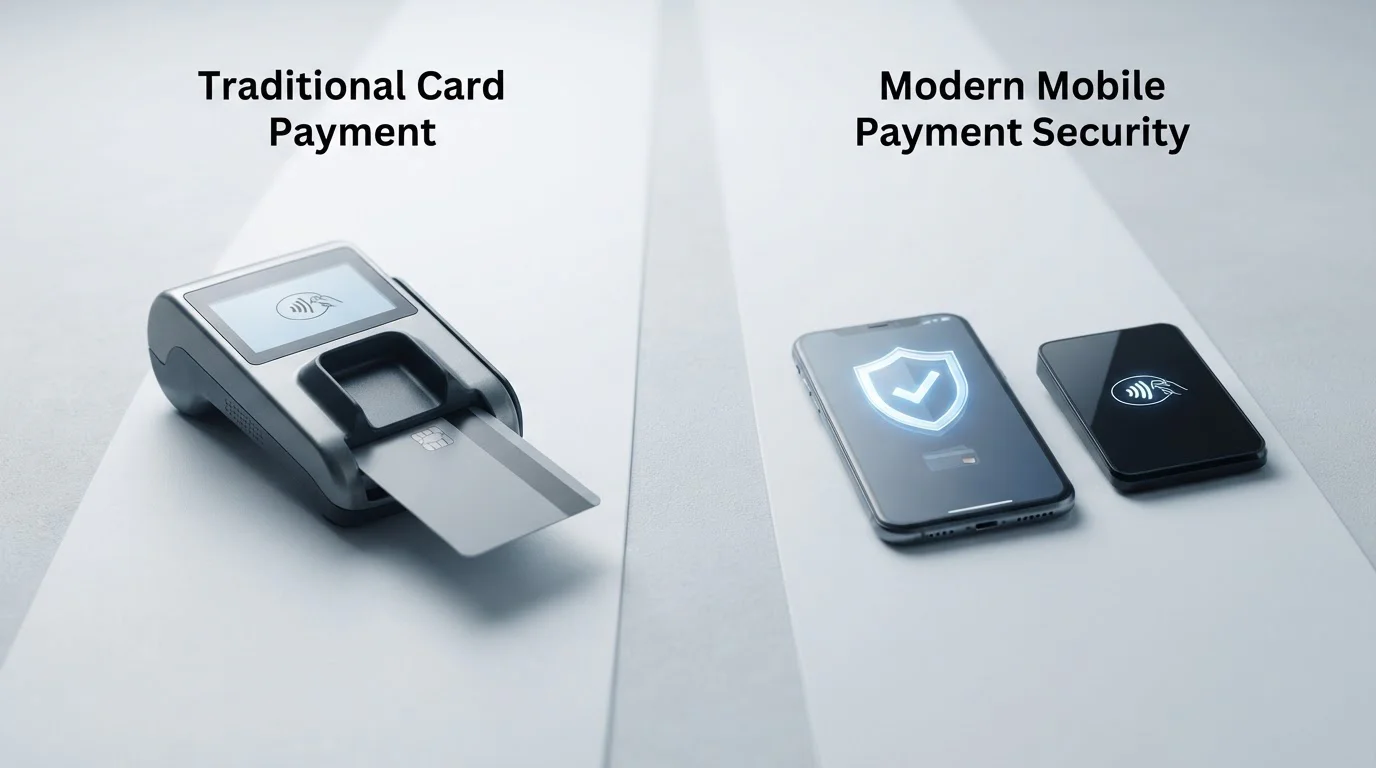
Debit cards (Visa and Mastercard) are the default payment method at UK casinos. They’re accepted everywhere, deposits are instant, and withdrawals clear in one to five days depending on the operator. Cards require you to enter a sixteen-digit PAN, expiry date, CVV, and billing address. 3D Secure authentication adds a layer of security, but card details are still stored on the casino’s server or the payment processor’s server, not in your own hands.
Open Banking removes that storage risk. The casino never sees your card number because there is no card. You authenticate directly in your banking app, and only the payment confirmation reaches the casino. If the casino’s database is breached, your payment details aren’t in it. That’s a meaningful security advantage, especially at smaller operators where data security practices may be less robust.
Deposit speed is identical: both are instant. Withdrawal speed favours Open Banking at operators that prioritise it. The tested withdrawal times for Open Banking (twenty-three hours to three days) often beat card withdrawals (one to five days) because Open Banking transactions settle via Faster Payments, which operates twenty-four hours a day including weekends. Card withdrawals can get delayed if they land on a weekend or bank holiday, because the card networks and acquiring banks don’t process settlements outside business hours.
Card decline rates are a hidden friction point. Gambling transactions trigger fraud filters at card issuers because of high chargeback risk. Decline rates can hit 10% to 15%, meaning one in ten attempted deposits fails even though your card is valid and funded. Open Banking avoids card-issuer fraud filters — if your bank approves the payment, it goes through. The exception is your bank’s own controls: if you have switched on a gambling block in your banking app, the bank will stop Open Banking payments to casinos too, which is exactly what the block is for.
Fees are identical for players: none. UK casinos don’t charge deposit or withdrawal fees for debit cards or Open Banking. The cost difference lands on the casino — debit interchange is capped at 0.2% but comes with scheme fees, acquirer margins and chargeback exposure, while Open Banking costs 0.25% to 1% with no chargebacks — which is why some casinos incentivise Open Banking with faster processing.
Open Banking vs E-Wallets (PayPal, Skrill, Neteller)
E-wallets like PayPal, Skrill, and Neteller sit between your bank and the casino. You fund the e-wallet with a card or bank transfer, then deposit from the e-wallet to the casino. Withdrawals return to the e-wallet, then you move funds back to your bank. It’s an extra step, but e-wallets offer faster withdrawals than cards at most UK casinos — typically two to twenty-four hours.
Open Banking cuts out the middleman. You don’t need a separate e-wallet account, no prefunding required, and withdrawals land directly in your bank account. Fewer steps mean fewer points of failure. E-wallets charge withdrawal fees at some casinos (though most UKGC-licensed operators cover the cost), and moving money from your e-wallet back to your bank can incur fees depending on the wallet provider’s terms.
Security is comparable. PayPal never shares your card details with the casino, just like Open Banking never shares your bank credentials. Both methods keep your payment data out of the casino’s hands. The difference is that PayPal is a private company that holds your funds, whereas Open Banking moves money directly between your bank and the casino with no intermediary holding a balance.
Bonus eligibility is where e-wallets sometimes lose. Many UK casino welcome offers exclude deposits made via Skrill and Neteller because e-wallet users are statistically more likely to bonus-hunt and withdraw quickly. Open Banking deposits almost never face this restriction — they’re treated the same as debit card deposits for bonus purposes.
Open Banking vs Traditional Bank Transfers (BACS/CHAPS)
Traditional bank transfers in the UK run on BACS (Bankers’ Automated Clearing Services) or CHAPS (Clearing House Automated Payment System). BACS processes in batches overnight and takes three working days to settle. CHAPS is same-day but costs twenty-five to thirty-five pounds per transaction. Both require you to manually enter the casino’s sort code and account number, add a payment reference, and wait for the casino to match your incoming transfer against your account.
Open Banking replaces this entire process. You click one button in the casino cashier, authenticate in your banking app, and the payment confirms instantly. No manual entry of account details, no three-day wait, no fee. The only advantage of traditional bank transfers is that they support higher transaction amounts without the daily Faster Payments cap, but that’s irrelevant for most players.
BACS is effectively obsolete for casino deposits in 2026. No UK player would voluntarily wait three days for a deposit to credit when Open Banking delivers it in seconds. Withdrawals via BACS are similarly outdated, though some casinos still offer them as a fallback for players whose banks don’t support Open Banking or who prefer to avoid the instant settlement for budgeting reasons.
| Payment Method | Deposit Speed | Withdrawal Speed | Fees to Player | Security | Card Details Required? |
|---|---|---|---|---|---|
| Open Banking / Pay by Bank | Instant | 24h–3 days (casino processing) | None | High (FCA-regulated, PSD2) | No |
| Debit Card (Visa/Mastercard) | Instant | 1–5 days | None (UK casinos) | High (3D Secure) | Yes |
| E-Wallets (PayPal) | Instant | 2–24 hours | None (most UK casinos) | High (no card details to casino) | Indirectly (card funds e-wallet) |
| Traditional Bank Transfer (BACS/CHAPS) | 1–3 days | 3–5 days | None from casinos; banks typically charge £25–£35 for CHAPS | High (bank-to-bank) | No |
Is Open Banking better than using a debit card at online casinos?
Open Banking is more secure because the casino never sees your card details, and there’s no card-issuer decline risk. Withdrawal speed often favours it (23h to 3 days tested) over card withdrawals (1–5 days), while deposit speed is identical. Choose Open Banking for security and speed, debit cards for the familiar flow.

Advantages and Disadvantages of Open Banking at UK Casinos
Open Banking’s adoption at UK casinos accelerated because it solves real friction points: security, speed, and the regulatory burden of affordability checks. It also has limitations, mostly around bank coverage and withdrawal routing. This section lays out the concrete advantages, the honest disadvantages, and when Open Banking is the right choice over alternatives.
Key Advantages — Security, Speed, and Convenience
The security model is cleaner than cards. When you deposit via Open Banking, you authenticate directly in your bank’s app or website using biometrics, passcode, or two-factor authentication. The casino never sees your login credentials, your account number, or any payment details beyond a confirmation that the transfer succeeded. If the casino’s database is breached, your bank account isn’t compromised because the casino never held your bank details in the first place. Card breaches expose sixteen-digit PANs, CVVs, and expiry dates, all of which are valuable to fraudsters. Open Banking breaches expose nothing of value.
Withdrawal speed is faster at operators that prioritise Open Banking. The tested times — twenty-three hours to three days — beat the one-to-five-day average for card withdrawals at most UK casinos. Operators like Sky Vegas, Paddy Power, and Grosvenor claim instant Pay by Bank withdrawals, and the technology supports it because Faster Payments settles in under sixty seconds once the casino approves the payout. The bottleneck is the casino’s internal compliance checks, not the payment rail, and casinos that use Open Banking’s transaction data to verify affordability can approve withdrawals faster than those that rely on manual document review.
No decline risk is a hidden advantage. Card transactions at gambling merchants trigger fraud filters at card issuers, and decline rates can hit 10% to 15% even for legitimate transactions. You’d enter your card details, the deposit would fail, and you’d have to try again or switch cards. Open Banking has no card issuer between your bank and the casino, so if your bank approves the payment, it goes through. The failure modes are insufficient funds, your bank’s daily Faster Payments limit, or a gambling block you have set on your account — all of which are transparent and under your control.
Convenience is subjective but real for players who don’t want to store card details at multiple casinos. With Open Banking, you don’t enter a card number, CVV, or billing address. You select your bank, authenticate in your app, confirm the amount, and you’re done. If you change banks, you don’t need to update card details across ten different casino accounts. You just pick the new bank from the list next time you deposit.
Record-keeping is cleaner with Open Banking. Every deposit appears on your bank statement as a named payment to the casino or its payment provider, with the exact amount and time, and every withdrawal arrives the same way. That makes it easy to total your gambling spend for the month, reconcile it against the casino’s own transaction history, and spot a payment you don’t recognise. Card deposits show up on statements too, but gambling merchant descriptors are sometimes abbreviated or routed through a processor’s name, which can make them harder to identify at a glance. If you keep a monthly budget for gambling, a clear audit trail in one place makes sticking to it more straightforward.
Limitations and Disadvantages
Not all UK banks support Open Banking, though coverage is broad. The major high-street banks (Barclays, HSBC, Lloyds, NatWest, Santander) all support it, as do challenger banks like Monzo, Starling, and Revolut. Some smaller building societies and credit unions aren’t integrated yet. If your bank isn’t on the supported list in the casino cashier, you’ll need to use a different payment method. The coverage gap is shrinking as more banks connect to Open Banking APIs, but it’s not universal.
You lose the spending buffer that credit cards provide. Open Banking pulls funds directly from your current account in real time. If you have fifty pounds in your account and try to deposit sixty, the transaction fails. Cards (before the UK credit card ban for gambling) let you spend on credit and settle later. Debit cards still offer some buffer if you have an arranged overdraft, though that’s not recommended for gambling. Open Banking is strict: if the money’s not in your account, you can’t deposit it. That’s a feature for responsible gambling advocates and a limitation for players who want flexibility.
Withdrawals to a different method can be restricted. If you deposited via Open Banking, most casinos require your first withdrawal to return to the same bank account for anti-money laundering reasons. If you want to withdraw to PayPal or a card instead, you’ll need to make a deposit through that method first, play through it, and then request the withdrawal. Some casinos are flexible after additional verification, but many enforce the rule strictly. If you like to switch withdrawal methods, Open Banking’s single-path routing can be limiting.
Chargebacks aren’t available. With card payments, you can dispute a transaction through your card issuer if something goes wrong — unauthorised charges, the casino didn’t deliver the service, technical errors. Open Banking transactions are bank-to-bank transfers, and banks don’t offer chargeback protections for them the way card networks do. If you authorise a payment and then regret it, the casino isn’t obligated to refund you. That’s standard for bank transfers, but it’s a protection you lose compared to cards. In practice, this matters less at UKGC-licensed casinos because every licensee must offer a complaints process backed by an approved ADR provider such as IBAS, but it’s worth flagging.
When to Choose Open Banking Over Other Methods
Choose Open Banking if security is your top priority. The payment flow keeps your bank credentials and account details entirely out of the casino’s hands, which is the cleanest security model available for online payments. If you’ve had card details stolen from a data breach before, or if you play at smaller casinos where you’re less confident in their data security practices, Open Banking removes that risk.
Choose it if withdrawal speed matters. Operators that prioritise Open Banking — PricedUp Bet, SpinYoo, DAZN Bet, Sky Vegas, Paddy Power, Grosvenor — clear payouts faster than the UK average. If you’re the kind of player who wants winnings in your bank account the next day rather than waiting three to five days for a card withdrawal, Open Banking is the method to use.
Choose it if you don’t want to store card details at multiple casinos. With Open Banking, you authenticate per transaction in your banking app. You’re not saving a card on file, you’re not entering a CVV every time, and you’re not updating expiry dates when your card renews. If you value the transactional nature of paying per session over the convenience of one-click card payments, Open Banking fits that preference.
Choose it if you bank with a digital-first provider. Challenger banks like Monzo, Starling, Revolut, and others integrated Open Banking early and often provide a slick app-based approval flow, so Open Banking at casinos will feel native. Customers of the big high-street banks (Barclays, HSBC, Lloyds, NatWest, Santander) are fully covered too, so a challenger account is a bonus rather than a requirement.
Don’t expect it to stretch your budget. Open Banking pulls funds in real time from your current account balance — and so does a debit card, since gambling on credit cards has been banned in the UK since 14 April 2020. Neither method gives you a “spend now, pay later” float. If you find yourself wanting to gamble with money that isn’t in your account yet, treat that as a signal to set a deposit limit or take a break rather than to look for a different payment method.
Don’t choose it if you want the option to withdraw via different methods. Open Banking’s anti-money laundering routing locks you into withdrawing to the same bank account you deposited from. If you like to deposit via one method and withdraw via another, cards or e-wallets are more flexible.
Is Open Banking safe for online casino deposits and withdrawals?
Yes. Open Banking is regulated by the Financial Conduct Authority under PSD2, and providers like Trustly and TrueLayer are FCA-authorised. You authenticate in your bank’s app, and the casino never sees your login or account details. The flow is bank-to-bank with no intermediary holding funds — a cleaner security model than storing card details.
Can I use Open Banking if my bank isn’t listed in the casino cashier?
If your bank isn’t in the Open Banking list, it either hasn’t integrated with that casino’s payment provider yet or doesn’t support Open Banking. Major UK banks (Barclays, HSBC, Lloyds, NatWest, Santander) and challengers (Monzo, Starling, Revolut) are widely supported. If yours isn’t listed, use a debit card or e-wallet; coverage is still expanding.

How We Selected These Casinos — Methodology
The twelve casinos in this guide were chosen using three criteria: an active UKGC licence, an Open Banking or instant bank transfer option in the cashier (branded as Pay by Bank, Open Banking, or Instant Bank Transfer), and enough published information to compare withdrawal speeds and player experience. The list isn’t exhaustive — many more UKGC-licensed casinos accept Open Banking in 2026 — but it covers a spread of fast, established and well-known operators.
Four casinos — PricedUp Bet, SpinYoo, DAZN Bet, and Luckymate — were tested for end-to-end withdrawal times in September 2026 with real-money deposits, play through any wagering requirements, a bank transfer withdrawal request, and a timer running from request to funds landing in an HSBC account. Those times are the most useful figures in this guide because they include the casino’s internal processing, not just the payment rail’s settlement time.
The remaining eight casinos — Paddy Power, Coral, Sky Vegas, Casumo, Betway, SlotsMagic, Grosvenor, and Oreels — were selected for brand recognition and for listing Open Banking or bank transfer in their cashiers. Paddy Power, Coral, Sky Vegas, and Grosvenor are high-street brands with household-name recognition in the UK. Casumo, Betway, and SlotsMagic are long-running online brands with large game libraries. Oreels, launched in 2017, is a smaller mobile-first operator.
Where a casino names its Open Banking provider (Trustly at SpinYoo and DAZN Bet, for example), the guide says so. Trustly dominates UK iGaming, but TrueLayer, Yapily, and platform-native integrations (Betable, Skill On Net, White Hat Gaming) also operate here. Where the cashier simply says “bank transfer,” the guide flags it: at UK-licensed casinos that option is usually an instant Open Banking payment, but you should confirm it in the cashier before depositing, because a manual transfer would be much slower.
Withdrawal speeds for operators without a timed test are the operators’ own published claims, from their websites, help centres and promotional pages. These are less reliable than tested times, which is why the comparison table marks each figure as “claimed” or “tested” in the withdrawal speed column.
You can check any operator’s licence yourself in under a minute. Search the operator or brand name on the Gambling Commission’s public register, confirm the licence status is active, and note the account number and licensee company. Some operators list their licence prominently (SpinYoo, DAZN Bet, Casumo); others put it in the footer or terms and conditions. The register also lists any regulatory action taken against the licensee, which is worth a look before you deposit.
Responsible Gambling and Open Banking
Open Banking’s real-time transaction visibility makes it a natural fit for the UK’s safer gambling framework. The UKGC has tightened affordability check requirements over the past two years, and Open Banking enables instant verification that used to take forty-eight hours of manual document review. This section explains how the technology supports responsible gambling, how deposit limits work, and how self-exclusion interacts with Open Banking.
How Open Banking Supports Safer Gambling
Safer gambling rules in the UK increasingly depend on a casino knowing something about your finances, not just who you are. Operators must watch for signs of harm and financial vulnerability, and where spending crosses the thresholds described earlier in this guide, they must check that it is affordable. Historically that meant manual document requests — payslips, proof of savings, tax returns — that could take days or even a week to resolve. The delay itself was part of the problem: a player in difficulty could keep depositing while the paperwork sat in a queue.
Open Banking compresses this to seconds. When the affordability threshold is triggered, the casino asks for consent to pull your recent transaction history through Open Banking’s API. You grant access through your banking app, the casino’s system scans your income and spending patterns automatically, and the check resolves instantly. If your finances support your gambling spend, you’re cleared to continue. If not, the casino applies limits or pauses your account pending further discussion.
The friction reduction is significant. Players who hit the affordability threshold in the old system often abandoned the casino rather than upload documents. The dropout rate was high, and casinos lost revenue. With Open Banking, the check happens in-session without breaking the player’s momentum, and compliance rates improved. From a responsible gambling perspective, that’s a win — more players are checked, and the checks happen in real time rather than after the damage is done.
Setting Deposit Limits with Open Banking
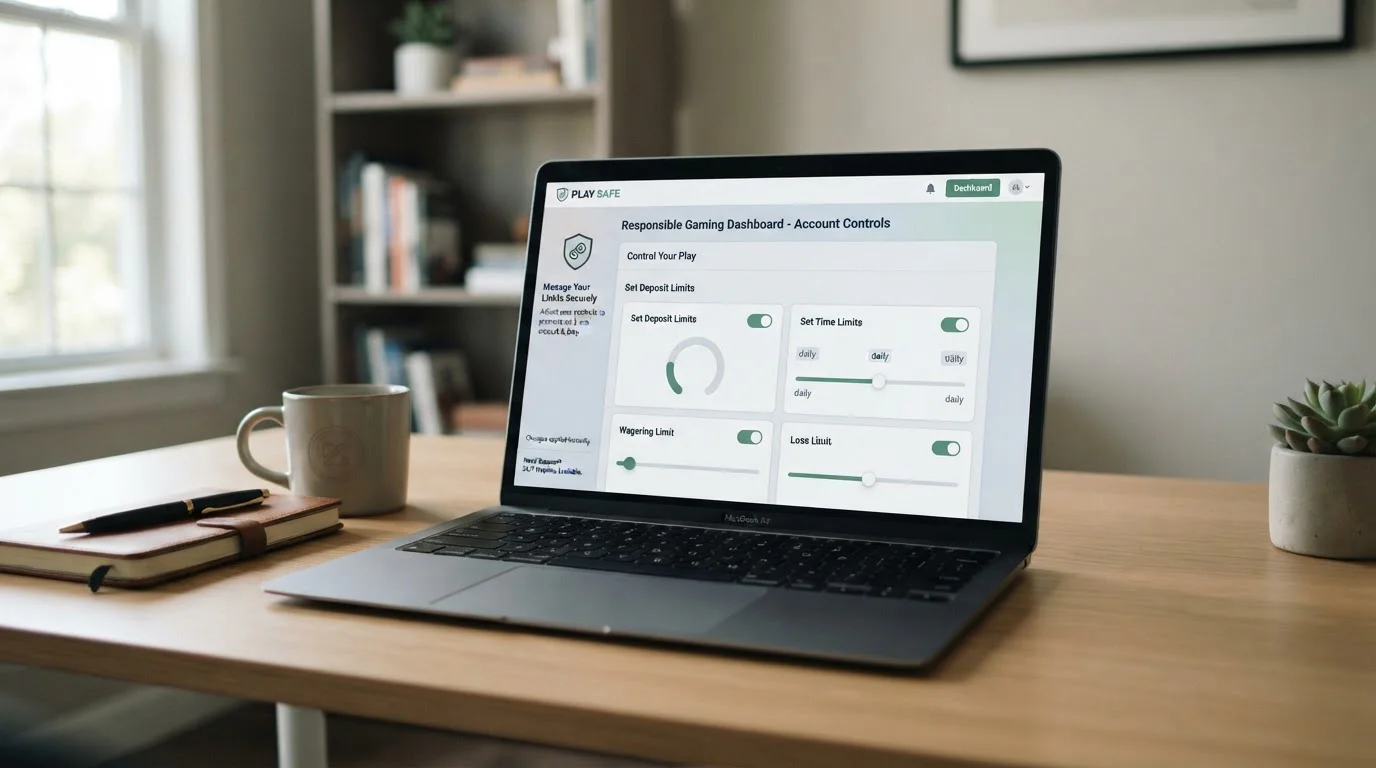
A recent rule change standardised how UK casinos count deposit limits. From 30 September 2026, every UKGC-licensed casino must present new players with a mandatory default deposit limit at registration, and the limit definition is uniform: withdrawals no longer create “room” for additional deposits within the limit. If you set a one-hundred-pound daily limit, deposit one hundred pounds, and then withdraw fifty pounds, you can’t deposit another fifty pounds the same day. The limit counts gross deposits, not net.
Open Banking doesn’t change how limits work, but it makes enforcement easier. Because every Open Banking transaction is recorded in your bank’s transaction history, the casino can verify that a deposit limit hasn’t been breached by checking your recent Open Banking transfers. If you try to deposit beyond your limit, the casino can block the transaction before it reaches your bank. With cards, the casino only sees deposits that clear successfully. With Open Banking, the casino can see attempted deposits even if they fail, which tightens the enforcement loop.
Some casinos offer Open Banking-specific budgeting tools. You can link your casino account to your bank account via Open Banking’s read-only access, and the casino’s responsible gambling dashboard shows your recent gambling spend alongside your income and other expenses. That transparency is optional — you have to grant read access — but it’s a feature that only Open Banking enables. Cards and e-wallets can’t pull your full transaction history for context.
Self-Exclusion and GamStop
GamStop is the UK’s national self-exclusion scheme for online gambling. When you self-exclude through GamStop, you’re blocked from all UKGC-licensed casinos for six months, one year, or five years depending on the term you choose. Open Banking doesn’t bypass GamStop. If you’re on the GamStop register, you can’t register at a UKGC-licensed casino, and you can’t deposit even if you try to use Open Banking.
Non-GamStop casinos — unlicensed operators that don’t hold UKGC licences — accept UK players but operate outside UK jurisdiction, usually under Curaçao licences, and offer none of the UK’s player protections. Open Banking providers like Trustly and TrueLayer don’t block payments to non-GamStop casinos because the providers don’t enforce gambling regulations; they only facilitate payments. If you’re self-excluded via GamStop and want to enforce a hard block on all gambling transactions, you’ll need to set up a gambling block through your bank, not through Open Banking. Most UK banks offer gambling blocks that prevent transactions to all gambling merchants, licensed or not.
Open Banking’s transaction visibility can support self-exclusion indirectly. Some banks let you review your Open Banking payment history and flag merchants you want to block. If you notice you’re depositing at casinos more frequently than you intended, you can set up a block through your bank’s app. That’s a manual step, not an automatic feature of Open Banking, but the visibility makes it easier to recognise patterns and act on them. If you are worried about your gambling, free and confidential support is available from GamStop, GamCare (0808 8020 133) and BeGambleAware.
Casino Deposit Methods UK 2026 — Compare Payment Options
Content created by the «casinopayoptions-uk.com» team