
UK Casinos That Accept Citadel in 2026 — The Reality Check
 Available in GB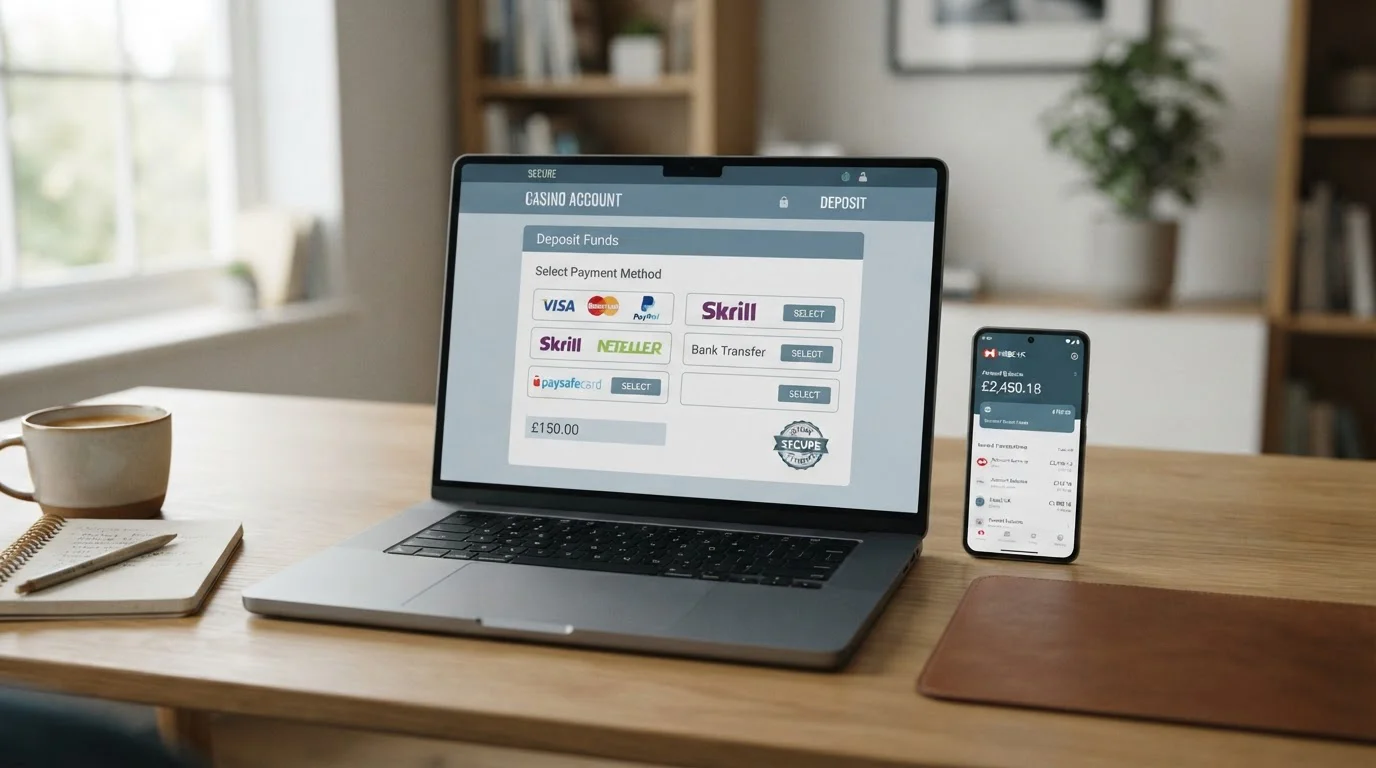
Finding a UK casino that accepts Citadel Instant Banking in 2026 is a frustrating exercise. Old payment listings still name it, some point to Videoslots as the go-to, and “best Citadel casino” lists turn out to be outdated or global compilations with no UK relevance. The reality is simpler and bleaker: Citadel is effectively dead at UK Gambling Commission-licensed operators, rare to nonexistent even at offshore sites, and nobody in the UK casino payment ecosystem mourns its passing.
Below: what happened to Citadel, whether any UK-accessible casinos still accept it, and which alternatives replaced it — without wishful thinking about “upcoming integrations,” just market reality in 2026.
Citadel Casinos UK 2026 — The Current Reality
No UKGC-licensed casino lists Citadel Instant Banking in its cashier in 2026. Global “Citadel casino” lists still circulate, but they are not UK-specific, and their entries are typically outdated or refer to offshore operators that are not licensed to serve UK players.
The name most often attached to Citadel is Videoslots. Yet when you visit the Videoslots UK cashier today, the listed methods are PayPal, Trustly, Visa debit, Apple Pay, and other standard debit cards. No Citadel. The claim is a fossil from earlier years.
UKGC-licensed operators have converged on a narrower set of payment methods: debit cards (the only card option since the credit-card ban), e-wallets like PayPal and Skrill, and open banking solutions led by Trustly. Citadel does not feature. The regulatory landscape did not explicitly ban it—Citadel was never a credit card, so the April 2020 ban did not touch it directly—but the rise of PSD2-compliant open banking made standalone instant-banking e-wallets like Citadel redundant.
Offshore operators present a murkier picture. Non-GamStop casinos licensed in Curaçao or Malta occasionally claim to accept Citadel, but concrete operator names are scarce, and such sites carry no UK protections in any case. The safest assumption for a UK player in 2026 is that Citadel is unavailable, and your time is better spent on methods that actually work.
Do any UK casinos still accept Citadel in 2026?
No UKGC-licensed casino accepts Citadel deposits or withdrawals in 2026. A few offshore sites may still list it, but they offer no UK protections and are impractical for UK players. The method is effectively obsolete; open banking options such as Trustly and Pay by Bank have replaced it.

What Happened to Citadel Instant Banking?
Citadel Instant Banking was established in 2000 as an instant bank-transfer aggregator. Users selected their bank and initiated the payment through Citadel’s system, which matched it to the merchant far faster than a standard transfer. It operated in over 20 countries and processed large volumes at its peak. For online casinos, it offered a faster alternative to traditional BACS bank transfers, which took 3-5 days to clear. For players, it meant no card details shared with the casino and instant deposits without setting up a separate e-wallet account in some variants (Citadel Direct). In other configurations (MyCitadel eWallet), it worked like a conventional e-wallet requiring pre-funding.
Citadel was registered as a Payment Institution with the UK Financial Conduct Authority and held membership in the Electronic Money Association. Its Canadian headquarters in Vancouver and its UK regulatory standing gave it legitimacy, but legitimacy does not guarantee survival when the infrastructure underneath shifts.
How Citadel Worked
Citadel offered two main products. Citadel Direct required no registration: the user selected bank transfer at the casino cashier, received a reference number and bank details, then logged into their internet banking separately to complete the transfer. Citadel acted as the intermediary recording the transaction and crediting the casino merchant account, which in turn credited the player. The process was faster than standard bank transfers but still required the player to leave the casino site and navigate their banking portal manually.
MyCitadel eWallet streamlined this. Players pre-loaded the e-wallet with funds via bank transfer, then used the eWallet balance for instant deposits at casinos. Withdrawals returned to the eWallet, then the player transferred back to their bank. This two-layer setup added friction compared to direct card deposits but offered a privacy layer—casinos saw only the Citadel transaction, not the underlying bank details.
Both variants relied on Citadel maintaining integrations with individual banks and casinos. When a casino added Citadel, it integrated Citadel’s API, not the open banking infrastructure introduced later under PSD2. That distinction proved fatal.
The Credit Card Ban (April 2020)
On 14 April 2020, the UK Gambling Commission enforced a complete ban on credit card use for all gambling transactions at UKGC-licensed operators. The regulator’s rationale was straightforward: credit cards let people gamble with borrowed money, escalating debt and worsening problem gambling. The ban applied to direct card payments and to credit-card-funded transfers through e-wallets or mobile payment services.
Citadel was not a credit card and was not touched by the ban. It was an instant banking product, moving money directly from current accounts. But the ban reshaped the UK casino payment ecosystem. Operators scrambled to drop credit cards and ensure alternative methods were robust. Debit cards remained legal and became the default. E-wallets like PayPal, Skrill, and Neteller stayed in play. And regulators, having just forced a major payment-method overhaul, began looking closely at how payment innovation could serve consumer protection.
The ban indirectly set the stage for Citadel’s decline by clearing the field for a newer, regulator-friendly approach to instant bank payments: open banking under PSD2.
The Open Banking Shift (2020 Onwards)
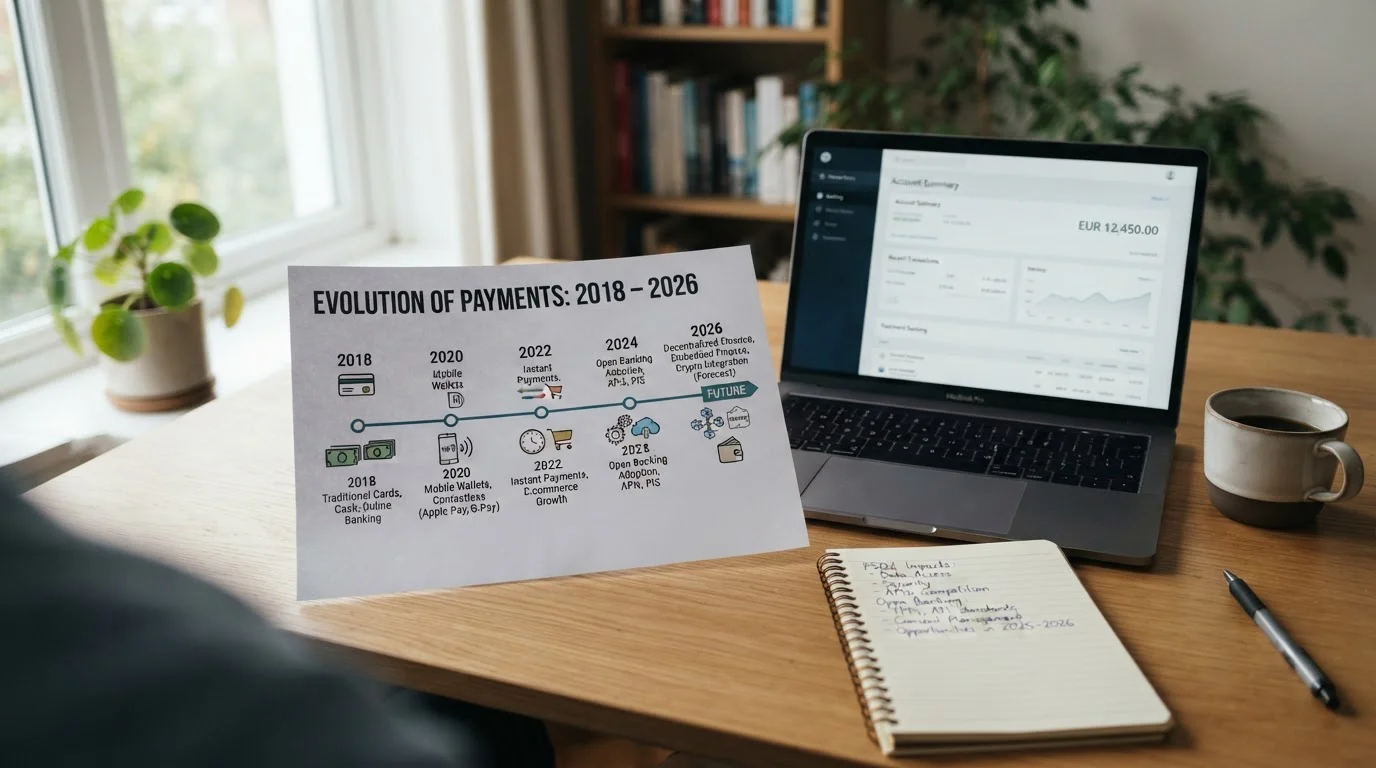
The Payment Services Directive 2 (PSD2), transposed into UK law in 2018 and retained post-Brexit, mandated that banks open their infrastructure to third-party Payment Initiation Service Providers (PISPs) via secure APIs. A PISP could, with customer consent, initiate a payment directly from the customer’s bank account. The customer authenticated in their own banking app—using biometrics, a one-time code, or another Strong Customer Authentication method—and the payment moved over the Faster Payments rail without the PISP ever seeing the customer’s bank credentials.
This was structurally different from what Citadel offered. Citadel required the user to log into Citadel’s interface or, in the Direct variant, manually enter bank details and reference numbers. Open banking skipped the middleman. The user stayed in their bank’s own app for authentication, and the casino integrated the PISP (most commonly Trustly in the UK market) rather than a proprietary e-wallet.
For casinos, open banking meant one integration (Trustly or another PISP) that worked with nearly all UK banks, instead of maintaining separate contracts with multiple e-wallet providers. For players, it meant no separate account to fund, no stored credentials, and instant deposits with the same speed Citadel had promised but with a cleaner, more secure user experience. And for regulators, it meant payments ran through banks’ own authentication systems, reducing fraud and improving traceability.
Between 2020 and 2023, UKGC-licensed casinos quietly migrated to open banking. Trustly became ubiquitous. By 2026, open banking is no longer a niche workaround but one of the main ways UK players move money into casino accounts, and large retailers such as Amazon UK offer Pay by Bank at checkout, signalling that open banking has crossed into mainstream consumer adoption beyond gambling.
Citadel, built on pre-PSD2 architecture, did not adapt. Its integrations were proprietary, not based on open banking APIs. Operators had no incentive to maintain a legacy instant-banking method when Trustly offered the same speed with better UX, wider bank coverage, and regulatory alignment. One by one, Citadel disappeared from casino cashiers.
Why did UK casinos stop accepting Citadel?
Casinos dropped Citadel because open banking methods like Trustly and Pay by Bank offered the same instant bank-transfer functionality with simpler integration, no middleware account, and alignment with PSD2 regulatory standards. Citadel’s proprietary architecture became redundant, and operators saw no reason to support two instant-banking methods when one was universally compatible.
What happened to Citadel Instant Banking — why did it disappear?
Citadel ran on pre-PSD2 infrastructure that needed proprietary integrations and, in some variants, a separate account. When open banking became standard under PSD2 around 2018–2020, UK casinos moved to Trustly and Pay by Bank, which deposit directly from your bank via secure APIs with no middleware. Citadel was obsolete, so operators phased it out.
Best Citadel Alternatives for UK Players in 2026
If you came here looking for Citadel casinos, what you actually need is a payment method that does what Citadel promised: instant deposits from your bank account, fast withdrawals, and no card details shared with the casino. Three options dominate the UK market in 2026, and all three are widely available at UKGC-licensed operators.
| Payment Method | Type | Deposit Speed | Withdrawal Speed | Fees | Separate Account Required | UK Casino Availability |
|---|---|---|---|---|---|---|
| Citadel (historical) | Instant banking e-wallet | Instant | 2-5 days in total | None at most casinos | MyCitadel: yes; Citadel Direct: no | Obsolete (no UKGC sites) |
| Trustly | Open banking (PISP) | Instant | 15 minutes – 24 hours | None | No | Widespread at UKGC casinos |
| Pay by Bank | Open banking (generic PSD2) | Instant | Same-day to 24 hours | None | No | Widespread, multiple PISP providers |
| PayPal | E-wallet | Instant | 24 hours typical | None at casinos | Yes | Many, but not all, UKGC casinos |
Trustly — The Open Banking Standard
Trustly Group AB is a Swedish payment institution founded in 2008 and authorised by the Swedish Financial Supervisory Authority as a Payment Initiation Service Provider under PSD2. It operates across Europe, and in the UK it is authorised by the Financial Conduct Authority. Trustly has no consumer-facing website or app of its own—it is a backend service integrated directly into merchant checkouts, including casino cashiers.
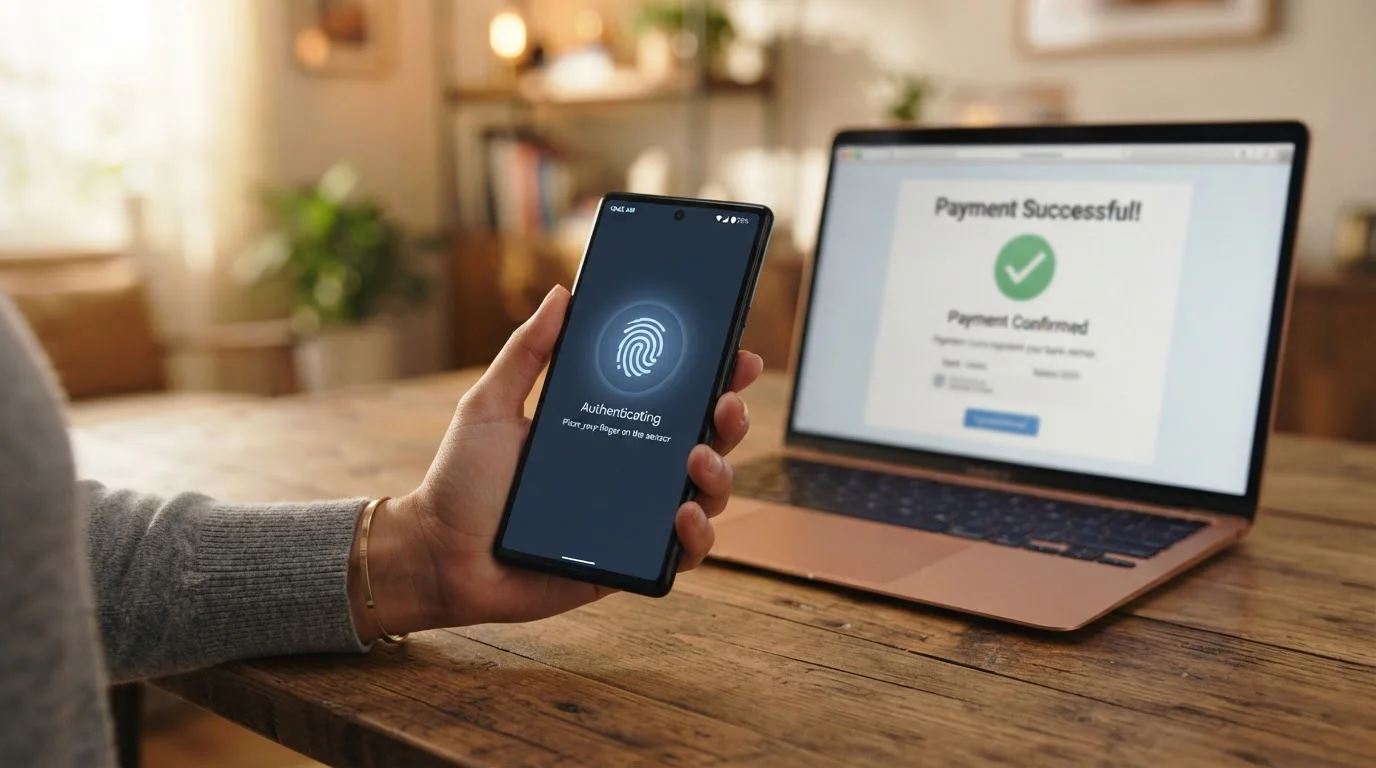
When you select Trustly at a UK casino, you choose your bank from a list, then the casino redirects you to your bank’s own authentication portal. You log in using your banking app, biometrics, or a one-time code (Strong Customer Authentication as required by PSD2), approve the payment, and the funds move instantly via the Faster Payments rail. The casino receives confirmation in real time and credits your account. Trustly never sees your bank login credentials or card details. The casino sees only that a Trustly payment arrived from your bank.
Trustly works with all major UK banks: Barclays, HSBC, Lloyds, NatWest, Santander, and dozens of others. The minimum deposit is typically £10. There are no fees charged by Trustly itself, and UKGC casinos rarely impose fees on Trustly deposits or withdrawals. Withdrawals process faster than almost any other method—some casinos return funds to your bank account in 15 minutes, most within 24 hours. That speed is structural: Trustly initiates the return payment the same way it handled the deposit, and Faster Payments clears in seconds once the casino releases the funds.
In 2026, Trustly is available at a large share of UKGC-licensed casinos, including SpinYoo and DAZN Bet. Videoslots, the site often linked to Citadel, lists Trustly as a primary payment method. Trustly is the name behind many open banking casino payments in the UK. It is the closest functional equivalent to what Citadel aimed to be, but with none of the friction.
The user experience with Trustly is notably cleaner than Citadel’s manual flow. At the casino cashier, you select Trustly and your deposit amount. The casino redirects you to Trustly’s bank selection screen—a list of major UK banks with logos. You tap your bank, and Trustly opens your bank’s authentication portal (or redirects to your banking app if you are on mobile). You authenticate using whatever method your bank requires—Face ID, fingerprint, PIN, or a one-time code from your card reader. Once authenticated, you see a payment confirmation screen showing the amount, the merchant (the casino’s legal name), and a confirm button. You tap confirm, and the payment initiates. The bank executes it via Faster Payments, Trustly notifies the casino, and your casino balance updates instantly. Total time from clicking “deposit” to playing: 15-30 seconds.
Contrast that with Citadel Direct’s old flow: select bank transfer, copy a reference number, open your internet banking separately, navigate to “make a payment,” paste the reference and the casino’s bank details, submit, wait for Citadel to detect the incoming transfer, then wait for the casino to credit your account. Even when it worked perfectly, it took 2-5 minutes and required manual data entry. One mistyped digit in the reference, and the payment failed or delayed.
Trustly suits players who want instant deposits without setting up a separate account, fast withdrawals, and zero fees. The main limitation is that it requires a UK bank account with online banking enabled and support for the authentication method your bank uses. If your bank is on Trustly’s list—and nearly all are—it works smoothly. Revolut, Monzo, Starling, and other challenger banks also support Trustly via open banking APIs, so even non-traditional accounts work.
Pay by Bank / Open Banking Payments
Pay by Bank is not a single company but a generic term for PSD2-based account-to-account payments. Multiple Payment Initiation Service Providers offer this under various brandings: Trustly is one; others include Brite Payments, Volt, Yapily, and Modulr. UK casinos integrate one or more of these PISPs, and the player experience is similar across all: select your bank, authenticate in your banking app, approve the payment. The infrastructure is the same—PSD2 open banking APIs, Strong Customer Authentication, and Faster Payments settlement.
The advantage of Pay by Bank over traditional bank transfers is speed. Old-school BACS transfers took 3-5 business days. Pay by Bank clears instantly for deposits and returns withdrawals as same-day or next-day bank transfers. The casino never sees your bank login or card PAN. Your bank confirms your identity through its own systems, often using biometrics on your phone. There is no card network involved, no interchange fee, and no static credential sitting on file to be compromised in a data breach.
PSD2 became UK law in 2018, and adoption accelerated after the 2020 credit-card ban pushed casinos toward alternative deposit methods. In 2026, Pay by Bank is a standard option at UKGC sites, and its presence at mainstream retailers means people outside gambling are familiar with the flow, so the learning curve for casino players is lower.
The technical architecture behind Pay by Bank is what killed Citadel. Pre-PSD2, if a casino wanted to offer instant bank transfers, it had to integrate each instant-banking provider separately, Citadel included. Each integration required separate contracts, separate API maintenance, and separate compliance checks. Citadel had to maintain relationships with individual banks to enable its instant-banking service, and those relationships were proprietary. If a bank dropped Citadel or changed its online banking interface, Citadel had to scramble to update its integration, and casinos relying on Citadel faced service disruptions.
PSD2 standardised this. Banks were legally required to open secure APIs for Payment Initiation Service Providers. One PISP integration (Trustly, Brite, Volt) gave a casino access to every bank that complied with PSD2—which, in the UK, is all of them. The casino no longer needed separate e-wallet contracts. Players no longer needed separate e-wallet accounts. The bank’s own authentication system handled security, satisfying regulators. And the payment moved over Faster Payments, the same rail banks already used for instant transfers between accounts. Citadel’s value proposition—instant bank transfers—was absorbed into the banking infrastructure itself. The middleman was cut out.
Pay by Bank works with essentially all UK banks that support open banking, which is nearly universal. Minimum deposits match Trustly (typically £10). Fees are rare. Withdrawals process faster than e-wallets in many cases because there is no intermediate balance—funds go directly from casino to your bank account.
The main distinction between “Pay by Bank” and “Trustly” is branding. Trustly is a specific PISP that UK players recognise. Other PISPs are less consumer-visible; the casino may simply label the option “Pay by Bank” or “Instant Bank Transfer” while using Brite or Volt on the backend. From the player’s perspective, the experience is identical.
Pay by Bank suits the same audience as Trustly: players who want instant deposits, no separate account, and fast withdrawals. If your casino lists both Trustly and a generic “Pay by Bank” option, either works—they run on the same infrastructure.
PayPal — The E-Wallet Alternative
PayPal is a different animal. Founded in 1998 and operated by PayPal Holdings, Inc. (NASDAQ: PYPL), it is a traditional e-wallet operating as a regulated e-money business, with FCA oversight of its UK services. Unlike Trustly and Pay by Bank, PayPal requires a separate account. You set up a PayPal account, link a bank account or debit card, then fund PayPal deposits from that linked source or maintain a PayPal balance. At casinos, you log into PayPal, approve the payment, and the casino credits your account instantly.
PayPal is widely accepted at UKGC-licensed casinos, though not at all of them. DAZN Bet, Betway, and Ladbrokes all list PayPal. Minimum deposits are typically £5-£10. There are no fees for deposits or withdrawals at UK casinos; the casino pays the merchant fee as part of its agreement with PayPal. Withdrawals return to your PayPal account first, then you transfer from PayPal to your bank, which adds 24-48 hours to the total payout time. Some casinos process PayPal withdrawals in under 4 hours (Betway, Ladbrokes), but even the fastest still involve the PayPal-to-bank leg.
PayPal offers a privacy layer that Trustly and Pay by Bank do not: the casino sees only that a PayPal transaction occurred, not your bank details or card number. This matters less in 2026 than it did pre-PSD2, because open banking also hides your credentials. But PayPal has brand trust. It is familiar, widely used outside gambling, and has buyer/seller protection (though that protection does not extend to gambling transactions themselves, so do not rely on it for casino disputes).
The downside is the extra account. You need to maintain a PayPal login, verify your identity through PayPal’s KYC process, and manage a separate balance if you choose to keep funds there. Open banking skips all that. And PayPal is available at fewer UKGC casinos than open banking methods. Neither is a route to offshore sites: PayPal blocks payments to unlicensed gambling operators, and Trustly is found almost exclusively at UKGC operators.
For UK players who already use PayPal for e-commerce, the casino integration is effortless. You log into PayPal, approve the payment with two clicks, and the casino credits your account. Withdrawals are equally straightforward: the casino pushes the funds to your PayPal account, you receive an email notification, and you can leave the money in PayPal for future deposits or transfer it to your bank. The PayPal-to-bank transfer takes 1-2 business days, which adds time compared to Trustly’s direct bank withdrawals but is still faster than the old Citadel eWallet-to-bank flow.
PayPal’s £5-£10 minimum deposit is lower than many debit cards (which often start at £10-£20), making it accessible for casual players testing a new casino. The maximum deposit is typically £5,000-£10,000 per transaction at UKGC casinos, limited more by the casino’s own caps than by PayPal. High rollers can make multiple deposits if needed, though some VIP-focused casinos still exclude PayPal from certain promotions to avoid bonus abuse.
PayPal suits players who already have an account, value brand recognition, and do not mind the extra step of withdrawing from PayPal to their bank. It is also the best fallback if your bank does not support Trustly or if you prefer keeping a separate wallet for gambling funds. Some players use PayPal as a budgeting tool—fund the PayPal account with a fixed amount each month, use it for casino deposits, and when it is empty, stop playing. That self-imposed limit is harder to enforce with Trustly, which has instant access to your full bank balance.
How does Trustly compare to Citadel for casino deposits?
Trustly offers the same instant-deposit speed Citadel promised, but with no separate account, no middleware login, and authentication in your own banking app via PSD2. It is widely available at UKGC casinos, processes withdrawals in 15 minutes to 24 hours, and charges no fees. Structurally it is superior, which is why Citadel became obsolete.
What is the best alternative to Citadel for UK players in 2026?
Trustly is the best direct replacement for Citadel. It offers instant deposits from your bank account with no separate account required, works at nearly all UKGC casinos, and processes withdrawals faster than Citadel ever did (15 minutes to 24 hours). PayPal is a strong alternative if you prefer a traditional e-wallet with strong brand recognition.
What is Pay by Bank and how does it replace Citadel?
Pay by Bank is a term for PSD2-based payments where you authenticate in your banking app and the money moves instantly via open banking APIs. It does what Citadel did — an instant bank-to-casino transfer — without a proprietary e-wallet. One PISP integration (Trustly, Brite or Volt) reaches every UK bank, making standalone wallets redundant.
How Citadel Deposits Worked (And Why You Don’t Need Them Now)
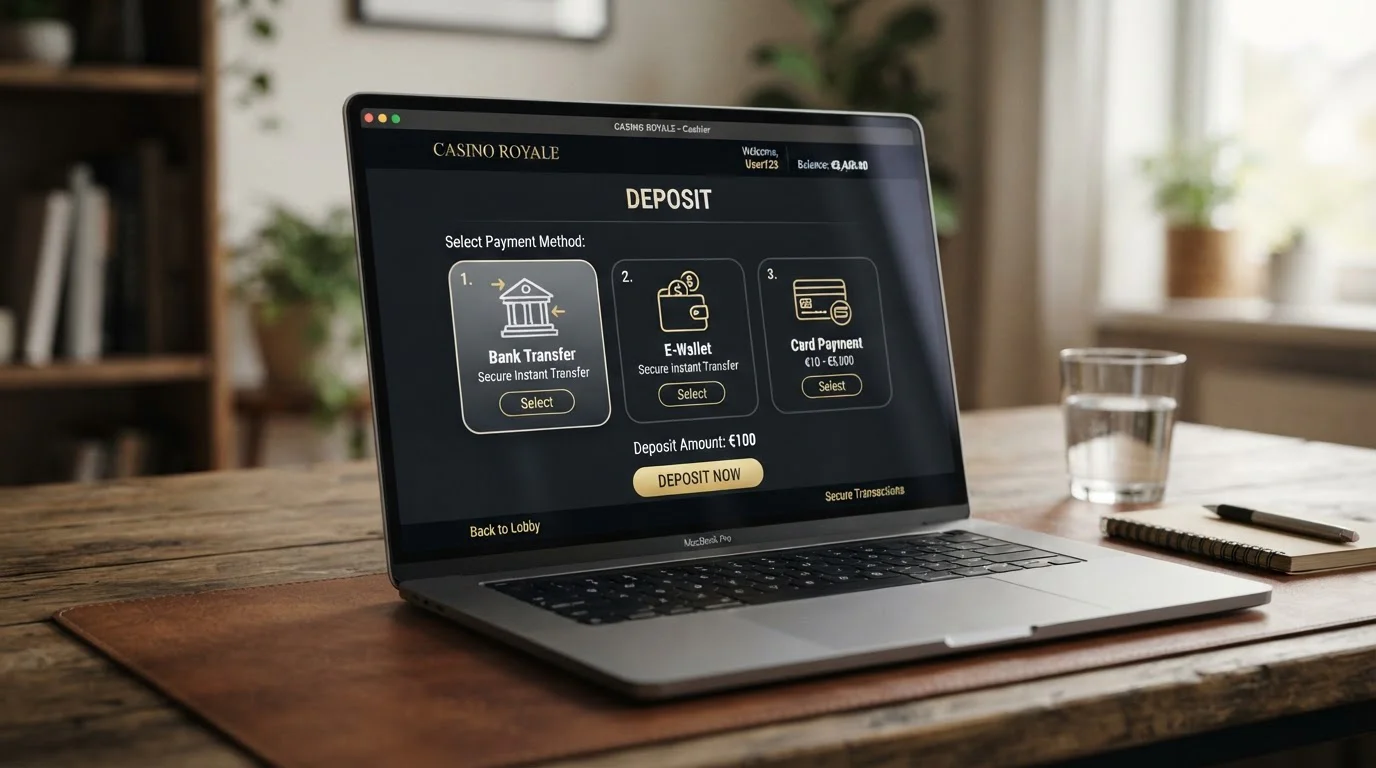
For historical context, here is how Citadel deposits worked when the method was still active. At the casino cashier, you selected bank transfer and were given a reference number and bank details by the Citadel system. You then logged into your internet banking separately, entered the reference and details, and initiated the transfer. Citadel’s backend recorded the transaction and notified the casino merchant account, which credited your player balance. The process was faster than traditional BACS (which took days) but slower and more manual than a card deposit.
The MyCitadel eWallet variant required pre-funding. You set up a Citadel account, transferred money from your bank into the eWallet (usually via bank transfer, taking 1-3 days), then used the eWallet balance for instant casino deposits. This added a two-step layer: bank to Citadel, Citadel to casino. Withdrawals reversed the flow: casino to Citadel, then Citadel to bank.
Deposit limits varied by casino. Most set a minimum of £10 or £20. Maximum deposits were typically dictated by your bank’s daily transfer limit rather than Citadel’s own cap. Fees were rare—Citadel did not charge consumers for transactions, and most casinos absorbed the merchant fee. The main friction was the manual step: leaving the casino site, logging into internet banking, copying the reference number correctly, and waiting for the casino to detect the incoming transfer (usually seconds to minutes, but sometimes longer if Citadel’s sync lagged).
In 2026, none of this matters because you cannot use Citadel at UK casinos. But understanding how it worked clarifies why Trustly and Pay by Bank won: they automated the entire flow. Instead of manually entering a reference, you authenticate once in your banking app and the payment initiates automatically via API. No reference numbers, no copy-paste errors, no leaving the casino site.
The Citadel Direct variant was slightly faster than the eWallet but still required manual intervention. You selected “bank transfer” at the casino, Citadel generated a unique payment reference tied to your casino account, and you had to log into your online banking separately to complete the transfer. The reference number was critical—if you entered it incorrectly, the payment would not be matched to your account, and you would have to contact casino support to manually reconcile the transaction. This happened more often than Citadel’s marketing materials admitted, particularly on mobile devices where copying and pasting between the casino site and a banking app was clumsy.
Citadel’s promise was “instant banking,” but the reality was “faster than BACS.” Trustly delivers actual instant banking: the entire authentication and payment flow happens in one unbroken sequence, and the casino credits your account the moment your bank confirms the payment. Citadel required you to break that flow, navigate away, and manually trigger the payment from your banking portal. It was an improvement over waiting three days for a bank transfer to clear, but it was not the smooth experience open banking delivers in 2026.
The table below summarises how Citadel’s two products compared with the open banking flow that replaced them, using the timings described above.
| Feature | Citadel Direct | MyCitadel eWallet | Trustly / Pay by Bank |
|---|---|---|---|
| Separate account needed | No | Yes, pre-funded | No |
| How you pay | Manual transfer with a reference number | eWallet balance | Authorise in your banking app |
| Deposit time | 2-5 minutes when it worked | Instant once funded (funding took 1-3 days) | 15-30 seconds |
| Withdrawal time | 2-5 days in total | 2-5 days, plus eWallet-to-bank leg | 15 minutes to 24 hours |
| Main risk | Mistyped reference delays the payment | Extra step to reach your bank | Needs online banking access |
If you were a Citadel user in the past, Trustly will feel familiar but faster. The deposit flow is the same—bank account to casino—but every manual step is gone.
Citadel Withdrawals and Payout Times
Citadel supported withdrawals at casinos that offered it, but the process was slower than deposits. When you requested a payout, the casino pushed the funds to your Citadel account (if using MyCitadel eWallet) or initiated a bank transfer via Citadel Direct. The casino’s internal processing time applied first—typically 24 hours for verification and approval. Then Citadel processed the withdrawal, which added another 24-48 hours for bank transfers to clear. Total payout time ranged from 2-5 days depending on the casino and your bank.
Compared to modern alternatives, that was slow. Trustly withdrawals clear in 15 minutes to 24 hours at the fastest UKGC casinos. PayPal withdrawals hit your PayPal account within 24 hours, then another day to transfer to your bank. Even standard debit card withdrawals at UKGC sites now process within 24-48 hours. Citadel’s 2-5-day window was acceptable when it launched but became a disadvantage as Faster Payments infrastructure matured and casinos optimised payout speeds.
Citadel did not charge withdrawal fees on its side, but some casinos imposed fees for bank-transfer payouts (typically £1.50-£3.00). That fee structure has mostly disappeared at UKGC casinos in 2026, where free withdrawals are standard for e-wallets and open banking methods.
Can I still withdraw to Citadel from a UK casino?
No. Since no UKGC-licensed casino accepts Citadel deposits in 2026, withdrawals to Citadel are also unavailable. If you had a MyCitadel eWallet account, the service itself may still function for other purposes, but UK casinos do not support it as a payout method.
Citadel Bonuses and Promotions (Historical Context)
When Citadel was active, it qualified for casino welcome bonuses at most operators. The common rule was that bonuses applied to “real money deposits,” and Citadel counted as real money (unlike some voucher-based methods that casinos excluded). A player depositing £100 via Citadel would receive the same match bonus a debit-card depositor received—typically 100% up to £200 or a similar structure, depending on the casino.
Some casinos offered payment-method-specific bonuses. PayPal, Skrill, and Neteller were occasionally excluded from certain promotions because those methods made bonus abuse easier (instant deposits and withdrawals reduced risk for bonus hunters). Citadel was rarely singled out for exclusion because its user base was smaller and the withdrawal process was slow enough to deter pure bonus arbitrage.
Free spins offers paired with first deposits also applied to Citadel. A typical 2020-era offer might be “deposit £10, get 50 free spins,” and Citadel deposits triggered the spins alongside card or e-wallet deposits. Wagering requirements were the same across all deposit methods—usually 30x to 50x before the UKGC wagering cap of 10x took effect on 19 January 2026.
In 2026, this is moot. Since Citadel is not available, you cannot use it to claim bonuses. Trustly and Pay by Bank qualify for all standard promotions at UKGC casinos. PayPal qualifies at most casinos that accept it, though some high-roller or VIP offers still exclude e-wallets. Debit cards remain universally eligible.
If you were a Citadel user hunting bonuses pre-2020, the good news is that open banking methods are treated identically to Citadel for bonus purposes: they are real-money deposits, not vouchers, and they trigger welcome offers without exclusions.
Citadel Casino Safety and Regulation
Citadel itself was a legitimate payment provider. It held FCA authorisation as a Payment Institution, was a member of the Electronic Money Association, and processed high volumes of legitimate transactions for merchants beyond gambling. Using Citadel at a casino, assuming the casino was itself licensed, carried no additional risk compared to using a debit card or another e-wallet. Your bank details were not shared with the casino (in Citadel Direct, the casino saw only the Citadel transaction; in MyCitadel, the casino saw your eWallet ID, not your bank account). The transaction was subject to UK money-laundering and consumer-protection regulations.
The safety question in 2026 is not whether Citadel was safe—it was—but whether casinos claiming to accept Citadel are legitimate. If you find an offshore site listing Citadel as a payment method, treat it with suspicion: it is not licensed to serve UK players. Many outdated casino listings still show Citadel because they were copied from 2018-2020 data and never updated. A Curaçao-licensed casino genuinely accepting Citadel might exist, but such a site would be an outlier, and its decision to maintain a deprecated payment method raises questions about how current its integrations and security practices are.
UKGC Payment Method Standards
The UK Gambling Commission does not prescribe which payment methods casinos must offer, but it enforces rules around consumer protection and financial transparency. UKGC-licensed casinos must prevent money laundering, verify customer identity, and process withdrawals within reasonable timeframes. The regulator banned credit cards in April 2020 to stop people gambling with borrowed money. Debit cards, e-wallets, and bank transfers remain permitted.
Citadel’s disappearance from UKGC casinos is market-driven, not regulatory. Open banking methods aligned with PSD2’s Strong Customer Authentication requirements, making them attractive to both operators and regulators. Casinos that adopted Trustly and Pay by Bank satisfied UKGC transparency rules while offering better UX than legacy methods. Citadel, by contrast, required maintaining a separate integration for a shrinking user base. Operators phased it out because it was redundant, not because it was banned.
If a UKGC casino lists Citadel in 2026, contact the casino’s support to verify. It is more likely an outdated cashier listing than a live payment option.
Non-GamStop Sites and Citadel
Non-GamStop casinos—offshore operators licensed in Curaçao, Malta, or other jurisdictions—accept UK players but fall outside UKGC regulation and the GamStop self-exclusion scheme. If you have self-excluded via GamStop, these sites are not a workaround: self-exclusion exists for a reason, and support is available from GamStop, GamCare (0808 8020 133) and BeGambleAware.
Citadel’s availability at non-GamStop casinos in 2026 is even murkier than at UKGC sites. A handful of global casino listings still name Citadel, but concrete site names are absent. Offshore casinos tend to rely on crypto and e-wallets such as Skrill, while Trustly is rare there because it primarily serves regulated markets, and PayPal blocks payments to unlicensed gambling operators. Citadel, if listed, is more likely a data remnant than a live option.
The broader caution with non-GamStop casinos is licensing and dispute resolution. UKGC-licensed operators answer to the UK regulator, and unresolved complaints go to an approved Alternative Dispute Resolution provider such as IBAS. Offshore sites answer to their home regulator—if they hold a valid licence at all. Payment-method availability is secondary to verifying the site is legitimate before depositing.
Is Citadel safe to use at online casinos?
Citadel was a safe, FCA-authorised payment method when it was active. In 2026 the question is moot, because no UK-licensed casino accepts it. If a site claims to offer Citadel, verify its licensing independently: outdated listings are common, and a site keeping a dead method may have poor integration hygiene.
Are there any non-GamStop casinos that accept Citadel?
None that a UK player should rely on in 2026. Global casino lists that still name Citadel are worldwide, not UK-specific, and many entries are outdated. More importantly, non-GamStop sites are not licensed for UK players and offer no UK protection; if you have self-excluded, GamCare (0808 8020 133) and BeGambleAware can help.
Mobile Citadel Casinos and Apps
Citadel worked on mobile browsers when it was active. The deposit flow was identical: select Citadel at the casino cashier, receive the reference and bank details, open your banking app separately, complete the transfer. Some UK banks offered mobile-optimised internet banking that streamlined the process, but Citadel itself had no consumer-facing mobile app for casino payments. The MyCitadel eWallet variant had a mobile interface for managing your eWallet balance, but funding and withdrawing still required navigating your bank’s mobile site or app.
In 2026, mobile casino payments are dominated by methods purpose-built for mobile UX. Trustly and Pay by Bank redirect you to your banking app, where you authenticate with biometrics (Face ID, fingerprint) and approve the payment in seconds. PayPal and Apple Pay work with one tap. Compared to Citadel’s manual reference-entry flow, these are faster and less error-prone.
If you were a mobile Citadel user, Trustly is the natural replacement. The flow is the same—authenticate in your banking app—but without the copy-paste step. Apple Pay, if your casino supports it, is even faster for deposits (though withdrawals still go via bank transfer or e-wallet).
Is Citadel Worth Pursuing in 2026?
No. The method is obsolete in the UK market, no UKGC-licensed operator accepts it, and the offshore listings that still name it are outdated and carry no UK protection.
Use Trustly instead. It does exactly what Citadel did—instant deposits from your bank account—but faster, with no separate account, and with wide availability at UKGC casinos. Trustly withdrawals clear in 15 minutes to 24 hours, beating Citadel’s 2-5-day payout window. There are no fees. The authentication flow is cleaner and more secure because it runs through your bank’s own app under PSD2. If your bank supports online banking (and nearly all UK banks do), Trustly works.
If you prefer a traditional e-wallet with brand recognition, use PayPal. It is available at many UKGC casinos, processes deposits instantly, and handles withdrawals within 24 hours to your PayPal account. PayPal requires a separate account, unlike Trustly, but many UK players already have one.
Pay by Bank is interchangeable with Trustly—it is the same open banking infrastructure under a different label. Some casinos brand it as “Instant Bank Transfer” or simply “Pay by Bank.” The player experience is identical: select your bank, authenticate in your app, approve the payment. If your casino lists both Trustly and Pay by Bank, either works.
The structural reason Citadel disappeared is that open banking replaced it. PSD2 gave Payment Initiation Service Providers like Trustly direct access to bank payment rails via APIs. Casinos no longer needed proprietary integrations with each e-wallet provider. One integration (Trustly, or Brite, or Volt) worked with all UK banks. Citadel’s value proposition—instant bank transfers without a card—was absorbed by open banking, and its proprietary architecture became a liability. Operators dropped it because keeping it offered no advantage and maintaining legacy integrations costs money.
For UK players in 2026, this is good news. Trustly and Pay by Bank are faster, more secure, and more widely accepted than Citadel ever was. Withdrawals are quicker. Fees are nonexistent. The UX is better. The only downside is nostalgia, and nostalgia does not fund casino accounts.
If you encounter a page claiming “Videoslots is the #1 Citadel casino” or promising “the best Citadel casino bonuses,” ignore it. Those claims are fossils from earlier years. Videoslots’ actual 2026 cashier lists PayPal, Trustly, Visa, and Apple Pay. No Citadel.
The UK casino payment landscape in 2026 is open banking, e-wallets, and debit cards. Citadel is not part of it — treat it as payment history, not a live option.
Is Citadel better than PayPal for online gambling?
Neither is better in 2026, because Citadel is unavailable. Historically both offered instant deposits and kept your card details off the casino. But PayPal is faster for withdrawals (around 24 hours versus 2–5 days), is accepted at many UKGC casinos while Citadel is accepted at none, and carries brand trust. PayPal wins by default.
Casino Deposit Methods UK 2026 — Compare Payment Options
Content created by the «casinopayoptions-uk.com» team