
Casinos That Accept Solana UK 2026: The Offshore Reality Check
 Available in GB
The search starts simple enough. You want to deposit Solana at an online casino from the UK. You expect a shortlist of regulated operators, a comparison table, maybe a welcome offer.
Here is the part nobody leads with: not a single UK Gambling Commission-licensed casino accepts cryptocurrency deposits in 2026. Not Solana, not Bitcoin, not Ethereum. Zero.
Every Solana casino accessible to UK players operates offshore, typically under a Curaçao or Anjouan licence. That changes everything: how deposits work, what protections you have, where disputes go, whether GamStop applies. The regulatory split matters more than the transaction speed, and most listings bury that reality under affiliate links.
Below you will find eight platforms that accept SOL and serve UK players, each broken down by licence, KYC policy, withdrawal speed, and the specifics that make one better than another depending on what you value. You will also find the legal position explained without the handwaving, the deposit process mapped from your bank account to spins on screen, and the risks stated plainly.
No UKGC casino will appear in this list. If that is a dealbreaker, close the tab now. If you are open to offshore platforms and want to know which ones are worth the regulatory tradeoff, keep reading.
What Are Solana Casinos and Why Use SOL for Gambling?
A Solana casino is an online gambling platform that accepts SOL, the native cryptocurrency of the Solana blockchain, for deposits and withdrawals. Solana launched in 2020 as a proof-of-stake blockchain designed for high throughput and low latency. In real-world conditions it processes between 1,500 and 4,000 transactions per second, with peaks during high activity reaching 2,000 to 5,000 TPS. Block times average around 400 milliseconds. Economic finality happens in under a second; full finality takes roughly 12 to 13 seconds.
That technical profile translates to a practical advantage for gamblers. A Solana deposit confirms almost instantly. You send SOL from your wallet, it lands in your casino account within five to sixty seconds depending on network load and the platform’s confirmation threshold. Most casinos require one to three confirmations. Compare that to Bitcoin, where confirmation times stretch into minutes, or bank cards, where deposits can take hours to clear and withdrawals stretch across days.
Transaction costs sit at a base fee of 0.000005 SOL per signature, roughly $0.0008 as of mid-2026. An optional priority fee during congestion might push the total to $0.001 or $0.05 in extreme cases, but typical transfers cost a fraction of a cent. Bitcoin averages around $0.24 per transaction, Ethereum around $0.18. Card processors charge casinos two to five percent, and they pass some of that cost along in withdrawal fees or slower processing. Solana eliminates the middleman.
Casinos adopt SOL for speed, cost, and the borderless nature of crypto. There are no bank cut-off times and no foreign-exchange fees baked into the transaction. Transactions run 24/7, and the blockchain does not care which country you live in.
Native SOL vs. Converted Balance
Not every casino that “accepts Solana” handles it the same way. Some hold your SOL natively in your player wallet. You deposit SOL, you play with SOL, you withdraw SOL. The balance fluctuates with the coin’s market price while you play. Others auto-convert your deposit into USDT or a house balance denominated in dollars or euros the moment it lands. You send SOL, the casino credits you the equivalent in stablecoins or fiat, and you never hold SOL again until withdrawal.
The distinction matters. Native SOL exposes you to volatility. If SOL drops ten percent between deposit and withdrawal, your bankroll shrinks with it. If it rises, you gain. Converted balances eliminate that risk. You lock in the exchange rate at deposit, play with a stable value, and avoid the whipsaw of crypto price swings. Most platforms that convert do so transparently, but some bury the detail in cashier fine print. Worth checking before you send.
Is Solana faster and cheaper than Bitcoin for casino deposits?
Yes. Solana confirms in seconds with fees under $0.001 in typical conditions. Bitcoin averages $0.24 per transaction and takes minutes to confirm. For casino deposits where speed and cost matter more than decentralisation or brand recognition, Solana is the more practical choice.
The Legal Landscape: UKGC vs. Offshore Solana Casinos
The UK Gambling Commission does not license a single casino that accepts cryptocurrency as of 2026. This is not a temporary gap or a licensing quirk. It is structural. UKGC-licensed operators face strict affordability checks, source-of-funds scrutiny, mandatory GamStop integration, and detailed transaction monitoring. Crypto undermines all of it. Pseudonymous wallets make tracing harder. Instant settlements bypass the cooling-off periods banks provide. The regulatory framework and the technology are misaligned.
Cryptoassets are being brought within the Financial Conduct Authority’s remit under the Financial Services and Markets Act 2000 (Cryptoassets) Regulations. UKGC executive Tim Miller indicated the Commission might explore permitting crypto payments for licensed operators under strict affordability and AML checks, but nothing has materialised. The pathway exists in theory. In practice, no licensed operator accepts crypto deposits.
What “Offshore” Means for UK Players
Offshore casinos are platforms licensed outside the UK that accept British customers despite not holding a UKGC licence. Most Solana casinos operate under Curaçao or Anjouan licences. These jurisdictions offer lighter regulatory frameworks, lower licensing costs, and no requirement to integrate with GamStop or enforce UK-specific affordability checks. That makes them attractive to operators who want to serve crypto users or bypass UKGC restrictions on stake limits, spin speeds, and bonus terms.
Playing at an offshore casino is not illegal for UK residents. The Gambling Act 2005 makes it an offence to advertise or operate unlicensed gambling to GB consumers. It does not criminalise the player. If you deposit at a Curaçao-licensed casino from London, you are not breaking the law. You are, however, stepping outside the consumer protections the UKGC provides.
No GamStop integration means a self-exclusion registered with UKGC sites does nothing offshore. No access to a UK-approved ADR provider means if the casino refuses to pay a withdrawal, your recourse is limited to the offshore licence jurisdiction’s mechanisms, which vary in rigour and enforceability. Some operators name independent adjudicators whose decisions bind the casino. Most do not. The practical result is that offshore gambling shifts risk onto the player.
Curaçao Licences (Post-LOK Reform)
Curaçao overhauled its licensing regime in December 2024 under the LOK (Landsverordening op de Kansspelen) reform. The old master-licence system, where sub-licensees operated under a handful of master licences with minimal oversight, was replaced by direct licensing through the Curaçao Gaming Authority. Every operator now holds its own licence, identified by an OGL number such as Cloudbet’s OGL/2024/328/0599, and faces stricter KYC and AML requirements than before.
The reform tightened things but did not turn Curaçao into Malta or Gibraltar. The licensing body still prioritises operator flexibility over player protection. KYC is enforced more consistently than pre-reform, but thresholds and verification depth remain looser than UKGC standards. The Curaçao-licensed casinos in this guide all hold licences in the new OGL format, some of them converted from the previous regime.
The Casino Secrets leak was a massive data breach exposing internal Curaçao Gaming Authority records. The leak revealed ownership structures, compliance gaps, and instances where licences were granted before ownership questions were fully resolved. Stake, one of the largest crypto casinos, was implicated. The leak did not shut down operations, but it underscored the opacity baked into the Curaçao system. Transparency is not the regulator’s strong suit.
Anjouan Licences
Anjouan, part of the Comoros archipelago, issues gambling licences through the Anjouan Offshore Finance Authority. Licence numbers start with ALSI-, as in FortuneJack’s ALSI-202411021-FI1. The regulatory framework is lighter than Curaçao post-LOK. Ongoing compliance requirements are minimal. Operators pay a flat annual fee, file basic reports, and face little scrutiny unless a major scandal surfaces.
That lax oversight makes Anjouan attractive to smaller or newer casinos that want low overhead. It also means player protections are almost entirely contractual. If the operator’s terms say disputes go to arbitration and the arbitrator is selected by the operator, you have no external recourse. Some Anjouan casinos are perfectly legitimate and pay out reliably. Others are fly-by-night operations that vanish after a few months. The licence itself tells you nothing about trustworthiness.
Your Legal Position as a UK Player
You are not committing a crime by playing at an offshore Solana casino from the UK. The offence under the Gambling Act 2005 targets operators and advertisers, not players. That said, legal does not mean protected. You forfeit UKGC consumer protections: mandatory dispute resolution, GamStop self-exclusion, affordability checks, and the ability to escalate unresolved disputes to the Gambling Commission.
If an offshore casino disputes a withdrawal, your options are limited. Some platforms include binding arbitration clauses or name independent adjudicators. Cloudbet, for example, specifies an adjudicator whose decision binds the casino. Most offshore operators do not. In practice, unresolved disputes end up on forums like Trustpilot, AskGamblers, or Reddit, where public pressure sometimes forces a payout. Sometimes it does not. The offshore model trades regulatory protection for access and flexibility. Know what you are giving up.
Are Solana casinos legal for UK players in 2026?
Playing at offshore Solana casinos is not illegal for UK residents. The Gambling Act 2005 criminalises operators and advertisers targeting GB consumers without a licence, not players. However, offshore casinos operate outside UKGC jurisdiction, so you lose consumer protections like GamStop, mandatory dispute resolution, and affordability checks. Legal to use, but unprotected.
What’s the difference between a Curaçao licence and an Anjouan licence?
Curaçao licences (post-December 2024 LOK reform) are issued directly by the Curaçao Gaming Authority, require stricter KYC/AML, and carry moderate compliance oversight. Anjouan licences, from the Anjouan Offshore Finance Authority, have minimal requirements and provide almost no player protections beyond the operator’s terms. Curaçao is more regulated; Anjouan is lighter and riskier.

Top Solana Casinos for UK Players in 2026
Eight platforms accept Solana deposits and serve UK players as of 2026. All operate offshore. None hold UKGC licences. The table below summarises key differentiators. Individual breakdowns follow.
| Casino | Licence | Min Deposit (SOL) | Withdrawal Speed | KYC Policy | Distinguishing Feature |
|---|---|---|---|---|---|
| BC.Game | Anjouan-licensed | 0.01 SOL | Under 10 min | No-KYC up to thresholds | 10,000+ games, BC Originals, massive crypto ecosystem |
| Stake | Curaçao OGL/2024/1451/0918 | Variable | Under 30 min | KYC required for UK | High-profile brand, VIP-first rewards, ownership controversy |
| Rollbit | Not published | 0.05 SOL | Instant (<10 min) | KYC before withdrawal | Instant payouts, NFT marketplace, 1000x crypto trading |
| Cloudbet | Curaçao OGL/2024/328/0599 | 0.01 SOL | 10–30 min | KYC for full verification | Since 2013, independent adjudicator clause, transparent terms |
| BitStarz | Curaçao OGL/2024/165/0185 | Variable | ~10 min | KYC on withdrawal | Hybrid crypto/fiat, 8,200+ games, Trustpilot 4.3/5 |
| FortuneJack | Anjouan ALSI-202411021-FI1 | 0.01 SOL | 9 min average | Variable | Bonus autonomy (match or cashback), mixed reputation |
| Thrill | Anjouan (number not published) | No minimum | Under 30 min | No-KYC small withdrawals | On-chain transparency, 1x wagering, fiat gateway integrated |
| Wildies | Anjouan ALSI-152406026-FI2 | Variable | Not published | See operator T&Cs | Launched 2026, €3,250 welcome package, very new |
BC.Game
BC.Game launched in 2017 and now operates under an Anjouan licence, having moved offshore from Curaçao. The platform ranks among the largest crypto casinos globally by on-chain liquidity and active users.
The game library exceeds 10,000 titles from over 100 providers. BC Originals, the in-house suite of provably fair games, includes Crash, Dice, Plinko, and other verifiable-RNG offerings. A sportsbook covers major sports and esports. Solana is selectable as an account currency at signup, meaning you hold and play with native SOL rather than a converted balance. The Monthly Deposit Bonus runs a four-stage ladder paying 180 to 360 percent with rakeback on every stage. Minimum deposit for stage one is five dollars. All four stages reset on the first of each month at midnight UTC. The VIP program offers tiered rewards and dedicated hosts at higher levels.
BC.Game distinguishes itself through sheer scale. The game count dwarfs most competitors. The crypto ecosystem extends beyond the casino into a native BC token, a yield vault, and integrated DeFi features. That appeals to users who want one wallet for multiple crypto activities. The downside is complexity. New users face a steep learning curve navigating the interface, and the promotional structure requires reading fine print to avoid forfeiting bonuses. If you value game variety and crypto-native tooling over simplicity, BC.Game delivers.
Stake
Stake operates under Medium Rare N.V. and holds Curaçao licence OGL/2024/1451/0918. It was co-founded in 2017 by Ed Craven and Bijan Tehrani, two Australians who met as teenagers playing RuneScape. The platform became one of the most recognisable crypto casino brands through high-profile sponsorships: UFC, Everton FC, a partnership with Drake. That visibility comes with scrutiny. The Casino Secrets leak exposed internal Curaçao records that listed an owner of Medium Rare N.V. other than the two public founders. Craven and Tehrani are the public face of the brand, but the ownership structure remains murky.
Stake supports SOL as one of multiple cryptocurrencies selectable at account setup. The platform combines casino games, Stake Originals (in-house Plinko, Mines, Dice), live dealer tables, a sportsbook, and esports betting. There is no traditional welcome bonus. Rewards come through the VIP program, rakeback, and promotional races. That structure favours high-volume players over casual signups. UK users should expect KYC verification before withdrawal. The platform enforces stricter checks for certain jurisdictions, and the UK is one of them.
Stake’s appeal is brand recognition and product polish. The interface is clean, the sportsbook is comprehensive, and the Originals are slick. The downside is the ownership ambiguity. If transparency matters to you, the leaked records are a red flag. If you care more about a smooth user experience and mainstream legitimacy than knowing exactly who owns the platform, Stake delivers. Withdrawals average under 30 minutes post-approval.
Rollbit
Rollbit operates under a less transparent licensing model than its Curaçao-licensed peers. The main site does not prominently disclose a licence jurisdiction or number, so you cannot check its regulator on a public validator before depositing. In practice the platform leans on its terms of service rather than visible regulatory approval. That opacity is not uncommon among crypto-first casinos, but it increases risk if a dispute arises. No clear regulator means no clear recourse.
The platform accepts Bitcoin, Ethereum, Litecoin, and Solana. Minimum deposit is 0.05 SOL. Rollbit distinguishes itself through instant withdrawals. Average processing time sits under ten minutes according to 2026 player reviews. Most casinos batch withdrawals or process them manually during business hours. Rollbit automates payouts and settles them immediately. That speed is best-in-class.
The product extends beyond the casino. Rollbit bundles a sportsbook, esports betting, an NFT marketplace (Rollbots), and leveraged crypto trading up to 1000x on a single wallet. The Rollbot NFT collection launched in 2021 and functions as both a collectible and a staking mechanism for platform rewards. The trading feature appeals to high-risk users comfortable with leverage. KYC is required before withdrawal: passport or driving licence, proof of address, sometimes a selfie. Verification takes one to 48 hours.
Rollbit suits users who prioritise withdrawal speed and want multiple products on one balance. The licensing opacity is the tradeoff. If you value regulatory clarity and binding dispute resolution, look elsewhere. If instant payouts and a bundled crypto ecosystem matter more, Rollbit delivers.
Cloudbet
Cloudbet is one of the oldest Bitcoin casinos still operating. It launched in 2013, making it a veteran in an industry where most platforms fold within three years. The operator is Halcyon Super Holdings B.V., registered in Curaçao at Abraham Mendez Chumaceiro Boulevard 03, Willemstad, company number 148526. Licence: Curaçao Gaming Authority OGL/2024/328/0599. The licence appeared on the Curaçao validator as of mid-2026.
Cloudbet accepts 29 cryptocurrencies including SOL. The coin is listed in the footer and selectable in the cashier. The casino stocks over 3,000 games, and the sportsbook has strong esports coverage. The welcome package reaches up to $2,500 or crypto equivalent across multiple deposits. The loyalty program pays rewards in cash rather than bonus funds with wagering requirements, which is rare among offshore operators. Once you complete KYC, there is no withdrawal ceiling. The platform publishes its fee structure instead of hiding processing charges, and the terms include a clause naming an independent adjudicator whose decision binds the casino. That adjudication clause is almost unheard of in the offshore space.
Cloudbet trades cutting-edge features for stability. The site design feels dated compared to newer platforms. The game library is smaller than BC.Game or Stake. But reliability and transparent terms matter more to veteran crypto bettors than flashy UI. If you want an offshore casino that behaves like it expects to still be operating in five years, Cloudbet is the safest bet in this list. Crypto payouts are fast, typically within ten to thirty minutes, and the platform has a track record of paying large wins without manufactured disputes.
BitStarz
BitStarz launched in 2014 and operates under Gareton B.V., a Curaçao-registered entity. Licence: Curaçao Gaming Authority OGL/2024/165/0185. The licence was converted to an indefinite term in December 2025, meaning there is no expiry date to track. The platform is a hybrid: it accepts 12-plus cryptocurrencies including SOL, but also handles fiat deposits in EUR, USD, and other currencies. That dual model appeals to users who want the option to switch between crypto and traditional payment methods.
The game library exceeds 8,200 titles from over 70 providers. BitStarz Originals, the in-house suite, includes 18 provably fair games. The welcome package adds deposit bonuses and 180 free spins across the first deposit. Crypto withdrawals are approved in roughly ten minutes on average, fast for a platform that also processes fiat. Zero fees on crypto payouts. Live chat operates around the clock. Trustpilot rates BitStarz at 4.3 out of 5 across 5,371 reviews (2026 figures), with a 96 percent reply rate on negative reviews. That customer-service reputation is a differentiator.
BitStarz suits users who want a foot in both worlds: crypto speed and fiat flexibility. The game library is extensive without being overwhelming. The Originals add provably fair options alongside traditional slots. KYC is required on withdrawal, typical for hybrid operators. If you value long operational history, strong customer service, and the option to deposit fiat if crypto becomes inconvenient, BitStarz is the middle ground.
FortuneJack
FortuneJack operates under PlayWave SRL and holds Anjouan Gaming licence ALSI-202411021-FI1. The platform launched around 2013 to 2014, making it one of the older crypto casinos, though it has shifted licensing jurisdictions over the years. It previously held a Curaçao licence and now operates under an Anjouan licence. The site accepts 11 cryptocurrencies including SOL, listed in the footer and selectable as an account currency. The game library contains 1,900-plus titles from 40-plus providers, with provably fair games available alongside traditional slots and live dealer tables. A sportsbook is integrated.
The welcome bonus structure offers autonomy: players choose between a deposit match or cashback rather than being forced into one model. That choice is rare. Most casinos bundle a match bonus with high wagering requirements and call it a “gift.” FortuneJack lets you pick the structure that suits your play style. The four-deposit welcome package scales rewards across multiple deposits. Withdrawal speed averaged nine minutes in 2026 testing, which is fast.
Reputation is mixed. Trustpilot removed FortuneJack’s rating after finding fake reviews. Of the 182 remaining reviews, 61 percent are one-star. That is a red flag. However, Casino Guru rates the platform 8.7 out of 10 with a High Safety Index, suggesting real players have had positive experiences despite the Trustpilot manipulation. The Anjouan licence provides minimal regulatory oversight, so due diligence falls entirely on the player. If you value bonus autonomy and fast withdrawals enough to accept reputation risk, FortuneJack is worth considering. If a clean reputation matters more, skip it.
Thrill
Thrill launched around 2025, making it one of the newest platforms in this guide. It operates under an Anjouan licence, though the specific number is not prominently disclosed on the main site. The platform has grown rapidly. It lists more than 3,000 games from dozens of providers. Thrill Originals, the in-house suite, includes live Crash and other provably fair games. The casino accepts 15 cryptocurrencies across 11 networks, including SOL. Multi-chain support is a distinguishing feature.
There is no minimum deposit. Wagering requirement before withdrawal is 1x deposit, an anti-money-laundering measure rather than a profit mechanism. Most casinos impose 30x to 50x wagering on bonuses. A 1x deposit requirement is negligible. Thrill integrates Swapped, a fiat-to-crypto gateway, allowing users to buy crypto with GBP or EUR directly on-site without leaving to use an exchange. That removes friction for users new to crypto. DappRadar tracks Thrill’s on-chain activity publicly—$2.39 million in deposits over one sampled 24-hour period in 2026, across 109 verified wallets on Ethereum, Solana, and TRON. That on-chain transparency is rare.
Thrill has no traditional welcome bonus. Rewards come through a loyalty program and promotional races. KYC is not required for small withdrawals, though UK players may face stricter checks depending on transaction size. The platform suits users who value on-chain transparency, low wagering requirements, and an integrated fiat gateway. The tradeoff is newness. Reputation takes years to establish. If you prefer a platform with a decade-long track record, Thrill is too young. If you want modern tooling and publicly trackable on-chain activity, it is worth testing with a small deposit.
Wildies Casino
Wildies launched in 2026 under Leva Limited, an Anjouan-registered entity. Licence: ALSI-152406026-FI2. The platform is the newest in this guide, with no long-term reputation to assess. It accepts nine currencies including GBP, EUR, and cryptocurrencies (Bitcoin, Ethereum, Solana, Tether). The game library runs to around 2,500 titles from roughly 35 providers, including Pragmatic Play and Hacksaw Gaming. A sportsbook is integrated from launch. Live support operates 24/7.
The welcome package is aggressive: up to €3,250 plus 150 free spins across the first four deposits. That is high-end for a new offshore casino. Most platforms front-load the first deposit and taper rewards. Wildies splits the package across four deposits, rewarding returning players rather than one-time signups. Wagering requirements and withdrawal terms are not prominently published, so read the full T&Cs before claiming; that gap is typical for platforms too new to have an independent track record.
Wildies suits users willing to gamble on a brand-new platform in exchange for a large welcome package and multi-currency flexibility. The Anjouan licence provides minimal oversight. No long-term track record means no way to verify reliability. If you value established reputation and verifiable payout history, avoid Wildies until it has a few years of operation. If you are comfortable being an early adopter and the €3,250 package appeals, test it with a small deposit and see how the first withdrawal goes.
How to Deposit and Withdraw Solana at UK Casinos
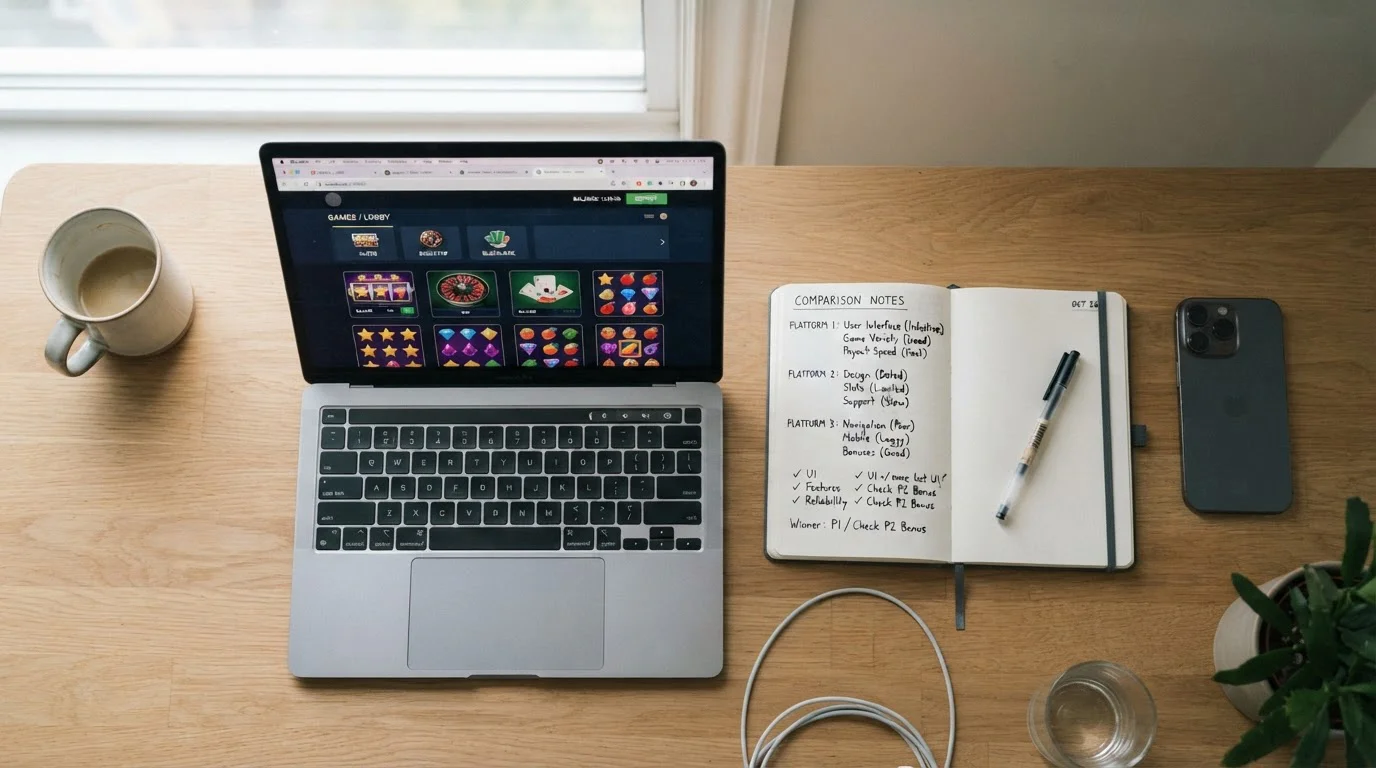
The process from GBP in your bank account to spins on a Solana casino takes five steps: buy SOL, send it to the casino, play, withdraw, and convert back to GBP. Funding a casino balance takes around ten minutes if you already have a verified exchange account; first-time exchange verification can stretch that to 48 hours. Below is the step-by-step breakdown.
Step 1: Buy Solana (GBP → SOL)
UK players typically buy SOL through a centralised cryptocurrency exchange. The three most common options are Coinbase, Binance, and Kraken. All three require KYC: passport or driving licence, proof of address (utility bill or bank statement under three months old), sometimes a selfie with your ID. Verification takes anywhere from ten minutes to 48 hours depending on the platform’s backlog and the clarity of your documents. If you already have a verified account, this step takes five minutes. If not, expect delays.
Once verified, deposit GBP via bank transfer or debit card. Card deposits are instant but carry higher fees (typically 1.5 to 3.5 percent). Bank transfers via Faster Payments are cheaper (usually free or a small flat fee) and normally arrive within minutes, though some exchanges hold a first deposit for review. After your GBP lands, navigate to the SOL market, enter the amount you want to buy, and confirm the trade. Exchange fees range from 0.5 to 1.5 percent for maker/taker orders, higher for instant buy services.
Alternative: some casinos integrate fiat-to-crypto gateways like MoonPay or Transak directly into their cashiers. Thrill, for example, uses Swapped. You can buy SOL with GBP on-site without leaving the casino. Convenience costs: integrated gateways charge higher fees than exchanges, often three to six percent. They also require KYC. For small purchases the convenience might be worth it. For larger amounts, use an exchange.
P2P platforms (LocalBitcoins-style services) offer another route. You buy SOL directly from another person, often with lighter KYC. Fees are higher, liquidity is lower, and scam risk increases. P2P makes sense if you want to avoid centralised exchanges for privacy reasons, but most UK players stick with Coinbase, Binance, or Kraken.
Step 2: Send SOL to Your Casino Wallet
Log into the casino, navigate to the cashier or deposit section, and select Solana as your deposit method. The casino displays a deposit address: a long string of letters and numbers (Solana addresses have no fixed prefix, so you cannot spot an error by its first characters). Copy that address. Do not type it manually. One wrong character sends your SOL into the void with no recovery.
Open your exchange or wallet, navigate to the send or withdraw function, paste the casino’s deposit address into the recipient field, enter the amount of SOL you want to send, and confirm. Double-check the address. Crypto transactions are irreversible. Most exchanges show a network fee estimate before you confirm. Solana fees are negligible (under $0.001 in typical conditions), but the exchange may add a flat withdrawal fee. Coinbase, for example, charges around 0.01 SOL (~$1 to $2 depending on SOL price) as a withdrawal fee. Binance is cheaper, often free or a fraction of a cent.
Confirmation time: five to sixty seconds depending on network load and the casino’s threshold. Most casinos credit deposits after one to three confirmations. Check the cashier; your balance updates automatically. If it does not appear within two minutes, check the transaction on a Solana block explorer (Solscan or Solana Beach). Enter your deposit address or transaction hash. If the transaction shows as confirmed on-chain but your casino balance has not updated, contact support.
Step 3: Play and Win
Your SOL is now in your casino account. If the platform holds native SOL, your balance fluctuates with the coin’s market price while you play. If the casino converted your deposit to USDT or a house balance, you are playing with a stable value. Check the cashier to confirm which model applies. Play slots, live dealer games, sportsbook, whatever the platform offers. Bonuses often come with wagering requirements. Read the terms before you claim. A 100 percent match bonus with 40x wagering means you must wager 40 times the bonus amount before you can withdraw. Slots usually contribute 100 percent to wagering; table games and live dealer games contribute less or not at all.
Step 4: Withdraw SOL to Your Wallet
When you are ready to cash out, navigate to the withdrawal section of the cashier. Select Solana, enter the amount you want to withdraw, and paste your personal Solana wallet address into the recipient field. This is the wallet you control, not the exchange deposit address (though you can withdraw directly to an exchange if you plan to sell immediately). Confirm the withdrawal.
Processing time varies. Rollbit and BC.Game claim instant withdrawals, often under ten minutes. Cloudbet averages ten to thirty minutes. BitStarz processes crypto withdrawals in roughly ten minutes. FortuneJack tested at nine minutes. Thrill and Stake average under 30 minutes. Wildies has not accumulated enough independent testing to verify. Some platforms require KYC clearance before your first withdrawal. If documents are requested, upload them promptly. Verification takes one to 48 hours. Large withdrawals (typically above $2,000 to $5,000 depending on the casino) almost always trigger KYC even if small withdrawals pass through without it.
Once approved, the casino sends SOL to your wallet. On-chain confirmation takes seconds. Open your wallet, check the balance. If you used a non-custodial wallet (Phantom, Solflare), the SOL appears immediately. If you withdrew to an exchange, the exchange may require its own confirmations before crediting your account, usually one to three blocks (a few seconds on Solana).
Step 5: Convert SOL Back to GBP
If you want GBP in your bank account, reverse the onramp. Send SOL from your wallet to your exchange account (Coinbase, Binance, Kraken). Once the exchange credits your SOL balance, navigate to the SOL/GBP market, sell your SOL, and withdraw GBP to your bank via bank transfer. Most UK exchanges pay GBP out via Faster Payments, which is near-instant once the exchange releases the funds; the wait is the exchange’s own processing, which can run from minutes to a couple of business days. Some charge a flat fee (£1 to £2); others are free.
Total time from casino withdrawal to GBP in your bank account: from under an hour to a few days, depending almost entirely on exchange processing. The on-chain part (casino to exchange) takes seconds. The exchange’s release of fiat is the bottleneck.
The table below pulls together the costs and timings for each leg of the GBP-to-SOL-and-back route described above.
| Stage | Typical time | Typical cost |
|---|---|---|
| Exchange account verification | 10 minutes to 48 hours | Free |
| GBP deposit to exchange by debit card | Instant | 1.5–3.5% |
| GBP deposit to exchange by Faster Payments | Usually minutes | Free or small flat fee |
| Buying SOL on the exchange | Seconds | 0.5–1.5% (higher for instant buy) |
| Buying via an in-casino gateway | Minutes | 3–6% |
| Exchange withdrawal of SOL to casino | Seconds on-chain | Around 0.01 SOL at Coinbase; network fee ~$0.0008 |
| Casino crediting the deposit | 5–60 seconds | None at most casinos |
| GBP withdrawal from exchange to bank | Minutes to a few days | Free or £1–£2 |
How do I buy Solana (SOL) in the UK to deposit at a casino?
Use a centralised exchange like Coinbase, Binance or Kraken; all require KYC (passport, proof of address). Deposit GBP by bank transfer via Faster Payments (usually minutes, low fees) or debit card (instant, higher fees), buy SOL, then send it to your casino deposit address. Some casinos integrate fiat-to-crypto gateways like MoonPay, but fees run higher.
Do Solana casinos charge deposit or withdrawal fees?
Most casinos charge no fee for Solana deposits; the on-chain network fee (around $0.0008) is paid by the sender. Withdrawal fees vary—some (BC.Game, Stake, Thrill) charge nothing, others a flat per-withdrawal fee—so check the cashier first. Your exchange may also charge a flat fee when you send SOL to the casino.
Which Solana casino has the fastest withdrawals?
Rollbit claims instant withdrawals averaging under ten minutes, consistently rated best-in-class for speed. BC.Game and FortuneJack also process withdrawals quickly, typically under ten to fifteen minutes. Cloudbet and BitStarz average ten to thirty minutes. Speed depends on whether the casino batches withdrawals manually or automates them, and whether KYC is already cleared.
KYC and Verification: What to Expect
Know Your Customer (KYC) verification is the process casinos use to confirm your identity, age, and address before allowing withdrawals. Offshore casinos market themselves as “no-KYC” or “minimal-KYC” alternatives to regulated operators, but the reality is more nuanced. Some platforms let small withdrawals pass without documents. Others require verification before your first cashout regardless of amount. UK players face stricter scrutiny than users from other jurisdictions due to heightened AML concerns and regulatory pressure following Curaçao’s LOK reform.
No-KYC Casinos (What They Really Mean)
A “no-KYC casino” does not mean you will never be asked for documents. It means the platform does not require verification at signup or for deposits. You can create an account with just an email address or wallet connection, deposit crypto, and play immediately. Verification is triggered later, typically at withdrawal, and often only above a certain threshold.
BC.Game and Thrill are often cited as no-KYC platforms. Both allow small withdrawals without documents. But “small” is relative and jurisdiction-dependent. A user in a low-scrutiny country might withdraw $500 or $1,000 without verification. A UK player might be asked for documents at $200 or even lower. The threshold is not published. It is set by the casino’s risk-management system and varies by account behaviour, transaction size, and geographic red flags.
Even casinos that advertise no-KYC often include clauses in their terms reserving the right to request documents at their discretion. That discretion is broad. If your account shows unusual activity (large deposits followed by immediate withdrawals, rapid bet size changes, winning streaks that look like bonus abuse), KYC can be triggered regardless of amount. The “no-KYC” label is marketing. Assume you might be asked, especially as a UK player.
KYC-on-Withdrawal Platforms
Most offshore casinos fall into this category. You can register and deposit without providing documents. Verification is required at the point of withdrawal, either immediately on your first cashout or after you hit a cumulative withdrawal threshold. Rollbit, BitStarz, and Stake enforce KYC before withdrawal. FortuneJack’s policy is less consistent, with some users reporting small withdrawals passing through and others being asked for documents immediately.
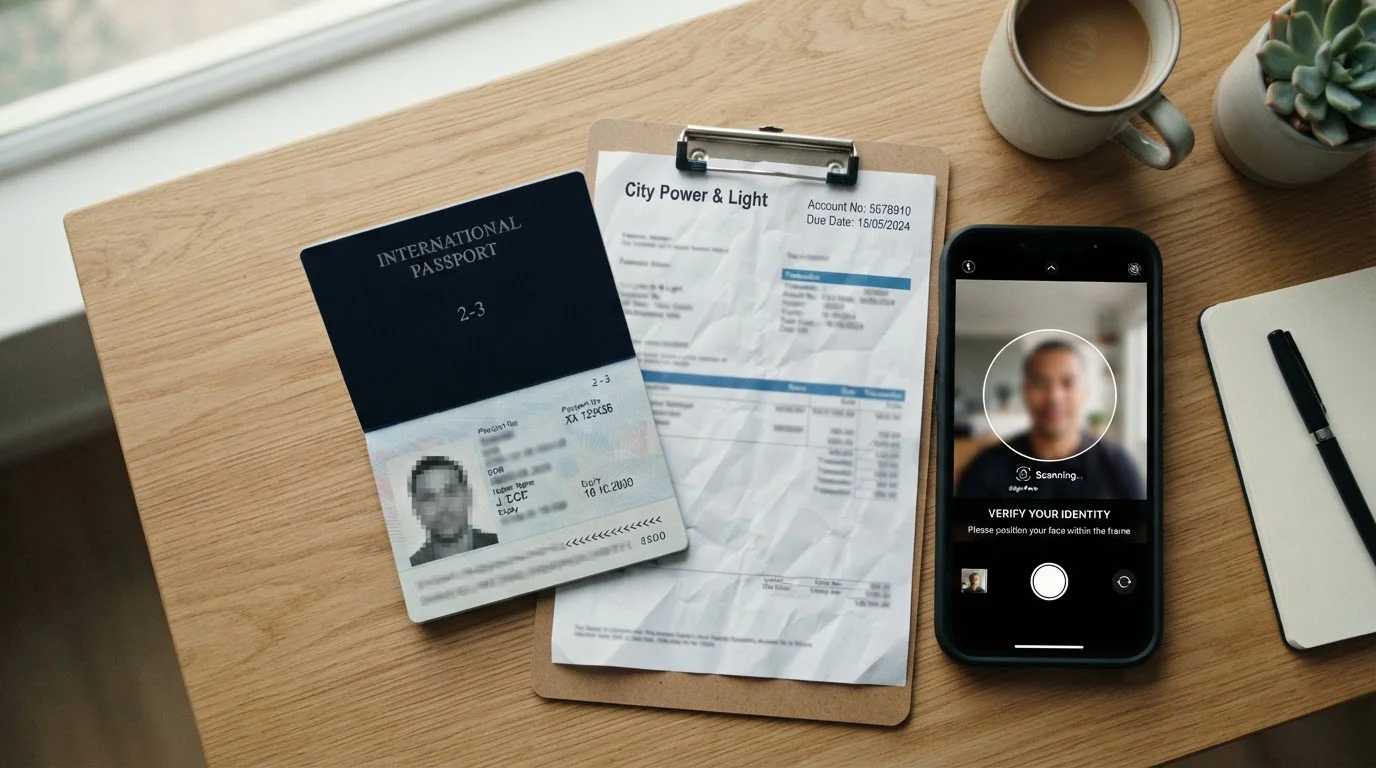
What documents you need: passport or driving licence (photo page), proof of address (utility bill, bank statement, council tax bill dated within the last three months), sometimes a selfie holding your ID next to your face. Large withdrawals or suspicious activity may trigger a source-of-funds request: proof of where the money came from (payslips, bank statements showing the source deposit, sale of assets documentation). Casinos frame this as AML compliance, but it also functions as a withdrawal-delay tactic. The more hoops you jump through, the more likely you are to reverse the withdrawal and keep playing.
Verification processing time: one to 48 hours if documents are clear and complete. Delays are common. Blurry photos, expired IDs, addresses that do not match the registration details, and incomplete documentation all extend the timeline. Upload high-resolution images, ensure the text is readable, and double-check that your address matches across all documents. If verification drags past 48 hours, contact support.
What Documents You’ll Need
Standard KYC requires three things: proof of identity, proof of address, and sometimes proof of payment method.
Proof of identity: passport (photo page), driving licence (front and back), or national ID card. The document must be valid (not expired) and the photo must be clear enough to read all text. Some casinos accept a photo taken with your phone. Others require a scan. If you use a phone, ensure good lighting, no glare, and all four corners of the document are visible in the frame.
Proof of address: utility bill (gas, electric, water), bank statement, council tax bill, or mortgage statement dated within the last three months. The document must show your full name and current address. Mobile phone bills and internet bills are sometimes rejected. If you live with parents or in shared accommodation where bills are not in your name, this becomes a problem. Some casinos accept a signed letter from your landlord or a council tax bill showing you as a resident. Check with support before you submit.
Proof of payment method: if you deposited via a method that links to your identity (debit card, bank transfer), the casino may ask for a photo of the card (front only, middle digits obscured) or a screenshot of the bank transfer showing your name and the transaction. Crypto deposits usually do not trigger this requirement, but hybrid casinos that accept fiat alongside crypto sometimes ask.
Selfie with ID: increasingly common. You hold your passport or licence next to your face, take a photo, and submit it. The purpose is to confirm the person in the ID photo is the person submitting the documents. Ensure your face and the ID are both in focus. Some casinos also ask you to write a note on paper with the current date and the casino name, then photograph yourself holding the note and your ID. This combats identity theft using stolen documents.
How Long Verification Takes
Fast-track: ten minutes to a few hours if your documents are pristine and the casino is not backlogged. Most Curaçao-licensed platforms have dedicated KYC teams operating during European business hours. Anjouan-licensed casinos vary. Some process documents quickly; others take days.
Typical: 24 to 48 hours. Upload in the evening, expect approval by the next afternoon. If you upload on a Friday night, expect delays until Monday. Support teams scale down on weekends.
Slow: three to seven days if documents are rejected and you need to resubmit, if the casino requests additional proof, or if the account is flagged for manual review. Large withdrawals (above $5,000) often face extended review regardless of document quality. If verification stretches past 72 hours without explanation, escalate via live chat or email. Public complaints on Trustpilot or AskGamblers sometimes speed things up.
Do I need KYC verification to withdraw from a Solana casino?
Most Solana casinos require KYC before withdrawal, especially for UK players. Platforms like BC.Game and Thrill allow small withdrawals without documents, but thresholds are not published and UK accounts face stricter scrutiny. Rollbit, BitStarz, and Stake enforce KYC before first withdrawal. Assume you will be asked for a passport and proof of address.
Solana Casino Bonuses and Promotions
Offshore crypto casinos structure bonuses differently than UKGC-licensed operators. No 10x wagering cap means requirements often stretch to 30x, 40x, even 60x. No ban on steep playthrough means that “free” spins come with strings attached. Most platforms offer deposit matches, rakeback, cashback, or VIP-tiered rewards rather than traditional welcome bonuses. Understanding what you are actually getting requires reading terms.
BC.Game runs a Monthly Deposit Bonus: a four-stage ladder paying 180 to 360 percent with rakeback on every stage. Minimum deposit for stage one is five dollars. Stages reset monthly. Stake has no welcome bonus. Rewards come through VIP levels, rakeback, and promotional races. High-volume players benefit; casual signups get nothing upfront. Rollbit similarly skips the welcome offer in favour of ongoing rakeback and trading incentives tied to its NFT marketplace.
BitStarz provides a welcome package with deposit bonuses and 180 free spins. Wagering requirements sit around 40x, typical for offshore casinos. FortuneJack offers bonus autonomy: you choose between a deposit match or cashback. That choice is rare and worth considering if you know your play style. Thrill and Cloudbet lean on loyalty programs rather than front-loaded bonuses. Wildies advertises up to €3,250 plus 150 spins across four deposits, aggressive for a new platform but likely attached to high wagering requirements.
General rule: crypto casinos do not give away money. Every bonus is a retention mechanism. If wagering requirements make the offer unplayable, skip it. Depositing without a bonus often gives you more control over your bankroll.
Games You Can Play with Solana
Solana casinos stock the same game libraries as other crypto platforms: slots, live dealer tables, provably fair originals, and sportsbooks. The crypto used for deposits does not dictate game availability. What matters is provider partnerships and licensing.
Slots
Slots dominate every casino in this guide. BC.Game offers over 10,000 titles. BitStarz exceeds 8,000. Thrill stocks more than 3,000. Wildies lists around 2,500. Providers include Pragmatic Play, NetEnt, Evolution, Hacksaw Gaming, Push Gaming, Nolimit City, and dozens of smaller studios. High-RTP slots (above 96 percent) are common. Megaways, cluster pays, and cascading-reel mechanics are standard. Maximum wins range from 5,000x to 50,000x stake depending on the title.
Crypto casinos often stock slots unavailable at UKGC sites due to different licensing agreements. Some titles banned in the UK for exceeding stake or speed limits appear on offshore platforms. That access comes with no consumer protection, so volatility and bet sizing are entirely your responsibility.
Live Dealer Games
Evolution Gaming dominates live dealer tables across all eight platforms. Blackjack, roulette, baccarat, poker variants, game shows like Crazy Time and Monopoly Live. Cloudbet and Stake have particularly strong live sections, with over 100 table variants each. Stakes are flexible: minimum bets start around $0.50 to $1 on standard tables, rising to $5 or $10 on VIP tables. Maximum bets stretch into the thousands, though offshore casinos impose stricter limits than their marketing suggests once you start winning consistently.
Live dealer games contribute poorly to bonus wagering, often ten to twenty percent of the bet amount versus 100 percent for slots. If you are grinding a bonus, avoid live tables. If you prefer table games, deposit without a bonus to avoid playthrough restrictions.
Provably Fair Originals
Provably fair games let you verify the RNG outcome was not manipulated. BC.Game, Stake, Thrill, and FortuneJack all offer in-house originals: Crash, Dice, Plinko, Mines, Limbo. Each round generates a server seed, a client seed, and a nonce. After the round ends, you can hash the seeds yourself to confirm the outcome was predetermined and matches the published result. It is transparency theatre for most players (few bother to verify), but it is real transparency for those who do.
Originals suit fast-paced, high-frequency betting. Rounds last seconds. Crash builds tension as a multiplier climbs until it crashes at a random point. Dice is a pure probability bet: pick a number, roll over or under. Plinko drops a ball through pegs; where it lands determines your payout. If you enjoy rapid-fire betting more than themed slots, originals deliver.
Sportsbook and Esports
Most platforms in this guide integrate sportsbooks. Stake and Cloudbet have the strongest sports coverage: football, basketball, tennis, MMA, cricket, esports. Odds are competitive with mainstream bookmakers. Live betting is available. Esports coverage includes League of Legends, CS2, Dota 2, Valorant. FortuneJack and BC.Game also offer sportsbooks, though depth varies.
Crypto sportsbooks settle bets in crypto, so your stake and payout fluctuate with coin price between bet placement and settlement. If you bet 0.1 SOL at 2.00 odds when SOL is $100, you risk $10 to win $20. If SOL drops to $90 by the time your bet settles, your $20 win is now worth $18. If SOL rises to $110, it is worth $22. That volatility cuts both ways.
Solana Casinos and GamStop
GamStop is the UK’s national self-exclusion scheme. If you exclude yourself via GamStop, every UKGC-licensed casino blocks your access for the period you choose (six months, one year, five years). The system works because UKGC operators are legally required to integrate with it and cross-check registrations against the exclusion database.
Offshore casinos are not part of GamStop. They operate outside UKGC jurisdiction, so they have no obligation to respect your self-exclusion. If you register at BC.Game after excluding yourself from all UKGC sites, BC.Game will not know and will not block you. That is not a “feature” for bypassing self-exclusion. It is a harm-reduction gap.
GamStop exists because some people need protection from themselves. If you excluded yourself for a reason, offshore casinos remove that barrier. You can deposit, lose control, and end up worse off than when you started. The offshore model offers access and flexibility in exchange for removing safeguards. If you have a gambling problem or a history of chasing losses, offshore platforms are a risk you should not take. GamStop exclusions do not transfer, and nothing stops you from signing up except your own discipline.
Some offshore casinos offer self-exclusion tools in their account settings. You can set deposit limits, loss limits, session time limits, or request account closure. These are voluntary and not enforced by any external body. If you email support asking to reopen a self-excluded account, many will comply within hours. UKGC operators face penalties for allowing excluded players to return early. Offshore operators face none. The protection is symbolic.
Can I use GamStop to block myself from Solana casinos?
No. GamStop only applies to UKGC-licensed operators. Offshore Solana casinos are not integrated with it and have no obligation to respect UK self-exclusions, so registering at one after excluding yourself will not be blocked. Some offer voluntary self-exclusion in account settings, but enforcement is weak and reopen requests are often granted quickly.
Risks and Consumer Protection
Offshore gambling strips away the protections UKGC licensing provides. That does not make every offshore casino a scam, but it shifts risk onto the player. Below are the practical implications.
What You Lose Without UKGC Licensing
UKGC operators must offer free dispute resolution through independent ADR bodies like IBAS or eCOGRA. If you and the casino cannot resolve a dispute, you escalate to the ADR provider, whose decision binds the operator. Offshore casinos have no such requirement. Some include arbitration clauses. Most do not. If an offshore casino refuses to pay a withdrawal and you exhaust their internal complaints process, your options are limited to public shaming on forums and review sites. Sometimes that works. Often it does not.
UKGC operators integrate with GamStop and enforce affordability checks. Offshore casinos do neither. If you deposit £10,000 in a week at a UKGC site, the operator will ask for source-of-funds documentation and may suspend your account pending review. At an offshore casino, nobody stops you. That lack of intervention is not a perk: it is dangerous if you are prone to chasing losses, and it removes a check that exists precisely for the moments when judgement slips.
UKGC operators face licensing sanctions for non-payment, unfair terms, and consumer harm. The Gambling Commission fines operators, suspends licences, and publishes enforcement actions publicly. Offshore regulators vary. Curaçao’s Gaming Authority can revoke licences but rarely does. Anjouan’s oversight is minimal. Operators know the risk of sanction is low, which changes the incentive structure.
Dispute Resolution: Your Options
Cloudbet is the rare offshore casino whose terms name an independent adjudicator whose decision binds the casino. That clause is gold. If a dispute arises and internal complaints fail, you can escalate to the named adjudicator, and Cloudbet must abide by the ruling. The transparency is exceptional. Other casinos in this guide do not offer equivalent protection.
Most offshore casinos include arbitration clauses that sound reassuring until you read the fine print. Arbitration is private, the arbitrator is selected by the casino or through a process the casino controls, and the cost is often prohibitive. Binding arbitration protects the casino more than the player.
Your practical recourse: escalate internally first. Email support, reference the specific terms clause being violated, attach evidence (screenshots, transaction IDs, correspondence). If that fails, escalate publicly. Post on Trustpilot, AskGamblers, Casinomeister, Reddit. Tag the casino’s social media accounts. Public pressure works when the operator cares about reputation. Some casinos resolve disputes immediately once they go public. Others ignore complaints entirely. The risk is you have no leverage beyond embarrassment.
If the dispute involves a significant amount (thousands of pounds), consult a solicitor specialising in gambling law. Some firms offer free initial consultations. They can assess whether the casino’s terms are enforceable and whether legal action is viable. Most offshore disputes are not worth pursuing legally due to jurisdictional complexity and cost, but large sums change the calculus.
Red Flags to Watch For
Licence claims that cannot be verified. If a casino says it holds a Curaçao licence but provides no licence number or the number does not appear in the Curaçao Gaming Authority public register, assume it is unlicensed. Unlicensed casinos have zero accountability.
Terms that change retroactively. If you claim a bonus and the casino later changes the wagering requirements or eligible games after you have started playing, that is a red flag. Terms should be clear and fixed at the point of acceptance.
Slow withdrawal processing with no explanation. Legitimate casinos process crypto withdrawals within hours, sometimes minutes. If a withdrawal sits in “pending” status for days with no response from support, the casino may be stalling deliberately. Small players sometimes get paid; large winners face manufactured delays in hopes they reverse the withdrawal and lose the money back.
Confiscated winnings over “bonus abuse” with no clear violation. Some casinos void wins and seize balances for vague “irregular play.” If the terms do not define what constitutes irregular play, the casino can retroactively apply the rule however it likes. That is a scam tactic.
Fake licences. Some casinos display licence badges that link to nonexistent regulators or registries that do not list them. Always verify the licence number independently through the regulator’s official site.

How to Vet a Solana Casino Yourself
The eight platforms above were compared on licence status, Solana acceptance, operational longevity (or, in Wildies’ case, transparent newness), withdrawal speed and reputation. You can run the same checks on any site before you deposit. Start with the licence: a Curaçao OGL number should appear on the Curaçao Gaming Authority validator, while Anjouan has no public register, so an Anjouan claim rests on the operator’s word. Where no licence number is published at all, as with Rollbit and Thrill, treat that as a transparency weakness and size your deposit accordingly.
Next, confirm Solana support in the live cashier rather than on a marketing page. Some sites list SOL in their promotions but do not offer it as an account currency or in the deposit menu, and that is where mistakes with networks and addresses happen.
Then check withdrawal speed against recent player reports on Trustpilot, AskGamblers and Reddit, not just the operator’s own claims. Casinos that batch payouts or process manually during business hours will be slower than those with automated payouts, whatever the landing page says.
Finally, read the reputation signals together rather than in isolation. A Trustpilot rating removed for fake reviews, a cluster of unresolved withdrawal complaints or terms that change after you accept them all outweigh a polished interface. Mixed reputations, like FortuneJack’s, are not automatically disqualifying, but they are a reason to test with a small withdrawal first.
None of these checks turns an offshore casino into a protected one. They help you avoid the worst operators; they do not give you GamStop, UK-approved ADR or funds-protection disclosure.
Crypto Casinos UK 2026 — Bitcoin Cash, Solana, XRP and More
Content created by the «casinopayoptions-uk.com» team